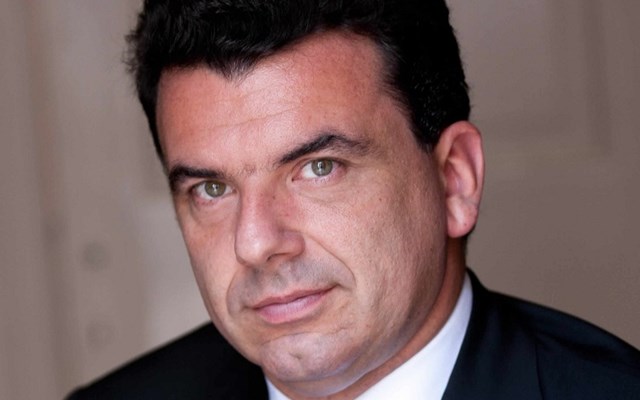
Greek Prime Minister Kyriakos Mitsotakis pitched his country as a prime destination for long-term capital at the International Forum of Sovereign Wealth Funds in Athens. Addressing international delegates during the afternoon session, he said the nation had moved well beyond simply recovering from a prolonged financial crisis.
The conference highlighted a major high-technology investment linked to the creation of an advanced production base in Greece. The facility is designed to manufacture and export 150 satellites every year, serving as the company's largest manufacturing site.
Mitsotakis told delegates that Greece now provides rare opportunities for institutional investors who manage long-term portfolios. He stressed that political, regulatory, and monetary stability was firmly anchored in the institutional architecture of the European Union, the eurozone, and NATO.
Economic turnaround and borrowing costs
Reviewing his administration's economic record over the past seven years, the prime minister pointed to a swift transformation in public finances. He said the government had successfully restored fiscal credibility, stabilized the banking sector, and introduced structural reforms that lifted productivity and international competitiveness.
Those reforms have produced rapid output gains, with Greece now expanding at twice the average growth rate of the wider eurozone. The domestic labour market has seen an equally sharp turnaround, with the national unemployment rate falling from 18 percent when his administration first took office to below 8 percent today.
Mitsotakis noted that sovereign bond markets have recognized this progress. He pointed out that Greek government borrowing costs are currently lower than those of four of the seven nations in the Group of Seven. He observed that very few market participants would have accepted such a wager three years ago.
A central milestone in that financial rehabilitation was regaining investment grade credit status. Mitsotakis identified this achievement as a top priority that he pledged before the 2023 national elections and delivered shortly after taking office for a second term, helping lift living standards despite recent global inflation.
Greece lost its investment grade rating in 2010 at the start of a decade-long sovereign debt crisis that required three international rescue packages. The subsequent structural overhaul of the Greek banking system and the steady reduction of sovereign debt ratios have paved the way for institutional asset managers to return to the Greek market.
Strategic crossroads and maritime trade
Beyond domestic financial figures, Mitsotakis framed Greece as a vital bridge between continents. The country occupies a strategic position at the crossroads of Europe, the Eastern Mediterranean, the Balkans, North Africa, the wider Middle East, and the Gulf region.
While Greece remains committed to European integration and supports stronger economic ties with the Western Balkans and southeastern Europe, Mitsotakis placed special emphasis on commercial partnerships across the Mediterranean. He said that decades of diplomatic, cultural, and trading ties with Middle Eastern and Gulf states form a strong base for joint ventures.
He described the country as an economic springboard that unites European legal predictability with the rapid growth of neighboring regions. Greece's deep maritime heritage and its position at the forefront of international commercial shipping further bolster its ability to facilitate global trade flows.
Greek shipowners control the largest commercial merchant fleet in the world by deadweight tonnage, giving Athens immense influence across global energy and dry bulk maritime transport. This established commercial presence has helped Greek authorities build close financial connections with sovereign funds in the Middle East and Asia.
Energy transition and hydrocarbon exploration
Turning to specific sectors, Mitsotakis outlined an ongoing overhaul of the Greek energy sector. The country is investing heavily in expanding renewable electricity generation, modernizing electrical grids, constructing regional cross-border interconnectors, and accelerating energy storage projects.
The government has also made a deliberate strategic bet on natural gas to provide essential baseload power during the transition to cleaner fuels. As part of that policy, Greece is reviving domestic hydrocarbon exploration to bolster national fuel security and support Europe's drive to diversify its supply routes.
Greece will carry out its first exploratory drilling for domestic oil and gas resources in 40 years during the second quarter of 2027. Mitsotakis said the campaign would assess whether indigenous hydrocarbon reserves can contribute directly to European energy resilience.
European energy markets have sought alternative sources of natural gas and cleaner electricity since supplies from Russia were curtailed in 2022. Greece has emerged as an import gateway for liquefied natural gas and is developing pipeline and electricity links to transmit energy northward into Central Europe.
Technology, research and domestic manufacturing
The prime minister placed digital infrastructure on equal footing with physical energy networks, stating that connectivity has become decisive for economic competitiveness. Greece is experiencing a rapid buildout of commercial data centres, telecommunications networks, cloud computing platforms, and artificial intelligence systems.
Mitsotakis said international tech firms are drawing on a growing pool of highly trained local professionals and expanding research capacity. He underscored efforts to connect university research with commercial industry to foster a sustainable innovation ecosystem.
The speech also drew attention to less publicised domestic industries. Mitsotakis noted that Greece has established significant manufacturing and scientific research capacity in the pharmaceutical sector, while the government is actively working to reinforce the domestic industrial and technological base, including defence manufacturing.
Mitsotakis concluded by urging sovereign wealth managers to look at large-scale real estate opportunities across the country. He pointed to substantial investment potential in commercial property, strategic asset restructuring, and major urban regeneration projects that are reshaping Greek metropolitan centers.