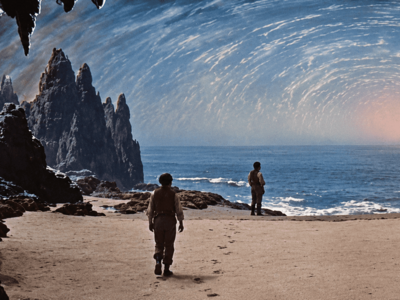
"Journey to the Center of the Earth," Henry Levin's 1959 film adaptation of Jules Verne's 1864 novel, remains one of the most memorable Verne adaptations ever made, according to writer Joan Prats in a retrospective published in Santo Domingo. James Mason stars as Professor Oliver Lindenbrook, who finds an ancient message hidden inside a volcanic rock, left by the explorer Arne Saknussemm, with instructions that could lead to the center of the Earth.
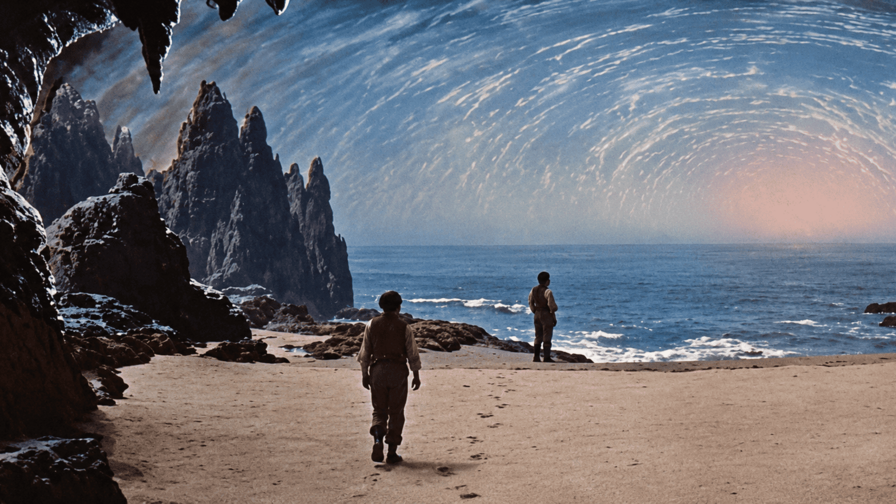
Lindenbrook sets off on the expedition with his student Alec McEwan, played by Pat Boone. They are joined by Carla Goteborg, played by Arlene Dahl, and the Icelandic guide Hans Bjelke, played by Peter Ronson. The descent takes the group through giant caverns, prehistoric creatures, extraordinary plants, a subterranean ocean and the ruins of the legendary Atlantis.
The screenplay, written by Walter Reisch and Charles Brackett, made numerous changes to Verne's original story, including new characters and situations. Prats noted that the essence of Verne's approach survives intact: an extraordinary adventure that carries its characters, and the audience, toward places that until then existed only in the imagination. Among the many film adaptations of the French author's work, Prats ranks this one alongside "20,000 Leagues Under the Sea," which, notably, starred Mason as Captain Nemo five years earlier.
Building worlds without digital effects
Watching the film again decades later highlights the creative effort needed to make its underground world feel tangible, Prats wrote. The production, made in the late 1950s, relied on built sets, matte paintings, visual effects, photographic tricks and real locations to stage an expedition to the center of the planet.
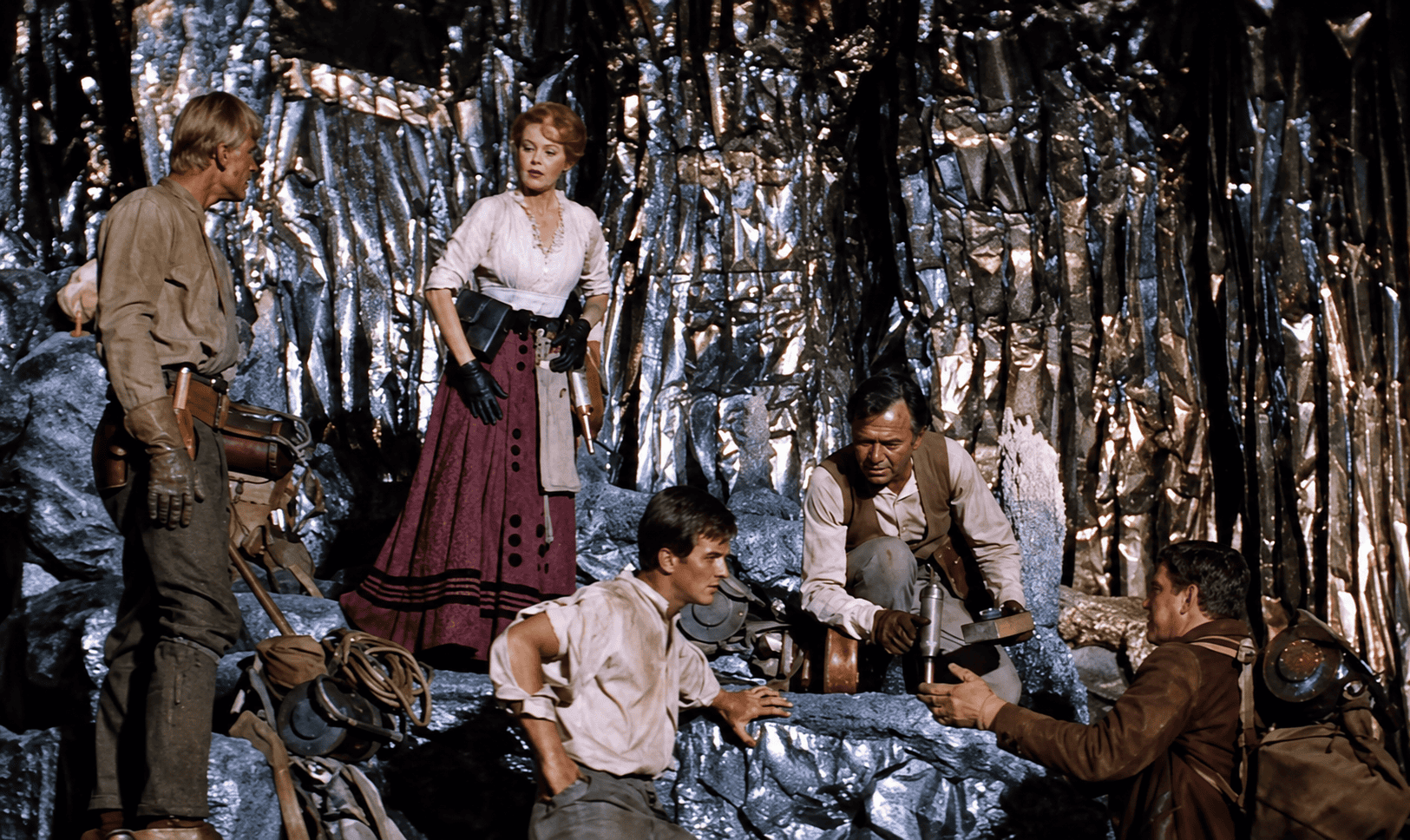
Some sequences were filmed at Carlsbad Caverns in New Mexico, whose natural chambers helped give the characters' journey a monumental scale. Even the prehistoric creatures were achieved through methods that look rudimentary by today's standards: some of the giant reptiles were played by real animals fitted with prosthetics and then integrated into the scenes.
Seen from today's perspective, some of the effects inevitably show their age, Prats acknowledged, but he argued that this is also part of the film's charm. There is something physical about those spaces and creatures, he wrote, a sense that the characters can genuinely touch what surrounds them, so that audiences feel they are exploring the fantastical setting alongside them rather than simply observing it.
A cast that carries the expedition
The cast is central to that effect. Mason gives Lindenbrook the presence needed to anchor the expedition, while Boone, Dahl and Ronson help create the feeling of a group forced to depend on one another to survive.
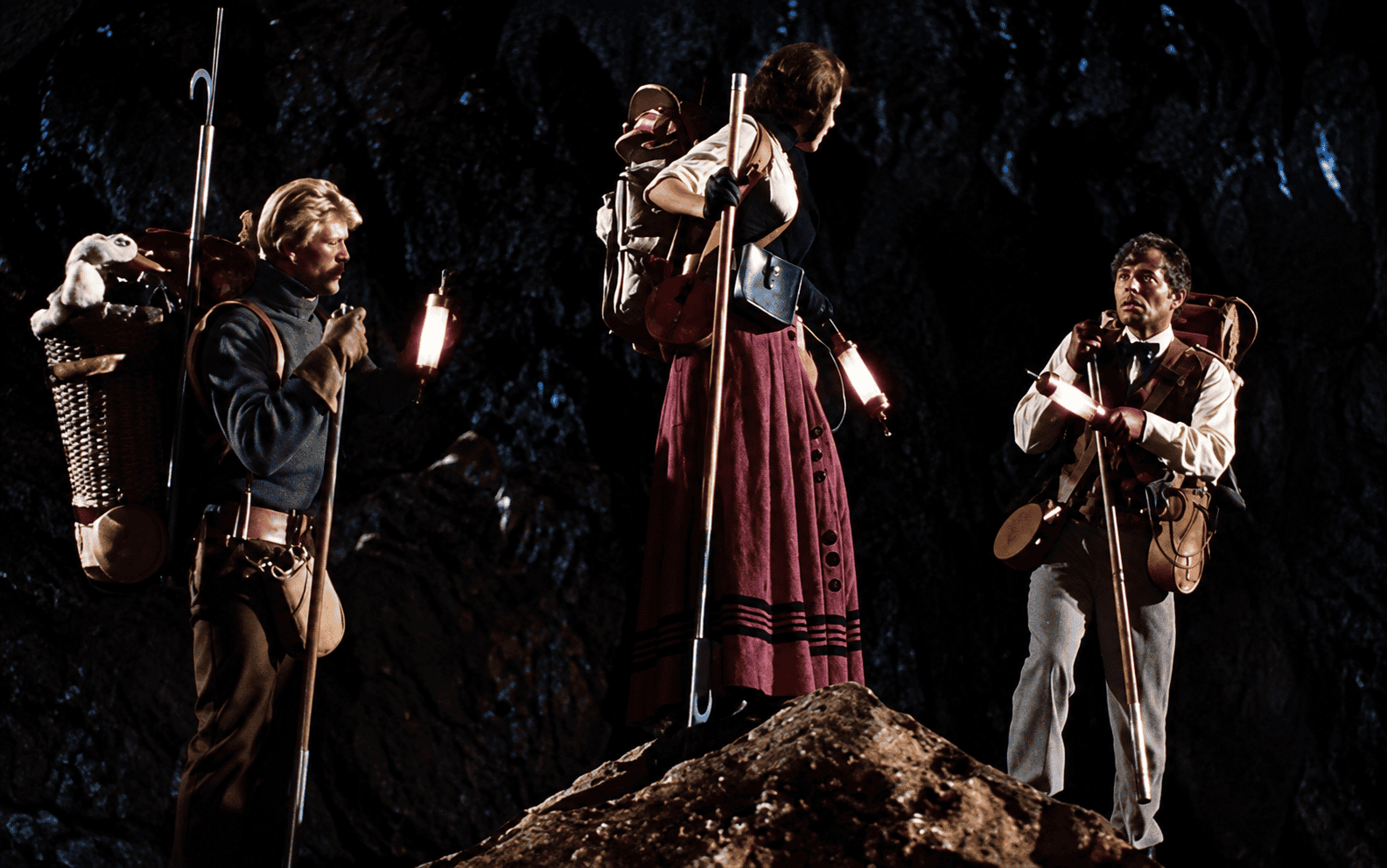
Prats wrote that much of the film's effectiveness lies in watching these characters climb, descend, run, explore and react physically to the dangers they encounter, giving the journey real weight. The score by composer Bernard Herrmann accompanies the descent into the unknown and deepens the sense of distance from the world above.
The film also has a direct link to television history. An animated series titled "Journey to the Center of the Earth," which aired in 1967, was inspired by the film rather than Verne's novel, and it used some of the characters created specifically for the 1959 movie version.
Why the film still works
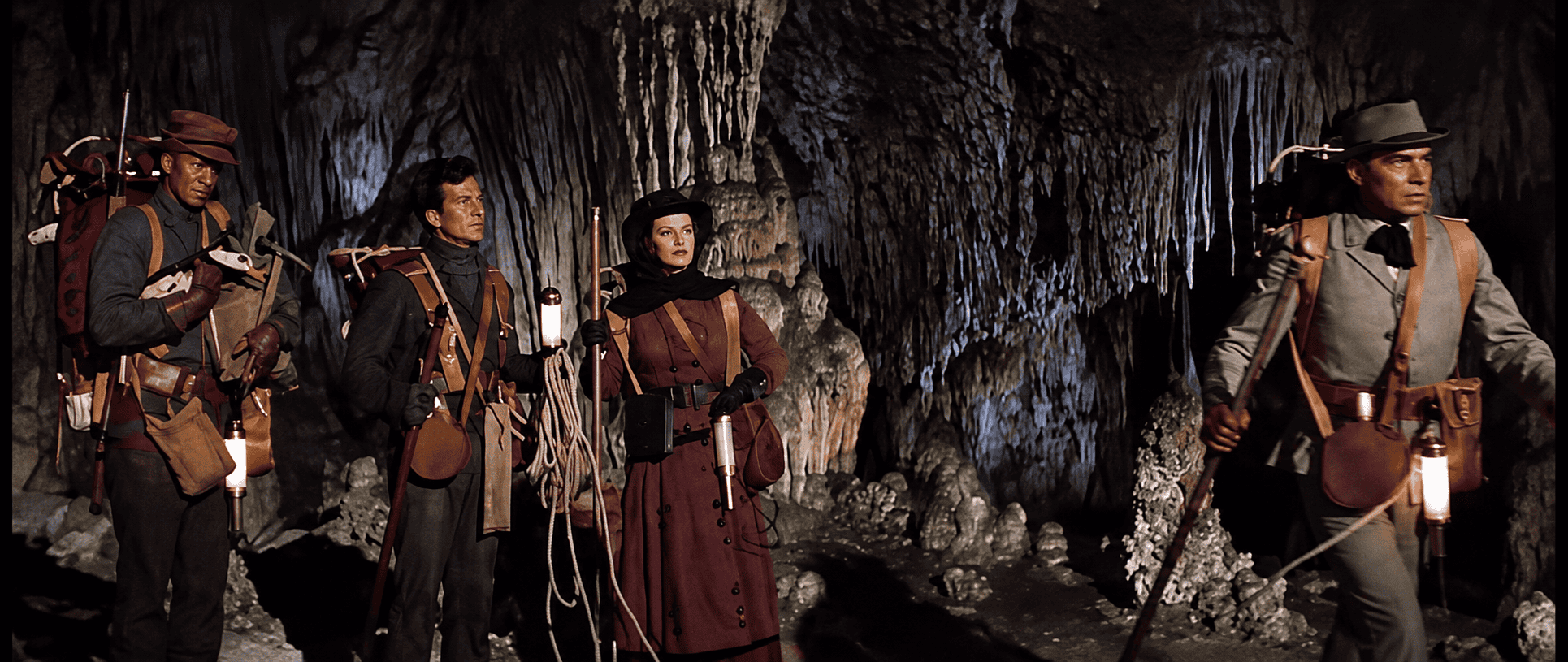
Nostalgia cannot fully explain the pleasure of revisiting the film, Prats wrote, since a first-time viewer today would likely react differently to its effects and storytelling. But he argued the film remains a science fiction and adventure classic because it holds on to something no technology can guarantee: the ability to spark curiosity.
Prats said viewers can return to it either to study how large productions were built before the digital era or simply to enjoy a fantastical expedition once again, adding that for him the two experiences tend to blend into one.