

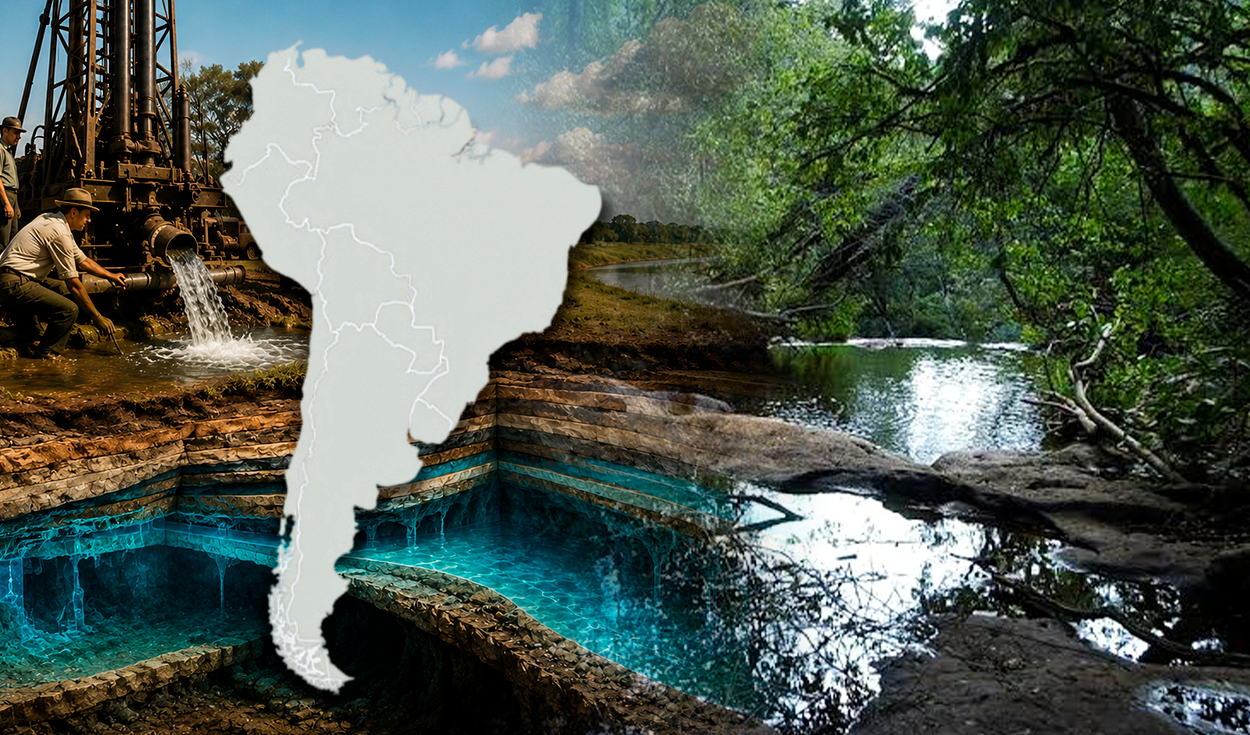
The Guarani Aquifer System supplies fresh water to millions of people across Brazil, Argentina, Paraguay, and Uruguay after being discovered during an oil search. Workers drilling a well in Salto, Uruguay, in 1941 struck abundant thermal water instead of petroleum.
Subsequent analysis confirmed the find was the first modern proof of a vast hydrogeological structure beneath the Southern Cone. South American specialists expanded research using regional maps and scientific studies. Geologist Danilo Anton proposed the name Guarani in 1996 to honor the indigenous people of the region.
Guarani Aquifer Storage and Dimensions
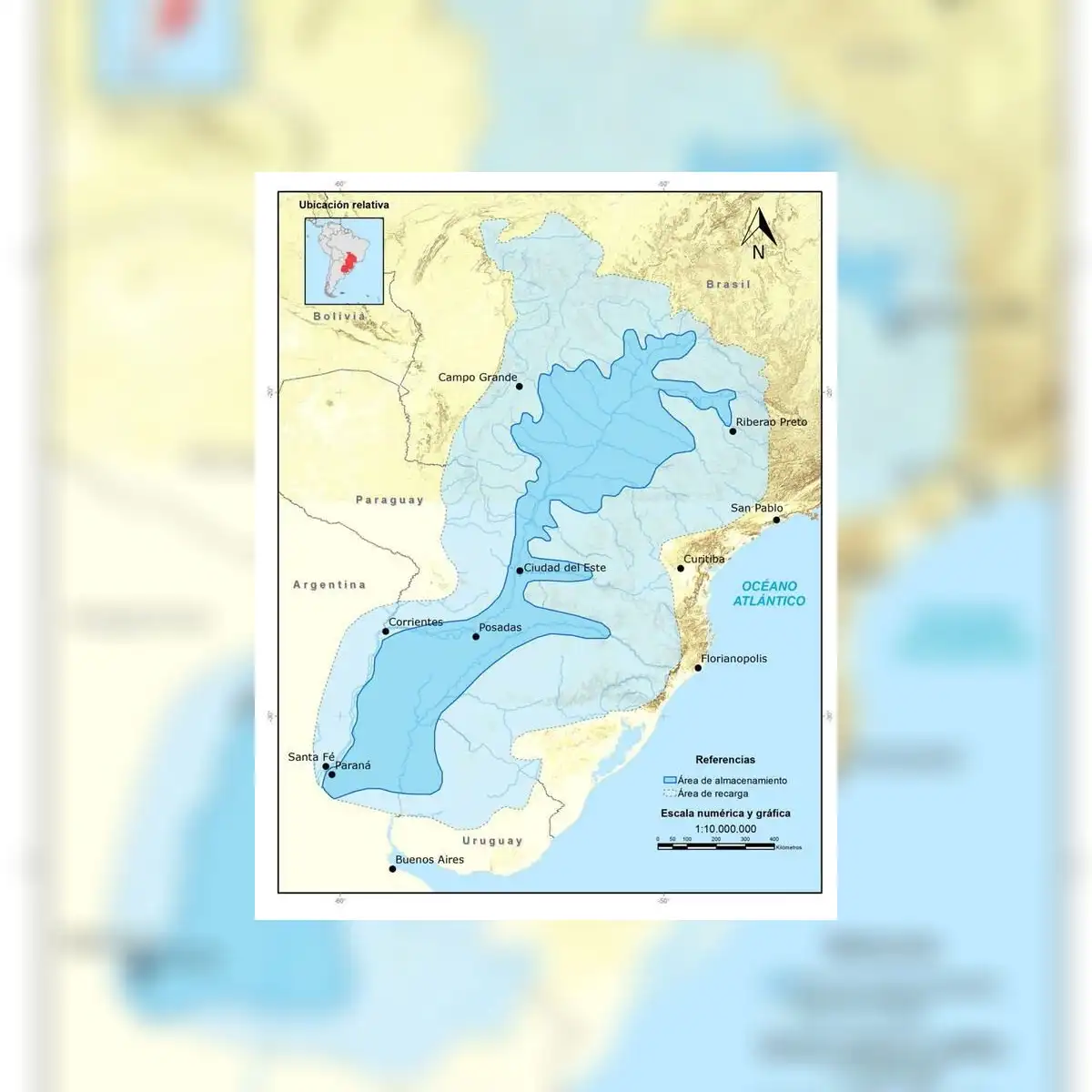
The aquifer spans 1.2 million square kilometers in South America and stores approximately 30,000 cubic kilometers of fresh water. Permeable sandstone layers began capturing rainfall about 20,000 years ago, creating a natural system that remains active today.
Millions of residents rely on the aquifer for drinking water, agricultural irrigation, industrial production, and thermal tourism. The Organization of American States, the World Bank, and UNESCO coordinate management of the system to maintain regional water security. The Organization of American States and the World Bank have also backed multilateral initiatives to prevent contamination, overconsumption, and urban expansion.
Four Nations Sharing the System
Brazil holds nearly 70 percent of the aquifer surface area, making it the primary user of the water. Its supply feeds cities, industrial plants, irrigation systems, thermal resorts, and mineral water production.
Argentina uses the groundwater beneath its northeastern provinces for human consumption, agriculture, and local economic activities. The resource also connects with surface ecosystems such as the Esteros del Ibera.
Paraguay relies on the aquifer to supply rural and urban communities in its eastern region, supporting farming and other productive industries. Uruguay holds the smallest portion of the system but uses it extensively for domestic consumption, crop irrigation, and thermal springs heated by the depth of the reservoir.
Global Impact and Science Diplomacy
Rising global droughts linked to climate change make the underground fresh water deposit critical for regional food security and ecosystems. During a High-Level Conference on Science Diplomacy in Paris, UNESCO hydrologist Miguel Doria said science diplomacy builds consensus and safeguards water for future generations. Doria noted at a 2025 UNESCO conference that the project shows how science can unite nations.
Coordinator Ricardo Burg said four countries had never before achieved such deep coordination to protect a shared aquifer.
Global hydrologic data places Brazil first in freshwater availability with 5,661 cubic kilometers, supported by the Amazon basin. Russia ranks second with 4,312 cubic kilometers, largely contained in Lake Baikal. Canada holds third place with 2,850 cubic kilometers distributed across lakes and tributaries.



