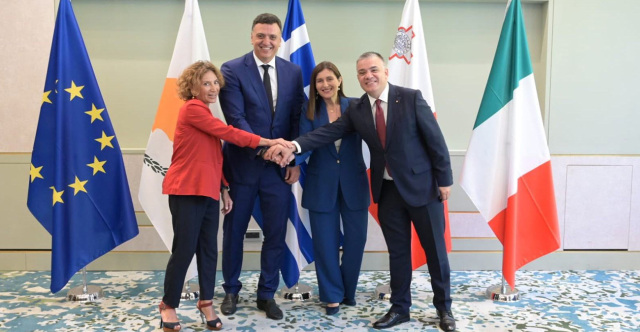
Greek Maritime Affairs and Insular Policy Minister Vassilis Kikilias joined shipping officials from Cyprus, Malta and Italy in Limassol, Cyprus, to sign a joint declaration aimed at protecting European maritime competitiveness and shielding households from rising energy and food prices.
The agreement was reached during the ninth trilateral meeting of maritime ministers from Cyprus, Greece and Malta, with Italy participating in the talks. Kikilias represented Greece alongside Cyprus Deputy Minister of Shipping Marina Hadjimanolis, Malta Minister for Sustainable Mobility Chris Bonett and Italy Deputy Minister of Transport and Infrastructure Edoardo.
Speaking after the meeting, Kikilias said decisions taken within the shipping industry directly influence energy, product and food prices, shaping the daily lives of European families. He stated that the four countries signed the joint declaration to safeguard citizens and national economies through practical, cost-effective policies.
The signatory nations plan to promote realistic, internationally applicable measures to achieve the broadest possible consensus during critical negotiations at the International Maritime Organization and within the European Union.
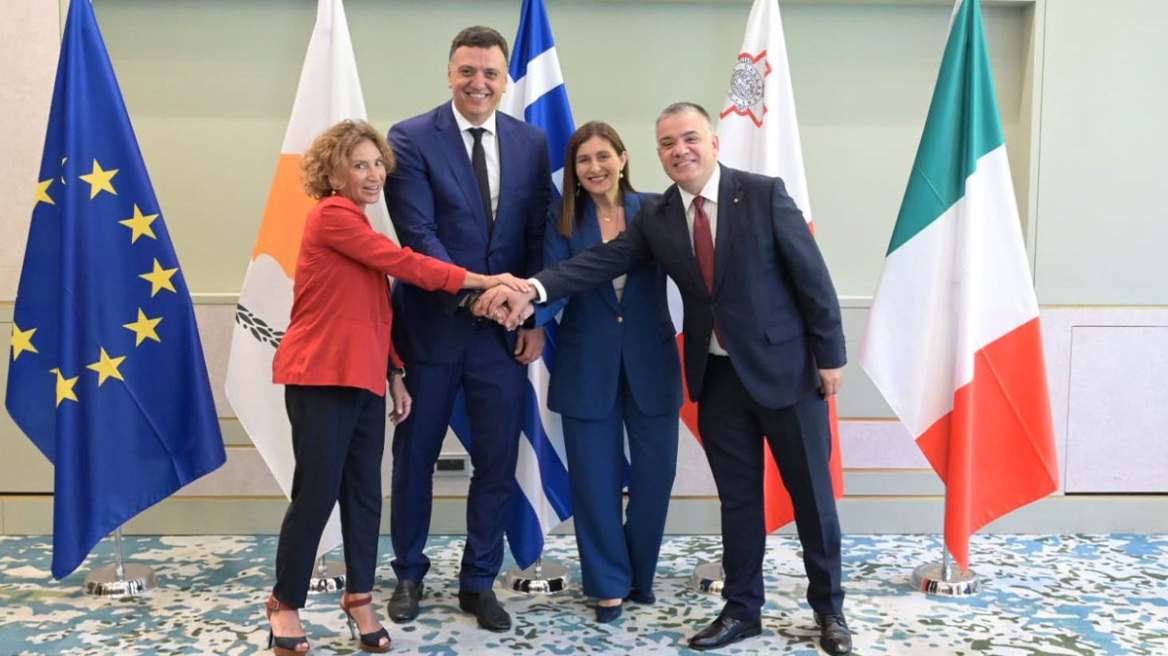
At a joint press conference following the signing, Kikilias said it was vital for the Mediterranean nations to combine their voices after a series of continuous efforts, pointing out that European shipping is directly linked to the strength of the wider European economy.
Impact of global trade and regional instability
Kikilias highlighted that 90 percent of global trade moves by sea. Because seaborne commerce dictates the cost of essential goods, energy and food, maintaining shipping competitiveness is vital for both European and global markets.
He warned that severe instability, conflicts and geopolitical flare-ups in surrounding regions are creating extra difficulties for international maritime routes. He added that these challenges must guide European leaders toward a prudent, realistic and meaningful strategy to fulfill their duties to the public.
According to the minister, Europe must look beyond short-term fixes for daily living expenses and establish structured medium-term and long-term planning. He urged the development of a comprehensive blueprint that ensures Europe remains a primary player in shipping, energy, shipbuilding, shipyards, ports and port infrastructure.
Mediterranean alliance and global regulatory standards
The host city of Limassol is the main commercial port and maritime hub of Cyprus, acting as one of the leading ship management centers in the European Union. Cyprus, Greece and Malta together account for a major share of the EU merchant fleet, giving the Mediterranean grouping substantial weight in international maritime policy.
The International Maritime Organization, headquartered in London, is the specialized United Nations agency responsible for regulating global shipping safety, security and environmental performance. Negotiations at the organization frequently focus on international emissions targets, fuel standards and global trade rules.
Kikilias described the summit in Limassol as a milestone and expressed confidence that other European Union member states will support the joint initiative. He said he believed more EU nations will choose realism and common sense in an era when governments must act to protect their populations and economies.