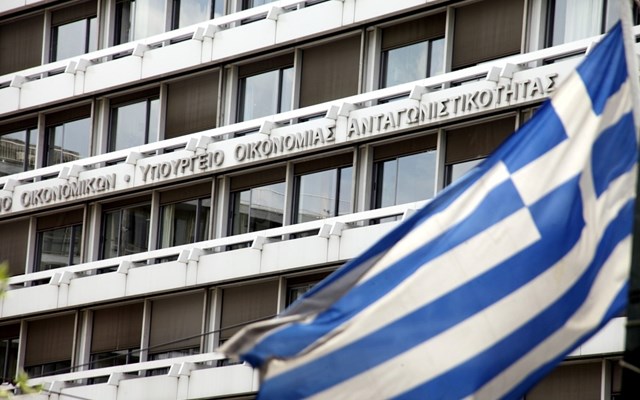
International organizations have begun calculating the 2027 fallout of the energy crisis triggered by the war between the United States and Israel against Iran, now accepting that the damage caused by the fighting will take months to repair even if hostilities end immediately.
And however large the Democratic Party's victory in the US House of Representatives and Senate elections, Donald Trump remains president of the United States for another two years. Greece's economic policymakers see this as a reminder that the problems caused, directly or indirectly, by the second energy crisis in five years will stay with the country for some time, worsened by chronic domestic weaknesses that will persist even after the Iran crisis ends.
The most serious issue is high inflation, which reached 5% in September and is expected to be even higher in October. On average since the start of the year, inflation has reached 3.6%. A 45% rise in oil prices and an almost 200% rise in natural gas prices will, from October, begin feeding through into food prices, which had until now been shielded from imported energy inflation.
The problem is that food prices, and services, never returned to the levels they were at before 2022. These are also almost inelastic expenses, which puts greater strain on household budgets and on the operating costs of businesses.
Given the European Union's difficulty in adopting a common stance on rising fuel costs, Greece's only option is to continue its subsidy policy, keeping subsidies on liquid fuels and soon extending them to electricity bills, since prices are set to rise. For that reason Greece is seeking more fiscal flexibility from the EU, in order to build the 600 million euro fund needed to keep the subsidies running for as long as the crisis lasts.
The Income Lag
The other side of the pressure facing low- and middle-income households is low pay. According to the latest Eurostat data, incomes in 2025, measured in purchasing power units, are 22.3% lower than they were in 2010. This is despite the fact that, in nominal terms, incomes in Greece rose by 30% between 2019 and 2025. Compared with the rest of the EU, Greece still ranks third from the bottom in real incomes. These figures explain why Greek households feel inflation more acutely, since it persistently runs at least one percentage point above the EU average.
Closing the income gap with the EU average will require not only statutory increases to the minimum wage, public sector pay and pensions, but also the continuation of permanent income-boosting measures alongside the 2.2 billion euros worth of measures planned for 2027.
Labor Productivity
A new indicator tied to low incomes is labor productivity, which in Greece stands, according to the latest available data, at 54% of the EU average. Productivity per hour worked is even lower, not exceeding 34% of the EU average. The low productivity is attributed to the structure of the economy, with many small businesses operating in uncompetitive sectors, and to the lag of Greek businesses in adopting technology.
The "antidote" is investment, which would raise the capacity and productivity of businesses. Greece has been closing the gap with the EU year on year, but investment needs to grow in both quantity and quality, meaning the country needs more productive investment, which rose 9% in the first half of the year and creates new infrastructure and new jobs.
Current Account Deficit
Despite the resilience the economy has shown through successive crises, it has not managed to rein in its still-high current account deficit, which reached 8.9 billion euros over the eight months from January to August. Standard & Poor's cited this figure as a reason for not upgrading Greece's economic outlook in its most recent review.
Greece's dependence on imports distorts even the multiplier effect of investment, since the needs created by new investment have to be met through imports. In periods of high fuel prices, GDP is drained to cover the rise in energy imports.
The current account deficit has drawn the attention of the international organizations that assess the Greek economy, which view it as a competitive disadvantage for the country. In absolute terms, Greece has one of the largest current account deficits, which is expected to reach close to 15 billion euros this year.
The Electoral Cycle
Finally, one cyclical problem Greece needs to avoid this time is the so-called "electoral cycle," the period before and after national elections during which the state mechanism freezes and the entire public sector waits for the election result and the new government's programmatic statements before restarting.
Depending on when elections are held, officials will need to factor in a preparation period that is necessary before Greece takes on the rotating presidency of the EU. Matters would become more difficult if a second round of elections were needed to form a government, leaving insufficient time ahead of 2027, which will be another critical year.