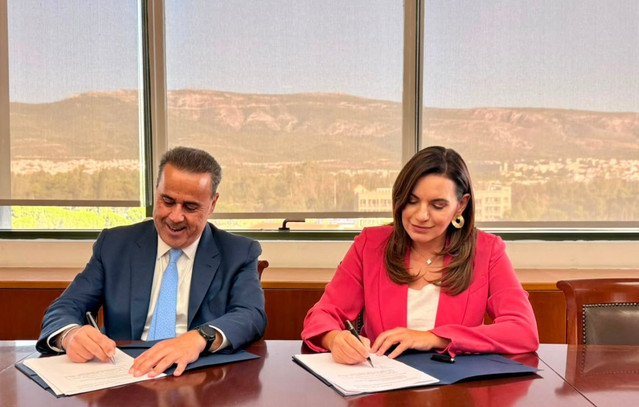
Greek Environment and Energy Minister Stavros Papastavrou and Tourism Minister Olga Kefalogianni have signed a Joint Ministerial Decision establishing a new national spatial framework for tourism development across the country.
The executive decision, co-signed by Deputy Minister of Environment and Energy Marilena Soukouli, sets binding rules designed to expand tourism investment while protecting natural ecosystems, easing congestion in saturated destinations, and promoting emerging regions.
Official ministry statements released through the state-run Athens-Macedonian News Agency confirm that the framework provides Greece with its first comprehensive institutional plan for spatial tourism planning.
National Framework for Sustainable Tourism
Known officially as the Special Spatial Framework for Tourism, the plan establishes a national strategy defining where and under what conditions tourism infrastructure can be built across Greece.
The framework sets strategic directions and medium-to-long-term national targets to ensure that spatial development in the tourism sector aligns with economic, environmental, and social sustainability standards.
Under its core mandates, the framework establishes uniform rules for incoming investments, organizes hotel construction, protects locations facing heavy visitor pressure, prioritizes sensitive island environments, and guides local urban planning for future years.
Tourism serves as a major driver of the Greek economy, providing significant revenue and employment, though rapid growth in recent years has heightened demands on local infrastructure and natural resources across popular coastal and island destinations.
Zoning Categories and Coastal Protections
To apply regulations according to local conditions, the framework categorizes regions based on the intensity of tourism activity, evaluating the density of tourist beds relative to surface area and permanent population within each Municipal Unit.
Under this system, land areas are categorized into Zones A through E, while island territories are divided into Tiers I through III to set specific regional development conditions.
These classifications establish the types of tourism investments permitted in each zone, minimum plot buildability limits for new hotel construction, maximum bed capacities, and specific environmental protection standards.
The framework also imposes strict protection measures along coastal zones, aiming to safeguard natural shoreline landscapes and prevent unauthorized coastal development.
Ministerial Strategy and Economic Vision
Environment and Energy Minister Stavros Papastavrou stated that the spatial framework serves as a national strategic tool that establishes the groundwork for organized, balanced, and sustainable tourism growth.
Papastavrou explained that the rules replace previous regulatory ambiguity and piecemeal planning with strategic long-term direction, providing legal certainty for investors while safeguarding cultural heritage and public quality of life.
He expressed gratitude to Tourism Minister Olga Kefalogianni, department Secretaries General, and ministry staff for their collaboration, describing spatial planning as a choice of national responsibility.
Emphasizing that tourism represents national capital and a heavy industry for Greece, Papastavrou noted that the framework ensures economic expansion proceeds in harmony with the protection of natural and cultural wealth.
Year-Round Growth and Local Flexibility
Tourism Minister Olga Kefalogianni stated that the framework provides the primary mechanism for implementing quality tourism development based on the realistic carrying capacity of each region.
Kefalogianni noted that the plan protects destinations under heavy pressure while opening opportunities in less developed areas, with the goal of extending visitor activity to more destinations and across a longer portion of the calendar year.
She highlighted that while the national framework sets binding guidelines, local administrative bodies retain the necessary scope to design tailored solutions adapted to their specific regional conditions.
Kefalogianni thanked Papastavrou and participating organizations for their contributions during public consultations, adding that the shared objective is to preserve and enhance the value of Greek tourism for the national economy and local communities.
Public Consultation and Framework Amendments
The final framework was approved following extensive public consultations involving industry entrepreneurs, scientific experts, civic organizations, and citizens, alongside formal reviews by advisory councils.
Both the National Spatial Planning Council and the Central Council for Spatial Issues and Disputes reviewed the draft and submitted formal opinions prior to its enactment.
Following consultation feedback, officials introduced three targeted refinements while maintaining the framework's overarching architecture, zoning classifications, and fundamental principles.
The first refinement adjusted regulations for Controlled Growth Areas, designated as Areas A, which experience high levels of tourism activity.
The second modification updated rules for Special Development Reinforcement Areas, designated as Areas E, which include border regions and under-developed zones.
The third adjustment established guidelines for utilizing and restoring designated traditional and listed neoclassical buildings located within Areas A.
Environmental Safeguards and Mild Development
The plan maintains specific provisions for mild development, which caps the maximum building ratio at half of the baseline building coefficient currently enforced in a given area.
Approval for mild development projects requires specialized technical documentation, including geotechnical assessments and stream delineation studies to manage environmental risks.
Developments under this classification must also undergo Strategic Environmental Assessments and public consultation before receiving final approval through Presidential Decrees validated by the Council of State.
Ministry officials confirmed that the Joint Ministerial Decision takes effect immediately, establishing a binding spatial framework for future tourism projects across Greece.