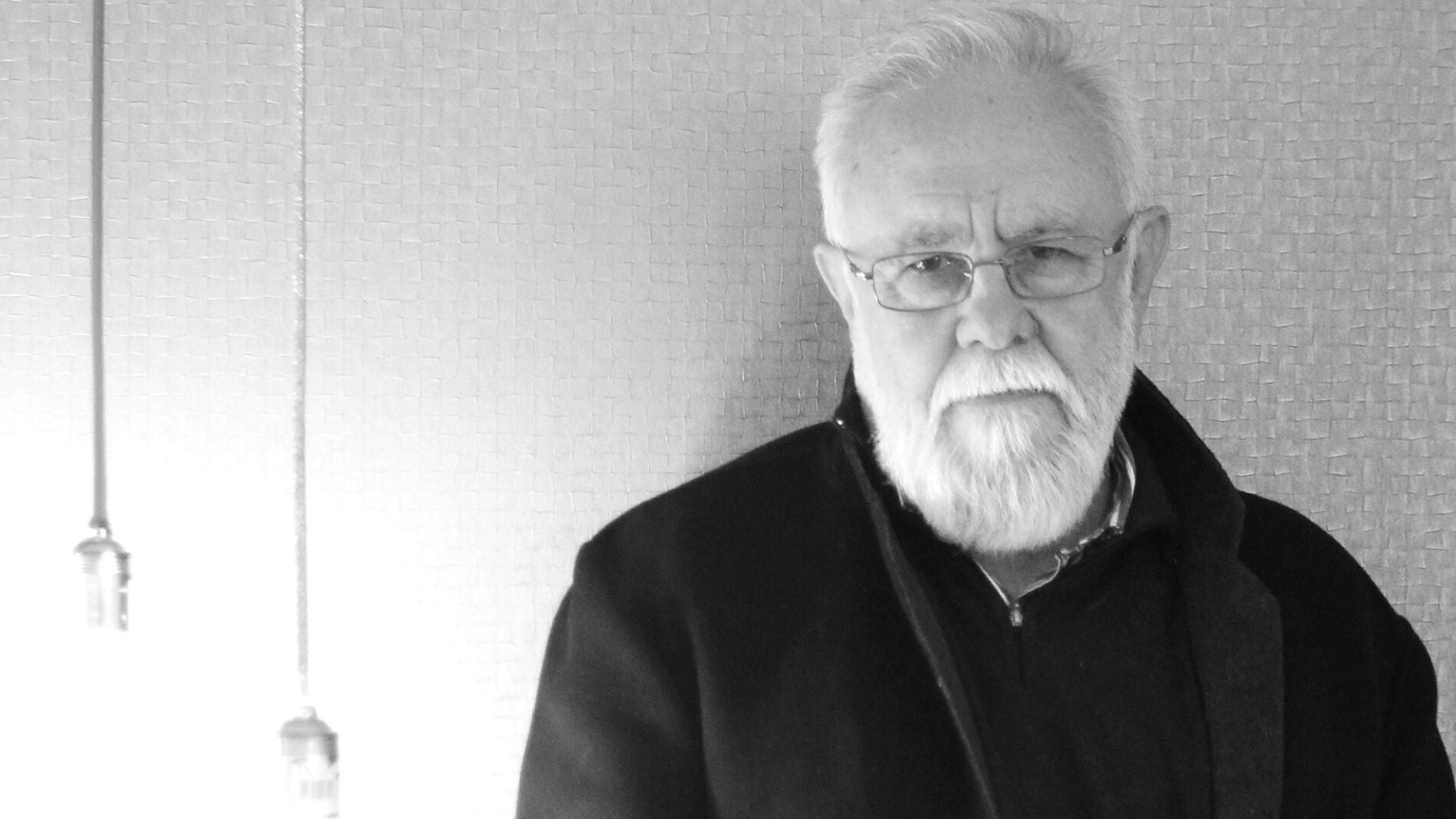
Spanish film director, author and screenwriter Gonzalo Suárez has died in Madrid at the age of 92. The acclaimed creator, who earned national and international honors across a six-decade career in cinema and literature, passed away on Tuesday, September 29, 2026.
Suárez was a central figure in Spanish culture for 60 years, directing more than 20 feature films and publishing numerous books. He was widely celebrated for blending reality and fantasy, defying traditional narrative boundaries throughout his artistic life.
When Suárez received the Honorary Goya from the Spanish Film Academy last year, he took the stage at the Auditori de Barcelona. The venue held deep personal significance for him, as it was in Barcelona that he wrote his first books, directed his first films, and raised his four children.
The Film Academy presented him with the award in recognition of a career that developed a surprising filmography, experimented with every genre from all artistic attitudes, and made him a key figure in Spanish culture over six decades.
During his acceptance speech, Suárez delivered an improvised and playful address that offered a sharp critique of world events. He referenced Donald Trump without naming him directly, remarking that he could never have imagined a figure playing golf with the world with impunity while trying to send it into the darkest hole.
Suárez then shared a fable with the audience about a roadside driver who took pity on a smelly tramp in the rain. Although the driver immediately regretted picking up the passenger because he ruined the upholstery, God rewarded the act of charity by transforming the tramp into a fairy-tale princess for a night at a motel. The next morning, the driver woke up to find the spell broken and the foul-smelling tramp back in his arms, leading the driver to conclude that God rewards humans with dreams and punishes them with reality.
The allegory illustrated Suárez's core belief that life is often disappointingly distant from human chimeras, a theme he explored throughout sixty years of artistic creation.
Artistic Vision and Creative Philosophy
Throughout his career, Suárez consistently championed imagination and fantasy over conventional narrative structures. He integrated real-life elements into a rich landscape of dreams, which fed his creative work and filmmaking methods.
Suárez acknowledged on several occasions that he rarely rewatched his own movies, with only a few specific exceptions. He explained that his gaze was always pointed forward, comparing his focus to that of horses or poets.
Reflecting on his life's work, Suárez noted with a laugh that if he had to start over, he would choose the exact same path of trying to invent cinema. He described time as the ultimate mystery, defining life as a single flash and calling the effort to capture it through gestures, light, or moments a constant challenge.
He also revealed that he had never followed a formal life plan. While he declared that he simply wanted to make movies when he grew up, written words served as his first foothold in the arts.
Journalism Pseudonyms and Literary Career
Born in Oviedo, Suárez studied Philosophy and Letters at university and worked as a football talent scout before turning to creative writing and film production.
He began his writing career under the pseudonym Martín Girard in the early 1960s, contributing journalistic chronicles to press publications. His entry into filmmaking came as a direct result of adapting his own published novels for the screen.
Suárez authored numerous literary works over his lifetime. His published books concluded with his final two releases, titled El cementerio azul and El caso de las cabezas cortadas.
His literary style drew praise from renowned authors, including Argentine writer Julio Cortázar. Cortázar observed that Suárez's slippery and elusive body of work occupied a place in contemporary Spanish culture similar to that of Boris Vian in France, comparing Suárez to a living butterfly that refused to be pinned onto catalog boards or bibliographical listings.
Major Films and Masterpiece Remando al viento
Suárez was a leading precursor of the Barcelona School of Cinema, an influential movement that reshaped Spanish filmmaking. Over his career, he directed many of the nation's most prominent actors, including Charo López, Francisco Rabal, José Sacristán, Carmen Maura, and Javier Bardem.
His filmography includes prominent feature films such as Ditirambo, El extraño caso del doctor Fausto, La Regenta, Morbo, Parranda, La reina anónima, El detective y la muerte, Mi nombre es sombra, and Oviedo Express. His film Epílogo gained international recognition when it received the Youth Award at the Cannes Film Festival.
His most celebrated masterpiece remains Remando al viento, known in English as Rowing with the Wind. The dreamlike film recreated the process of Mary Shelley writing her famous novel Frankenstein, starring a young Hugh Grant as Lord Byron. The production won six Goya Awards, including the prize for Best Director for Suárez.
In addition to directing, Suárez worked as a producer on major projects, including the film Don Juan en los Infiernos and the television series Los Pazos de Ulloa.
His notes on the script of Remando al viento reflected his artistic vision, describing an opening scene as a blazing vision of eternity and death. He wrote that the routine, buried sound of invisible waves gradually brought life to a static, sustained image with exasperating exactitude.
Awards and Legacy in Spanish Culture
Suárez received extensive recognition from major cultural institutions throughout his life. He was awarded Spain's National Cinematography Prize in 1991, the Gold Medal for Merit in Fine Arts, and the Luis Buñuel Award. In 2026, he received the Gold Medal of the Film Academy.
He was also honored internationally and nationally with prestigious titles. He was named a Knight of the Order of Arts and Letters of France and a Knight of the Order of Alfonso X the Wise, becoming the first film director ever to receive the Spanish honor.
Outside his creative career, Suárez was known as an avid fan of boxing, a sport he followed with great enthusiasm throughout his life.
With his passing in Madrid at the age of 92, colleagues and film historians remember Suárez as a creator who brought dreams to life on screen and left an enduring imprint on Spanish cinema.