
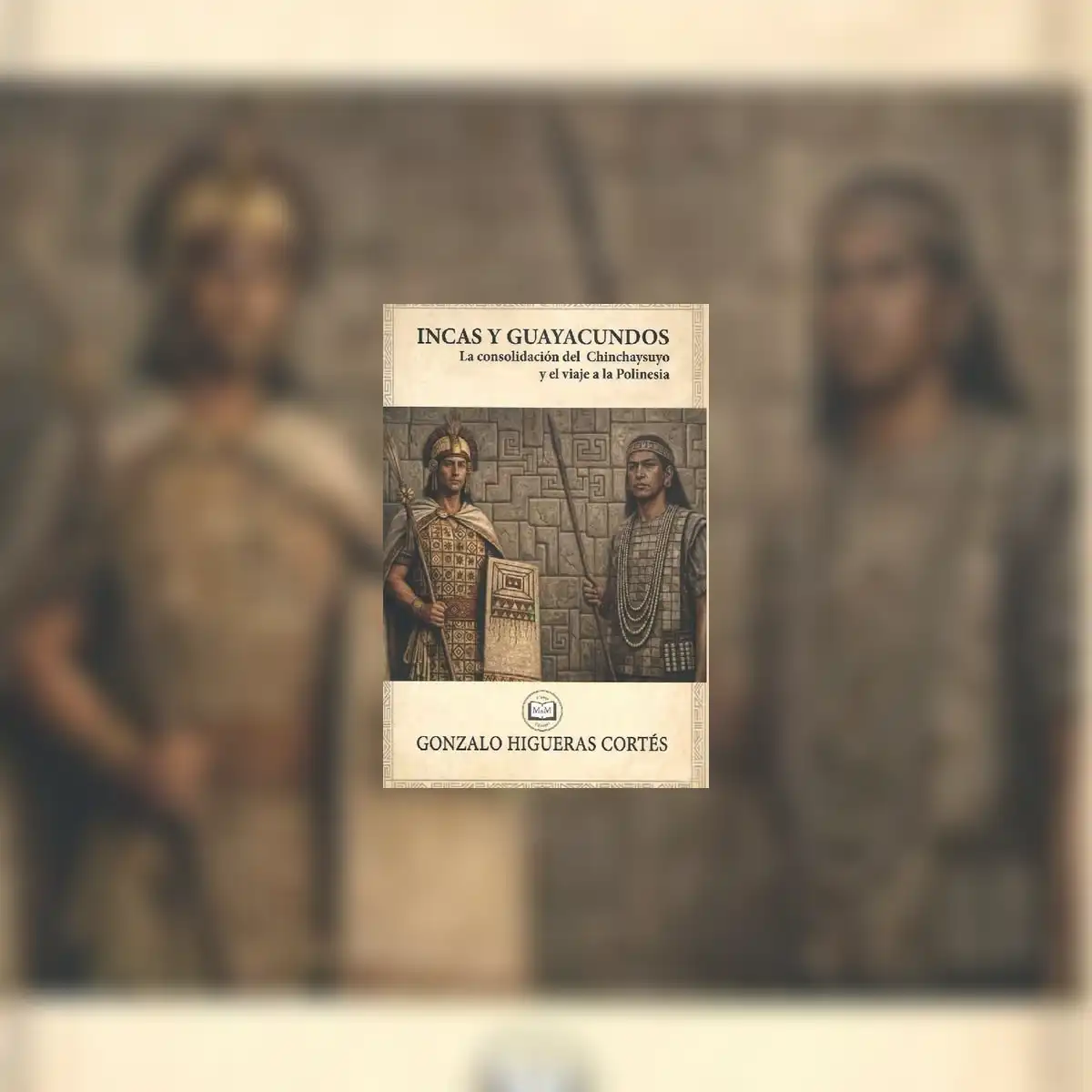
The Municipality of Piura will name author and composer Gonzalo Higueras Cortés an illustrious citizen on Thursday, August 13, during a week of celebrations for the city. Higueras will also present his new novel, Incas y Guayacundos, on Friday, August 14, ahead of the 494th anniversary of Piura on Saturday, August 15.
All of Higueras' creative output is inspired by Piura. Alongside his published novels, he has composed more than 100 musical pieces, including waltzes and tonderos. He explained that both his literary and musical work aim to highlight Piura's major contributions to Peruvian culture, which he said have not been properly recognized or told.
New novel and ethnic trilogy
Incas y Guayacundos is the seventh novel by Higueras and his third focused on Piura ethnic groups. The book completes a trilogy on regional history alongside his earlier novels El primer vicús and El último tallán. Higueras said he wrote the trilogy to showcase little-known historical events from the region's past.

The new novel details the Inca conquest ordered by Pachacútec, who directed his son Túpac Yupanqui to conquer Chinchaysuyo in the northern highlands. Túpac Yupanqui expanded his territory until reaching the Guayacundos, a macro-ethnic group consisting of the Ayahuacas, Huancapampas, and Caxas, which also extended into part of modern-day Ecuador.
Túpac Yupanqui reached a political agreement with the Guayacundos. Higueras highlighted the historical figure Apo Guacall, a character in the novel who played a key role in consolidating the Inca Empire in the north. During that campaign, the 25-year-old Túpac Yupanqui reached Manta and traveled to Polynesia.
Critique of Peruvian history teaching
Higueras criticized how Peruvian history is taught in schools, stating that standard accounts overlook major events between Spanish explorer Francisco Pizarro's arrival and his defeat of Atahualpa in Cajamarca. He noted that Pizarro first arrived on an expedition in 1528, four years before the widely cited founding date of 1532. Pizarro returned to Spain with four native people, derogatorily termed reyezuelos, including Felipillo.
Despite historic figures such as naval hero Miguel Grau and writer Miguel Gutiérrez, Higueras said Piura has not received the prestige it deserves. He recalled that Gutiérrez, a close friend whom he ranked among the top 10 Peruvian fiction writers of the 20th century, once mentioned a sense of rejection toward Piura. Higueras attributed this to a lack of complete historical knowledge and a missing unified cultural discourse.
Cultural identity and inspiration
Higueras said he drew early creative inspiration from oral tales, songs, and the lights of the port of Paita. He described Piurans as noble, hard-working people without malice, a spirit he sought to capture in his works about the Tallanes ethnic group.
Reflecting on being named an illustrious citizen, Higueras stated that he began writing and composing solely to share the virtues of Piura. He added that he never expected official recognition and that his books and songs represent his deep affection for his homeland.