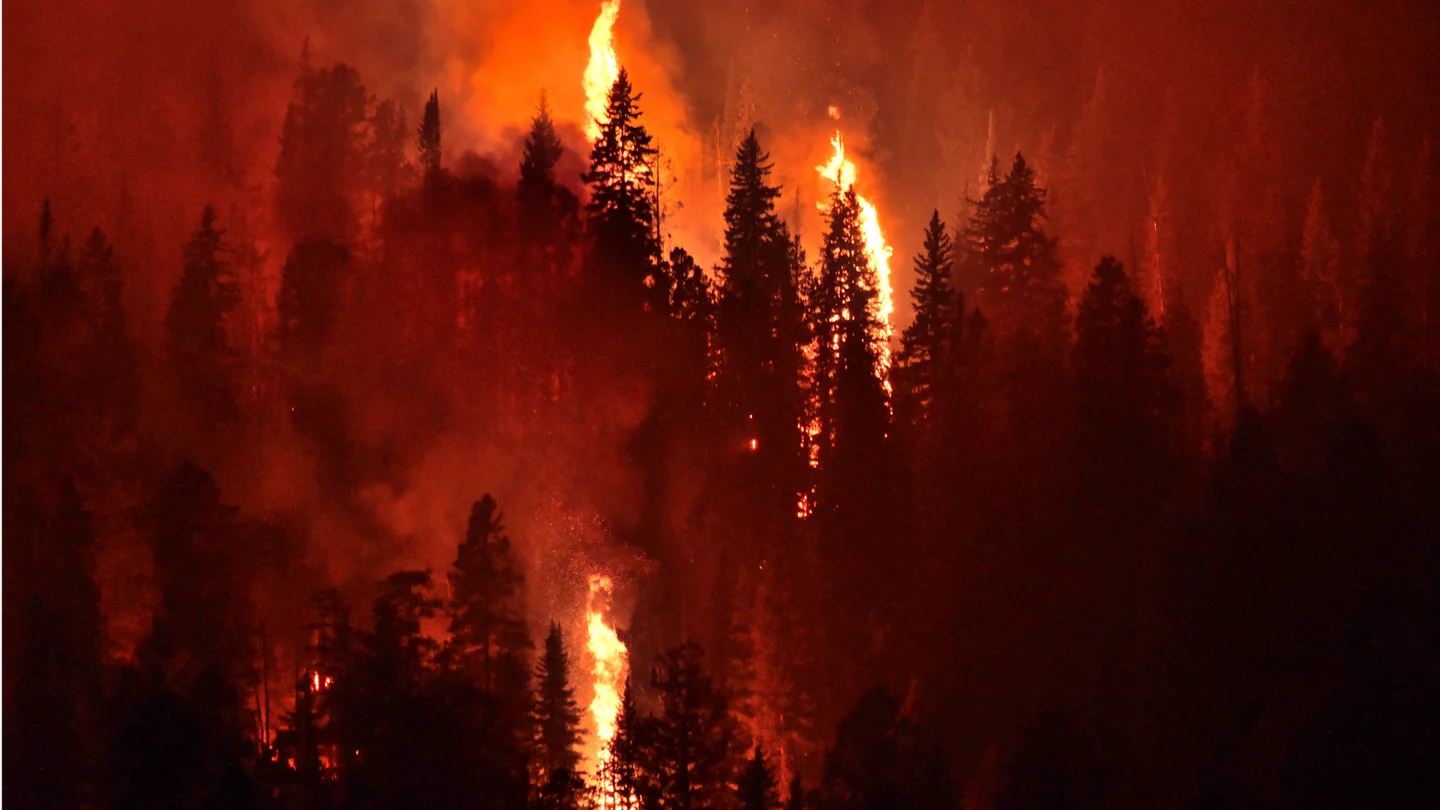
Wildfire activity across Europe could nearly triple by the end of the century under high carbon emissions, researchers at the Potsdam Institute have warned.
In a high-emissions scenario where global temperatures rise by approximately 3.6 °C, the area burnt by fires across the continent could increase by 192%, according to modeling published in the journal Global Change Biology.
The warnings come as more than 550,000 hectares of land have already burnt across the European Union between January and August 12, 2026. That figure represents nearly 2.5 times the 20-year European average.
Spain has been particularly severely affected in 2026, with more than 265,000 hectares destroyed in over 40 major wildfires. The fires have claimed more than a dozen lives and displaced thousands of residents, contrasting with less than 190,000 hectares burnt in Spain during 2025.
Kirsten Thonicke, a scientist at the Potsdam Institute for Climate Impact Research and co-author of the study, said fires in France, Spain, and Greece demonstrated how quickly hot, dry, and windy weather could push firefighters and their resources to the brink. Maik Billing, a researcher at the institute and lead author of the study, noted that climate change was driving up fire activity across Europe.
The Potsdam Institute for Climate Impact Research, based in Potsdam, Germany, is a government-funded research institute dedicated to climate impact, sustainability, and global change modeling.
Projections under low and high emissions
The study evaluated potential fire progression based on global temperature management. Billing said findings indicated widespread increases in burnt areas even under comparatively low global warming of around 1.8 °C, which would result in a 39% increase in burnt area compared to current averages.
Under the higher emissions scenario known as SSP3-7.0, with temperatures rising by about 3.6 °C, fires would become much more prevalent. Billing explained that this increase would heavily impact the Mediterranean and large parts of western and central Europe, including regions that had previously experienced few fires. Researchers noted that current global trends appear closer to the higher emissions trajectory.
Global Change Biology is a monthly peer-reviewed scientific journal that covers biological research on climate change and environmental transformations. Study co-author Thomas Hickler is a scientist at Senckenberg, a major German natural history and biodiversity research institution based in Germany.
Fire management investments and limits
The research team also modeled the potential impact of improved fire management strategies, such as brigade training, equipment upgrades, prescribed burning, and alternating agricultural land with forested areas. Hickler said fire conditions were worsening, which made increased investment in fire management essential. He added that while projections showed management investment could make a significant difference, extreme fires could cause containment capacity to collapse, noting that recent record fires in France showed past experience was no longer a reliable guide.
According to the study, expanding fire management capacity could reduce burnt area by up to 92% if global temperature increases are limited to 1.8 °C. However, under a 3.6 °C temperature increase, even maximum management efforts would only reduce burnt area by up to 72%.
Thonicke concluded that climate conditions could become so extreme that humanity would reach limits in preventing and combating fires once they reached a certain size. She emphasized that cutting greenhouse gas emissions was essential alongside strengthening local fire management to counter long-term wildfire risks.