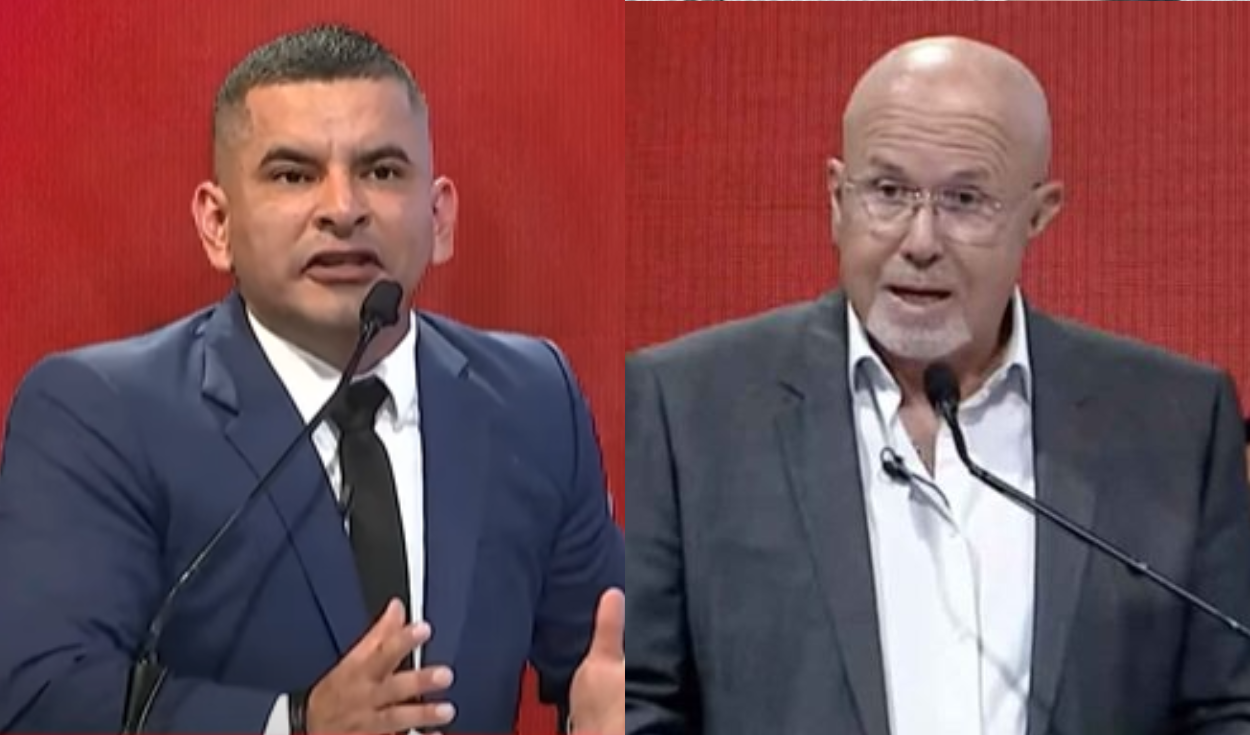
Lima mayoral candidate Elio Riera attacked rival candidate Carlos Bruce during a municipal election debate after footage surfaced showing Bruce firing a stun gun at an adviser.
Riera, representing the Alianza para el Progreso party, raised the incident during the second session of the debate for the capital city leadership. He criticized Bruce, who is running for the Somos Perú party, over video footage showing him discharging an electric weapon against his adviser Arturo Bobbio.
Riera said he was tired of politicians who enjoyed shooting and electrocuting their staff. He added that such candidates did not represent him and called it chaotic and atrocious to laugh at the distress and agony of other people.
Alianza para el Progreso is one of Peru's prominent political parties, while Somos Perú has historically held strong representation in municipal governance across the nation. The Lima mayoral race has drawn intense competition among political figures seeking to manage the capital city of nearly ten million residents.
Clash Over Municipal Security Proposals
During the debate, Riera also targeted public safety platforms presented by his rivals, calling their security proposals unviable and technically flawed. He specifically rejected Bruce's proposal to create a dedicated municipal police force to combat urban crime in Lima.
Riera explained that municipal watchmen, known in Peru as serenazgo, cannot be granted official duties of the National Police without prior legal changes. He warned that candidates were proposing to apply one-year legal contradictions within a single month, which he said was impossible without amending the Penal Code.
In addition, Riera criticized a security plan put forward by candidate Daniel Urresti, a retired military general who proposed hiring 100 specialized Terna police teams through the municipal government.
Riera warned that Urresti's proposal would illegally invade the jurisdiction of the Ministry of the Interior. He said generals who propose models fitting the role of the Interior Ministry do not represent him, arguing that local governance requires administrative management rather than overlapping security functions.
Under Peruvian law, public policing and criminal investigations fall strictly under the authority of the National Police of Peru and the Ministry of the Interior. Municipal serenazgo forces are funded by local district councils to support street order, but they lack police powers such as carrying firearms or conducting formal arrests.
The Terna units, officially part of the National Police intelligence division, operate in plainclothes to intercept street crime in urban centers across the country.
Riera further criticized political figures who abandon municipal management to run for other public offices, questioning those who leave city posts before completing their terms.
Electoral Authority Addresses Candidate Legality
The debate took place as the National Jury of Elections, Peru's highest electoral tribunal, addressed legal challenges surrounding candidate qualifications for the 2026 municipal elections.
JNE President Roberto Burneo clarified that the tribunal plenary confirmed the legality of former mayors running for municipal council positions as first regidores. A 2018 electoral reform prohibited immediate re-election for incumbent mayors, prompting several former district leaders to seek council seats on party ballots.
However, Burneo noted that the electoral tribunal has not yet decided whether former mayors elected as first regidores will be legally permitted to assume the mayoral seat if the elected mayor resigns or faces impeachment.
Burneo stated that the tribunal will rule on approximately 135 registered cases across the country involving former mayors under this condition. He emphasized that the electoral body will issue its decisions independently and without yielding to political pressure.
Security Risks and Climate Challenges
Burneo also expressed condolences following the murder of candidate Suzy Aponte in the northern region of Áncash. The killing has heightened concerns over candidate safety during the election campaign.
While the JNE does not provide direct security protection for individual candidates, Burneo explained that the authority has deployed more than 80 multisectoral commissions nationwide to monitor and prevent electoral violence.
Burneo added that the regional commissions are also tasked with evaluating operational risks linked to the El Niño climate phenomenon. Severe weather patterns associated with El Niño frequently cause flooding and damage infrastructure across Peru, presenting logistical hurdles for election organizers.