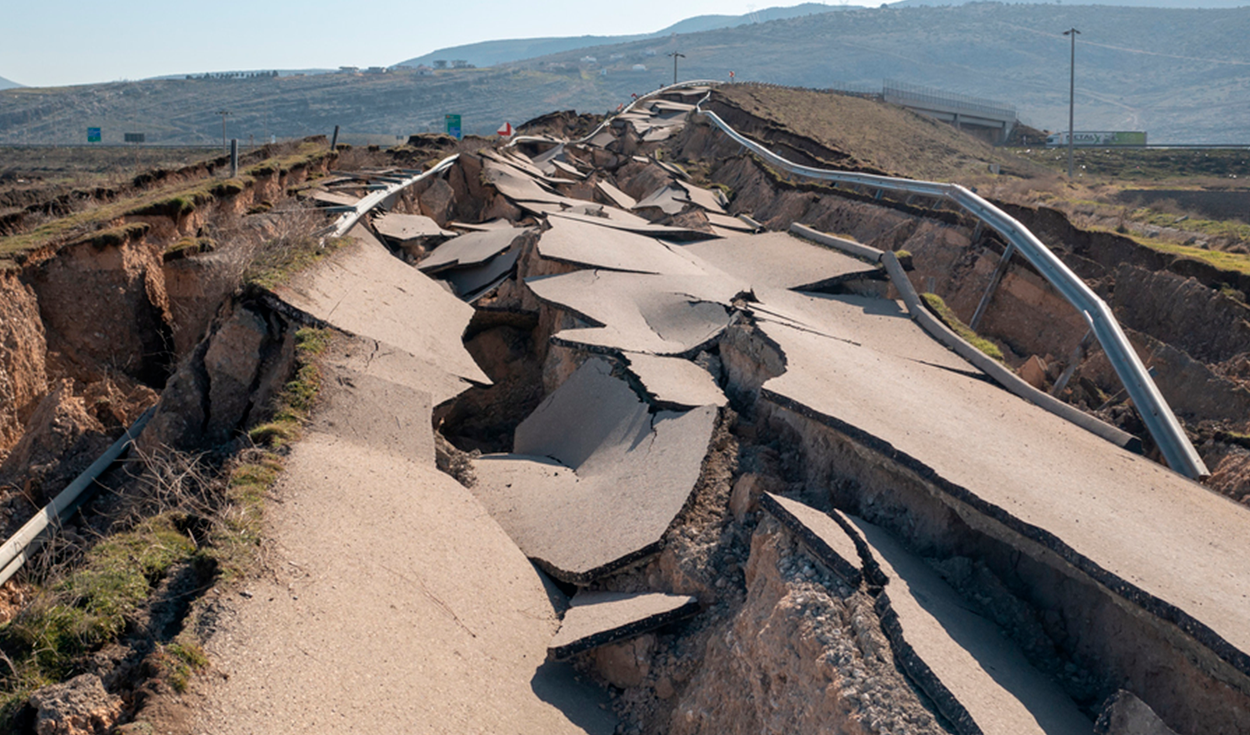
Physicists at the Hebrew University of Jerusalem have discovered a hidden mechanism that explains how earthquakes begin with a slow, silent stage before releasing destructive seismic waves, according to a study published in the journal Nature.
Researchers led by Jay Fineberg found that before a fault releases a massive burst of energy, a small internal contact zone begins to break slowly without generating the ground shaking typically felt during a tremor.
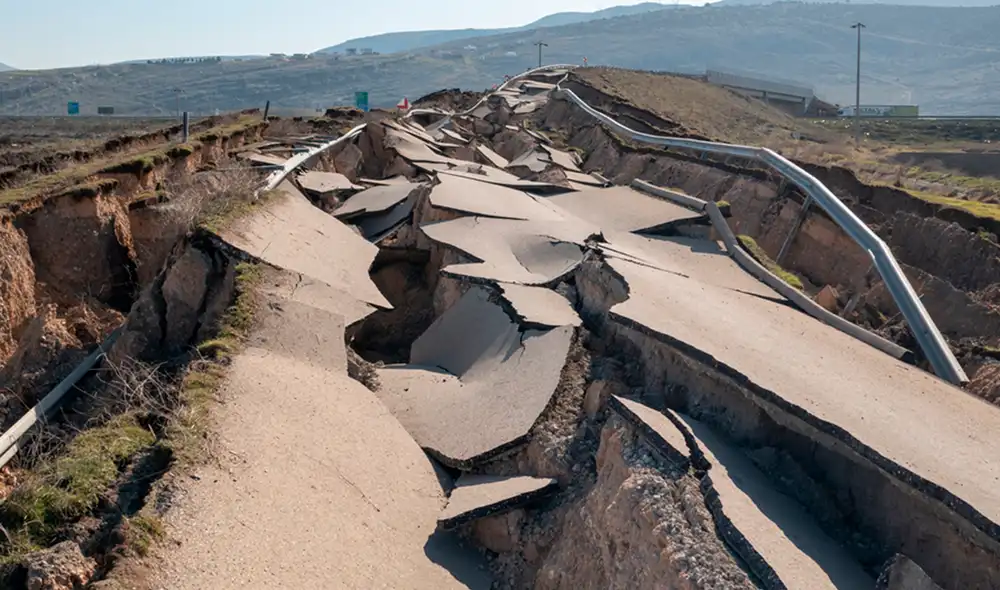
When two tectonic plates slide past each other in opposite directions, the forces driving their movement can become locked at a fragile area along the fault interface. Stress builds up steadily at this locked region until the contact layer starts to yield, but the resulting fracture does not happen instantaneously.
The Hebrew University of Jerusalem, founded in 1918 in Israel, conducted the research using specialized laboratory experiments to simulate fault line mechanics. The study appeared in Nature, one of the world's leading peer-reviewed scientific journals.
Fineberg explained to Live Science that the fracture process cannot occur suddenly because a seed crack must form first. To model this phenomenon, his research team used sheets of polymethyl methacrylate, a transparent synthetic plastic commonly known as plexiglass.
Plexiglass is frequently used in physics research to model brittle materials because its fracture mechanics closely mirror rock behavior under stress. The researchers subjected the plastic sheets to lateral forces similar to those acting on a strike-slip fault, such as California's San Andreas Fault, where two tectonic blocks slide horizontally past one another.
The nucleation front and fracture growth
The team had previously identified an initial phase called the nucleation front. This precursor phase acts as a seed for the future crack, moving across the contact surface at speeds much slower than a conventional rupture.
During the nucleation phase, the fault does not release enough kinetic energy into the surrounding rock to produce seismic waves. As a result, the early stage of the process remains entirely silent to sensors on the surface.
The new research resolved a theoretical difficulty that had previously puzzled the team. Mathematical calculations revealed that the nucleation front should be modeled as a two-dimensional patch growing within the contact plane, rather than as a simple single line.
This spatial distinction is fundamental to how earthquakes develop. While the expanding fractured patch remains within the boundaries of the fragile zone, the energy required to extend the rupture increases in direct proportion to its perimeter, keeping the expansion slow and stable.
Transition from silent movement to explosive rupture
Fineberg stated that the underlying mechanism applies across different materials because the fundamental physics controlling the process remains identical. He noted that the composition of the contacting tectonic plates does not alter the outcome, as the same physical process occurs regardless of rock type.
The decisive transition occurs when the expanding fracture patch grows beyond the boundaries of the fragile region. Once the crack crosses this boundary, the energy cost needed to create additional broken surface area stops increasing at the same rate, pushing the system into energy surplus.
Fineberg explained that this surplus energy drives the explosive movement of the crack. The fracture rapidly accelerates to speeds approaching the speed of sound, releasing kinetic energy and creating the powerful seismic waves that cause destructive shaking.
The findings open new possibilities for researchers aiming to detect signals that mark the transition from an aseismic phase to a seismic rupture. However, Fineberg and his colleagues noted that identifying these signals in natural faults remains difficult, as some geological faults exhibit slow movements for extended periods without ever triggering a major earthquake.