The Dominican Republic now expects to declare its first rare earth reserves in the first half of 2027, Energy and Mines Minister Joel Santos said, pushing back a target the government had originally set for 2026.
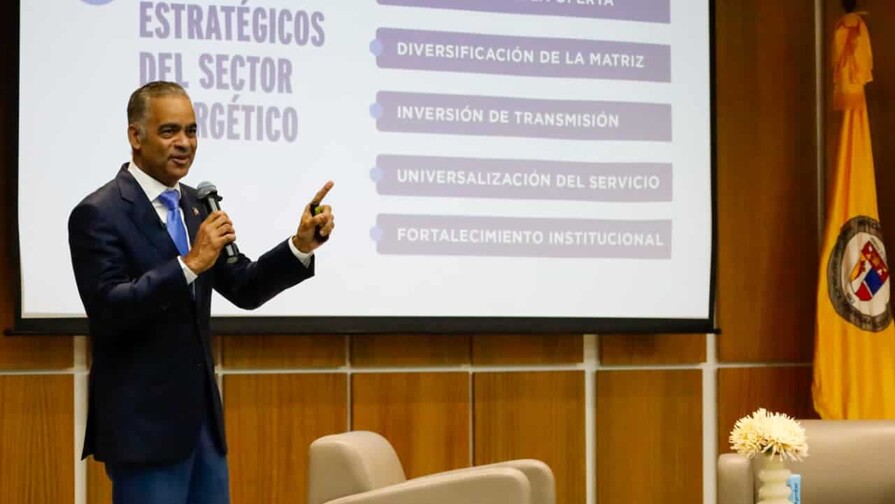
Santos gave the update during a conference titled "Progress and Outlook for the Electrical and Mining System in the Dominican Republic," delivered to students at the Pontificia Universidad Católica Madre y Maestra in Santiago.
In April 2025, during a tour of mining exploration zones in Pedernales, Santos had said the country would be able to determine its mineral resources by the middle of that year and declare its first reserves by the end of 2026. The timeline has since shifted more than once.
The minister said more than 5,000 samples have been analyzed during the exploration process, helping officials gauge the potential of the mineral deposits.
Rare earths are a group of 17 chemical elements used across strategic industries, prized for their ability to improve efficiency and reduce the weight of technological equipment and devices. Santos said demand for the minerals has grown alongside new technologies and their use in security and military applications.
Mining's role in the economy
Santos also highlighted the performance of the mining sector, which grew 17% in September 2026 and posted a cumulative expansion of 5.2% for the year.
Gold remains the Dominican Republic's leading export product, with sales of $2,392 million between January and September of this year, exceeding the amount recorded over the same period in 2025.
Santos described mining as a kind of natural hedge for the Dominican economy, since international gold prices tend to keep the sector active during periods of global economic uncertainty. He pointed to the Covid-19 pandemic as an example, when rising gold prices helped generate resources that supported economic assistance programs and wage payments.
Electric grid challenges
Earlier in his presentation, Santos addressed the challenges facing the electricity sector as economic growth changes household and business energy consumption patterns.
He said energy demand is rising as homes and businesses adopt more air conditioners and other electrical equipment that require greater power availability. The country needs to jointly strengthen generation, transmission, distribution and regulation to meet that demand, he said.
Santos noted that installed renewable generation capacity rose from 555 megawatts in 2020 to more than 2,000 megawatts in 2026, a fourfold increase in six years.
He also said the government aims to add at least 800 megawatts of energy storage by 2028, allowing solar electricity generated during the day to be used at night.
Among the initiatives to improve distribution, Santos cited planned investments in meters, transformers, networks and substations worth $750 million over the next two years.
He also said the government plans to install 251,000 streetlights in communities across the country between 2027 and 2028, rehabilitate 1,800 kilometers of power lines, and upgrade 18 substations.
The event was attended by members of the government's electricity team and civil authorities from the province.
What happens next
The government plans to declare the country's first rare earth reserves in the first half of 2027, add 800 megawatts of energy storage by 2028, and install 251,000 streetlights between 2027 and 2028.
Test yourself
When does the Dominican Republic now expect to declare its first rare earth reserves?
How many samples has the government analyzed in the Pedernales exploration zone?
What were the Dominican Republic's gold exports worth between January and September 2026?
Have your say
Should governments prioritize developing domestic rare earth reserves even if it takes years longer than planned?
Where it happened
Santiago, Dominican Republic