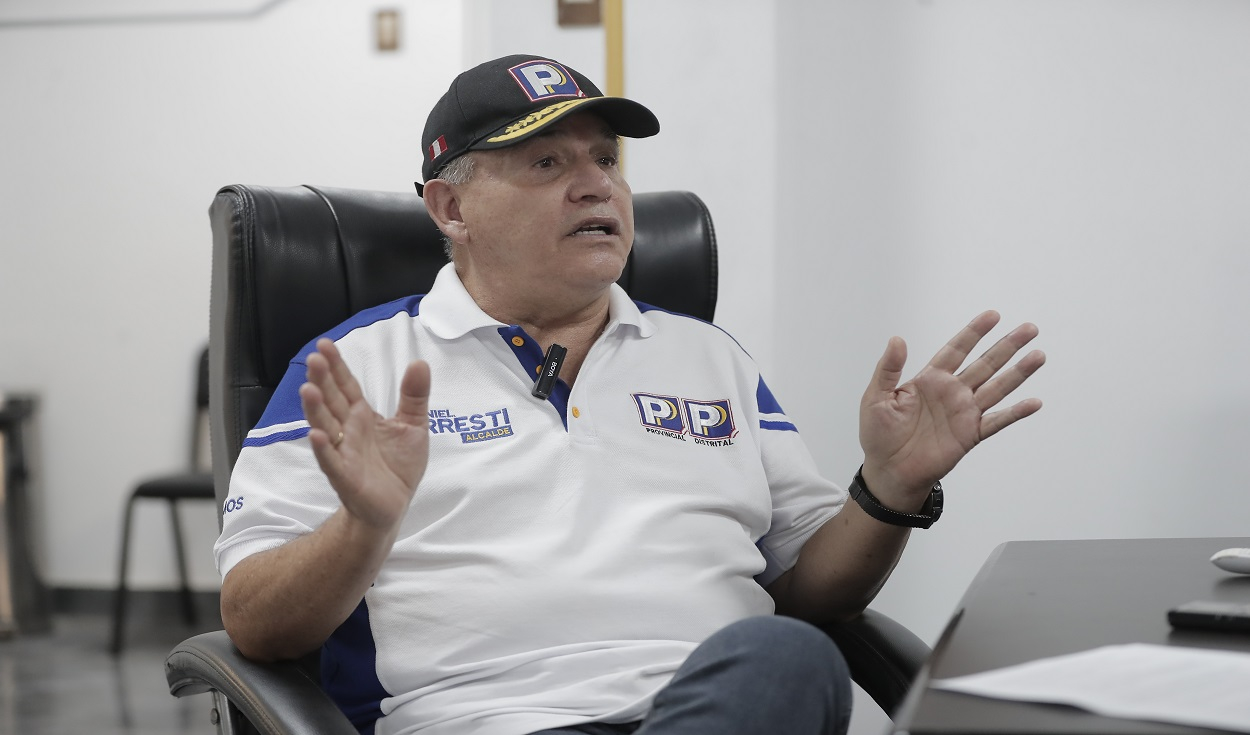
Former Peruvian Interior Minister Daniel Urresti has launched his campaign for mayor of Lima under the Podemos Peru party while demanding a new trial over the 1988 murder of journalist Hugo Bustios.
Urresti said his release from prison earlier this year following a ruling by Peru's Constitutional Court was not enough, as he has petitioned the Inter-American Commission on Human Rights in Washington to order a fresh trial that establishes his complete innocence.
Urresti spent three years in prison before the court annulled his 2023 conviction, a period he described as purely a loss of time that did not change his outlook or moderate his political stance. While imprisoned, he engaged in reading, writing, and workshops in welding and ceramics, drafting a two-part book detailing his military intelligence service in Ayacucho and his legal defense.
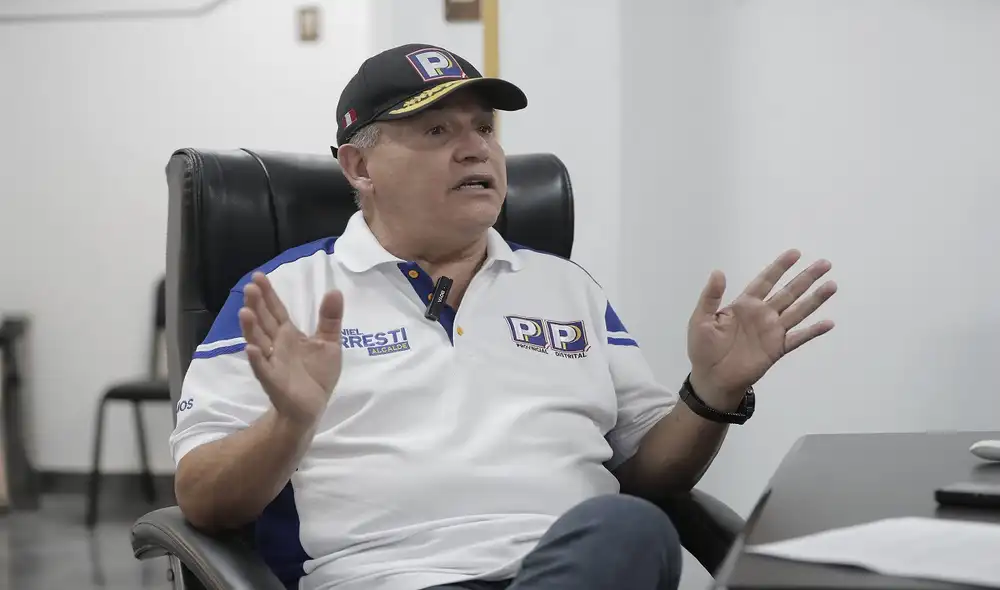
The first section of his book recounts his service as an intelligence officer at the Castropampa Base during the conflict against the Shining Path guerrilla movement, including precautions taken to avoid insurgents, such as an officer growing a beard and wearing dark glasses. The second section sets out his legal argument regarding the Bustíos case, which forms the basis of his petition to international human rights authorities.
Legal battle and human rights petition
Peru's Constitutional Court annulled Urresti's conviction under Law 32107, authored by lawmaker Fernando Rospigliosi, which established that the statute of limitations had expired for crimes not typified before 2002 and cited violations of legal principles. Urresti rejected suggestions that he owed his freedom to Fujimorismo, pointing out that Congress approved the legislation beyond the party's 20 to 21 votes.
Urresti called his 2023 conviction despicable, arguing that judges improperly convicted him as a co-author despite charging him as a direct author. He told reporters that settling for dismissal on statute of limitations grounds was unacceptable because he maintains his innocence.
In his petition to the Inter-American Commission on Human Rights, Urresti asked for an investigation into the trial judges and a court order requiring Peru to conduct a new trial. He argued that judges altered established facts from a 2007 ruling that convicted two military officers, changing patrol sizes, crime scene locations, and firing angles in violation of binding international precedent set in the Barrios Altos and La Cantuta cases.
Urresti dismissed accusations from co-defendant Amador Vidal Sambento, asserting that Vidal admitted under oath he only assumed Urresti was involved to seek a case review after the Supreme Court denied his appeal. Urresti explained that as an S2 staff officer at Castropampa Base he had no troop command, never engaged in combat, and never fired a weapon, while supporting specialized Police-Military Tribunals for service-related offenses while keeping common crimes in civilian courts.
Podemos Peru party reorganization
Urresti is running on the Podemos Peru ticket, a party he has belonged to for a decade and describes as a pragmatic center movement favoring a free-market economy with a social focus. The party entered a complete reorganization and dissolved its congressional caucus after founder Jose Luna Galvez received 1.5 percent of the vote in the presidential election.
Urresti emphasized that he operates independently in his municipal campaign, noting that Luna Galvez took a week of rest following the election before returning to his private business activities. He addressed criticisms of Luna's former private university Telesup, which SUNEDU closed four to five years ago for failing quality standards, stating the institution complied with all regulations and represented only one part of Luna's diversified business holdings.
Urresti also defended party member Jose Luna Morales, who is running for mayor of San Juan de Lurigancho after previously serving as Urresti's candidate for first councilor. Urresti noted that Luna Morales holds a master's degree, owns import and export businesses, and grew up in the district, adding that an ongoing investigation into 2003 book contracts at Alas Peruanas university remains in its initial stages without any finding of guilt.
Security proposals for Lima
Urresti outlined a municipal security plan based on the police's Plan Mariano Santos 2030 and consultations with operational commanders, proposing to contract 1,000 patrol vehicles through renting rather than purchasing. He also proposed hiring 600 police officers on their off-duty days and vacations to form 100 specialized Terna undercover teams under the Escuadrón Verde.
Urresti explained that Terna units focus on catching criminals in flagrante delicto through tactical surveillance and filming, recalling that he expanded these units as Interior Minister before subsequent administrations neglected them. He claimed that 95 percent of footage used in television programs such as Renzo Reggiardo's Alto al crimen came from Terna officers, joking that Reggiardo acted essentially as a cameraman for the squad.
To decentralize police operations from central Lima, Urresti proposed constructing four Metropolitan Security and Justice Megacomplexes across Lima Norte, Lima Sur, Lima Este, and Lima Centro. These super police stations would house operational and specialized police units, flagrancy centers, prosecutor and judge offices, criminalistics laboratories, and holding cells.
Municipal debt and campaign strategy
Urresti rejected statements by rival candidates Carlos Bruce and Francis Allison and reports from the Fiscal Council that Lima is bankrupt with 5 billion soles in debt. He criticized incumbent Mayor Rafael Lopez Aliaga for issuing 4 billion soles in municipal bonds, double the city's annual revenue of 2 billion soles at the time, which resulted in a 10.1 percent interest rate due to lack of central government backing.
According to Urresti, the municipal bond issue will cost the city 8.3 billion soles over 20 years, requiring 500 million soles annually in payments over the next four years. He insisted his security plans are affordable because Lima collects 1.7 billion soles in direct tax revenue and receives between 500 million and 600 million soles from the Ministry of Economy and Finance, providing an annual operating budget of 2.2 billion to 2.3 billion soles.
Addressing his campaign style, Urresti explained that he recorded a viral rap video referencing Calle 13 with his communications team to respond to criticisms from leading candidates. He described himself in the track as argumentative and having street smarts from growing up in San Martín de Porres and attending Jose Granda high school after moving from Huancabamba, Piura.
Urresti concluded that he expects to pursue both of his goals simultaneously, seeking election as mayor of Lima while waging a legal battle for full exoneration before international bodies that he estimated will take at least two years.