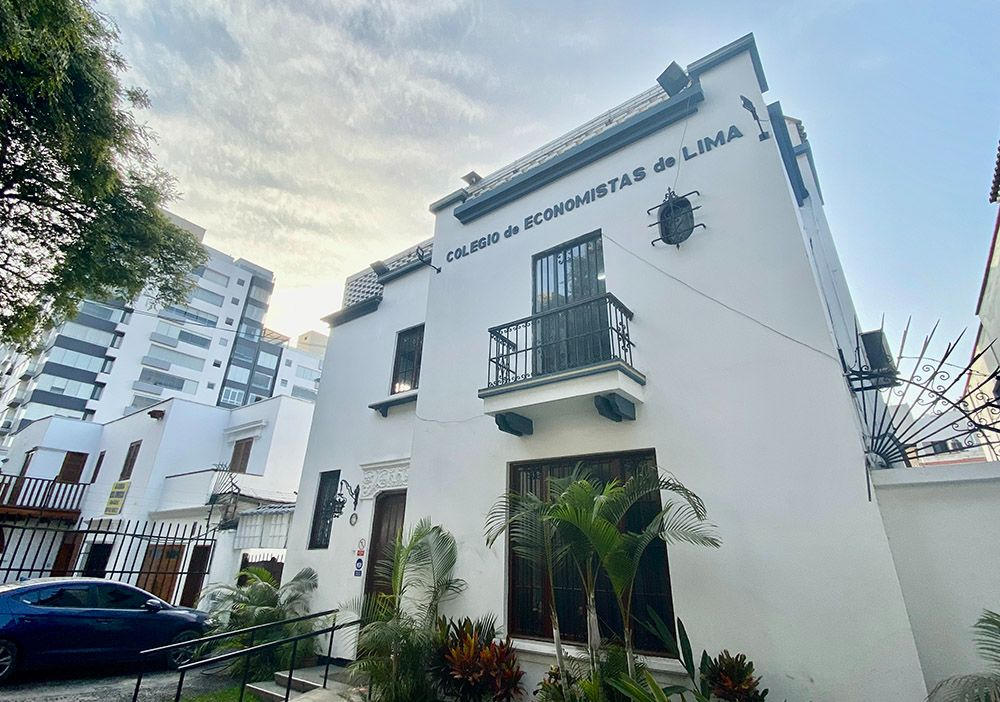
The Colegio de Economistas de Lima has filed unconstitutionality lawsuits before Peru's Constitutional Court against two parliamentary pension laws that it warns will severely compromise the country's financial sustainability.
The professional body announced that its directorial council voted on March 25, 2026, to challenge Law No. 32561 and Law No. 32581. The legal action follows concerns raised in Communiqué No. 02 - CD-CEL/2026, issued by the organisation in March 2026, regarding legislation enacted by the Congress of the Republic.
The economists stated that both legislative measures violate Article 79 of the Peruvian Constitution, which explicitly prohibits members of Congress from creating or increasing public spending through legislative initiatives.
The Colegio de Economistas de Lima is an autonomous professional body representing economists in the Peruvian capital. Under Article 203, clause 8, of the Constitution of Peru, official professional colleges hold the legal authority to bring actions of unconstitutionality directly before the Constitutional Court, the country's highest tribunal on constitutional matters.
Constitutional Concerns and Fiscal Impact
According to the Colegio de Economistas de Lima, both laws had previously been observed and returned to Congress by the Executive Branch due to technical deficiencies. However, Congress approved both measures by insistence without resolving the technical objections, prioritizing social objectives while leaving constitutional risks unaddressed.
The council noted that both laws reinstate pension leveling mechanisms comparable to the repealed Cédula Viva system, a legacy public sector pension scheme. The economists stated that restoring these schemes violates the First Final and Transitory Provision as well as Article 79 of the Constitution.
The organization emphasized that the laws completely lack actuarial studies and fail to identify real funding sources, which it described as an essential prerequisite for constitutionality.
The legal petition cited data from the Consejo Fiscal, an independent technical advisory body that monitors public fiscal policy in Peru. Analysis by the fiscal council indicated that Law No. 32561 imposes a present-value financial burden of 14,800 million soles on the pension regime of the Armed Forces and National Police.
In addition, the economists highlighted figures showing that Law No. 32581 creates an unbudgeted annual cost of at least 8,000 million soles within the national teaching sector.
Systemic Economic Risks and Pension Reform
The Colegio de Economistas de Lima warned of systemic risks to the national economy if similar pension criteria are extended to Peru's more than 1.2 million public servants. Under such a scenario, the annual fiscal burden would exceed 23,000 million soles, representing 2.5 percent of gross domestic product.
The organization stated that an expansion of this scale would destabilize public finances and endanger Peru's international investment grade status. It added that pursuing better pensions must occur within strict constitutional boundaries, without placing the welfare of future generations at risk.
The economists clarified that filing the unconstitutionality lawsuits does not suspend any existing pension rights or eliminate benefits currently received by retirees, as only the Constitutional Court has the authority to rule on their repeal.
Acknowledging the precarious condition of Peru's current pension system, the body stated that all older adults deserve equal protection rather than selective measures for specific sectors. The Colegio de Economistas de Lima urged both the Executive Branch and Congress to advance a comprehensive pension reform that is technically sound, equitable, and fiscally sustainable.