Researchers have digitally reconstructed the face of Conquest Man, an 11th-century man buried at St Peter's Church in Barton-upon-Humber, Lincolnshire, after ancient DNA analysis.
The skeleton of the man was discovered 50 years ago inside the church, which was historically connected to one of the knights of William the Conqueror. Skeletal examinations show that the man died between the ages of 50 and 60, measured slightly over 152 centimetres tall, had a muscular physical build, and had suffered multiple bone fractures that had healed before his death.
To recreate his physical appearance and investigate his life history, researchers combined ancient DNA testing, isotope analysis, and digital facial reconstruction techniques. The scientific results indicate that his ancestry was far more diverse than the traditional historical division between Anglo-Saxons and Normans.
Barton-upon-Humber is an ancient parish on the southern bank of the River Humber in northern Lincolnshire. St Peter's Church is famous for its surviving Anglo-Saxon architecture, including a landmark tower constructed prior to the Norman Conquest. Bioarchaeological techniques such as isotope analysis evaluate chemical elements fixed in teeth during growth, allowing scientists to track past movement and dietary changes across early medieval Europe.
Scandinavian Burial Traditions
Genetic analysis revealed that Conquest Man possessed significant ancestry from continental Europe. In addition, chemical traces preserved in one of his teeth show that he spent part of his adolescence in a region with a colder climate before relocating to northern England.
His burial arrangements also reflected distinctive cultural traditions. Conquest Man was buried in a wooden coffin made from an oak tree cut down around 1079. His head was rested on a pillow of grass supported by two fragments of local chalk, and three apple-wood sticks were placed beside his body.
Archaeologists associate the placement of apple-wood sticks with Scandinavian funeral customs. The grave was situated inside St Peter's Church, which served as the private church of a knight who served William the Conqueror. However, the church building itself was erected before the Norman invasion of 1066.
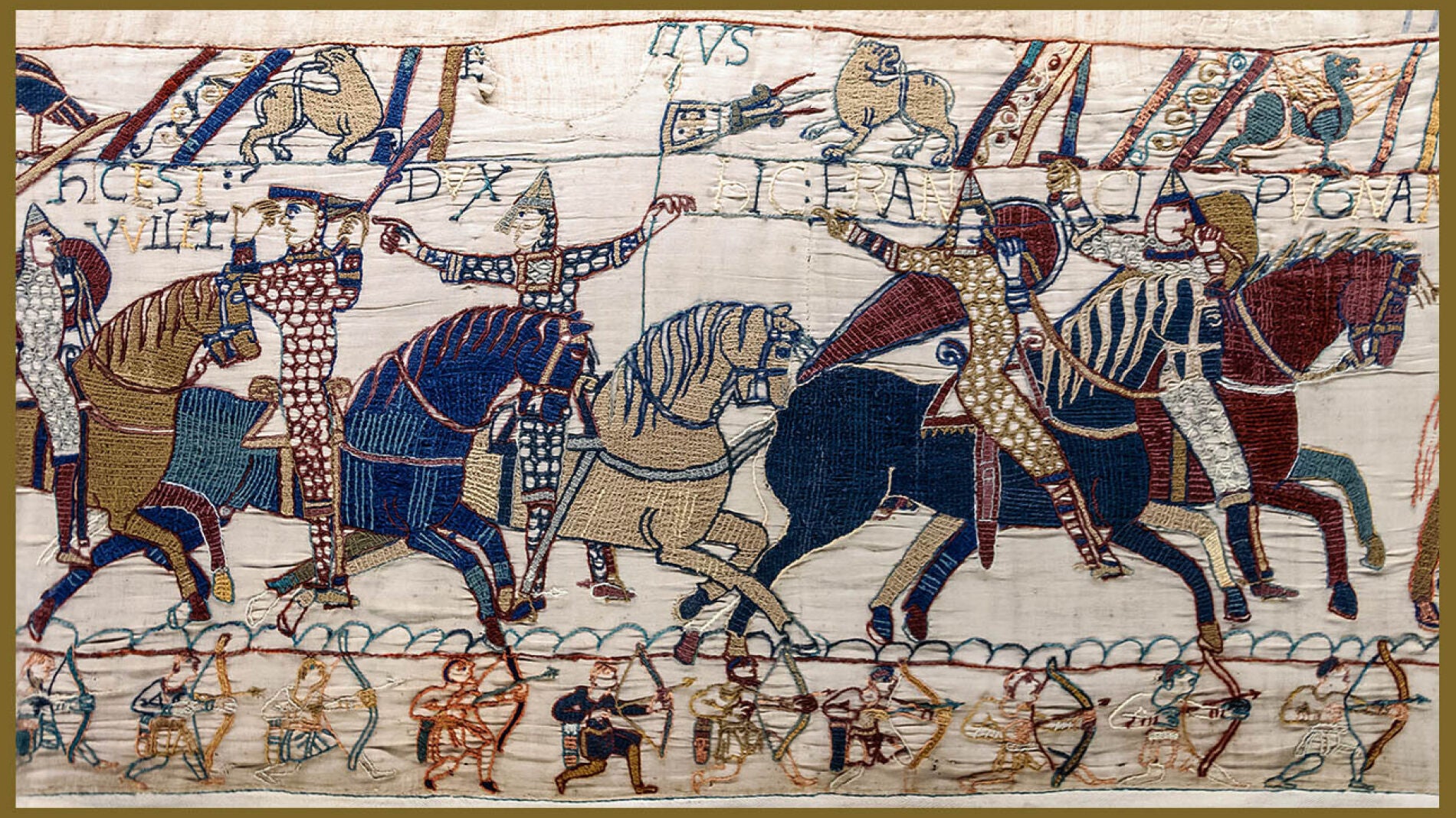
The Bayeux Tapestry, an embroidered cloth created in the late 11th century, illustrates the Norman Conquest of England led by William, Duke of Normandy. During the conquest, Norman forces defeated King Harold Godwinson at Hastings, leading to widespread reallocation of land and estates to Norman nobles and knights across England.
Identity in Norman England
Kevin Booth, senior curator of collections at English Heritage, has investigated the remains of Conquest Man for 20 years. One unresolved mystery Booth is attempting to answer is whether the man took part in the Battle of Hastings in 1066.
Booth said researchers do not know whether the man was Saxon or Norman. He added that the man may have been neither, but rather an individual who carried both continental and Scandinavian influences.
Researchers believe the man was born during the reign of Cnut, the Danish king who ruled England between 1016 and 1035. If that estimate is accurate, he would have lived through the Norman Conquest and the extensive social and political shifts that followed William taking the English throne.
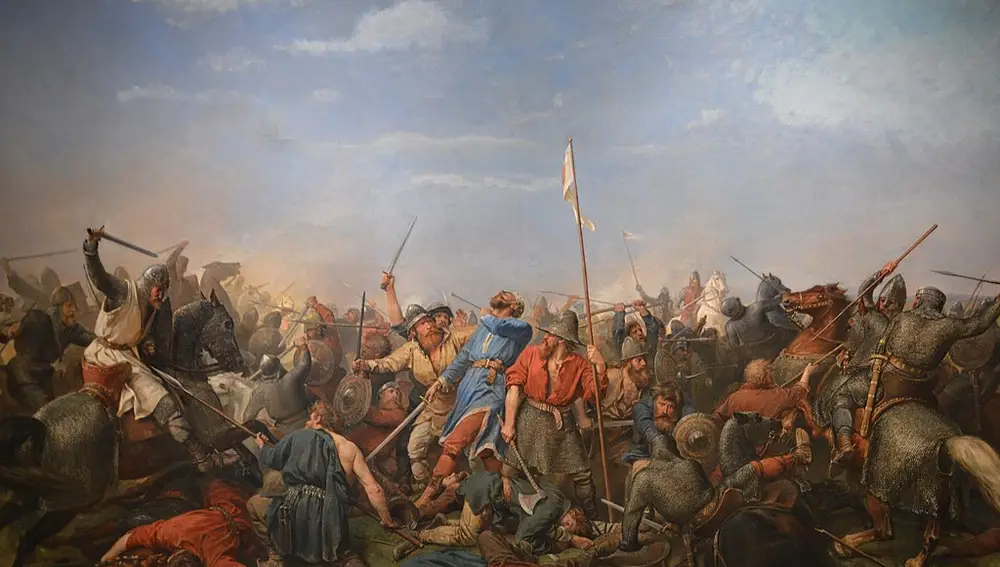
King Cnut the Great established a North Sea empire that united England, Denmark, and Norway under a single crown. His reign encouraged extensive trade, migration, and cultural interaction between Scandinavian populations and eastern English communities prior to the arrival of the Normans.
Complex European Connections
Sarah Stark, a human skeletal remains specialist at Historic England, said the scientific evidence does not point to a single location of origin. She stated that the skeleton, burial style, DNA, and isotope tests together indicate a person with connections across multiple European regions.
Experts have outlined two potential scenarios for his origins. He may have moved to Barton-upon-Humber at some point during his life, or he may have been born in the town within a community that already held established contacts with the European continent.
Stark noted that the specific manner of his burial demonstrates that the traditions surrounding his interment were known to the local community and held meaning for them. Researchers concluded that his life demonstrates that identity in 11th-century England was far more complex than a rigid divide between Saxons and Normans.
English Heritage manages more than 400 historic monuments, buildings, and sites across England, including St Peter's Church. Historic England functions as the public body responsible for protecting and documenting the historic built environment of the nation.
Public Exhibition
The skeleton of Conquest Man will be placed on public display starting on September 20 at St Peter's Church in Barton-upon-Humber, returning to view in the same building where he remained buried for nearly 1,000 years.