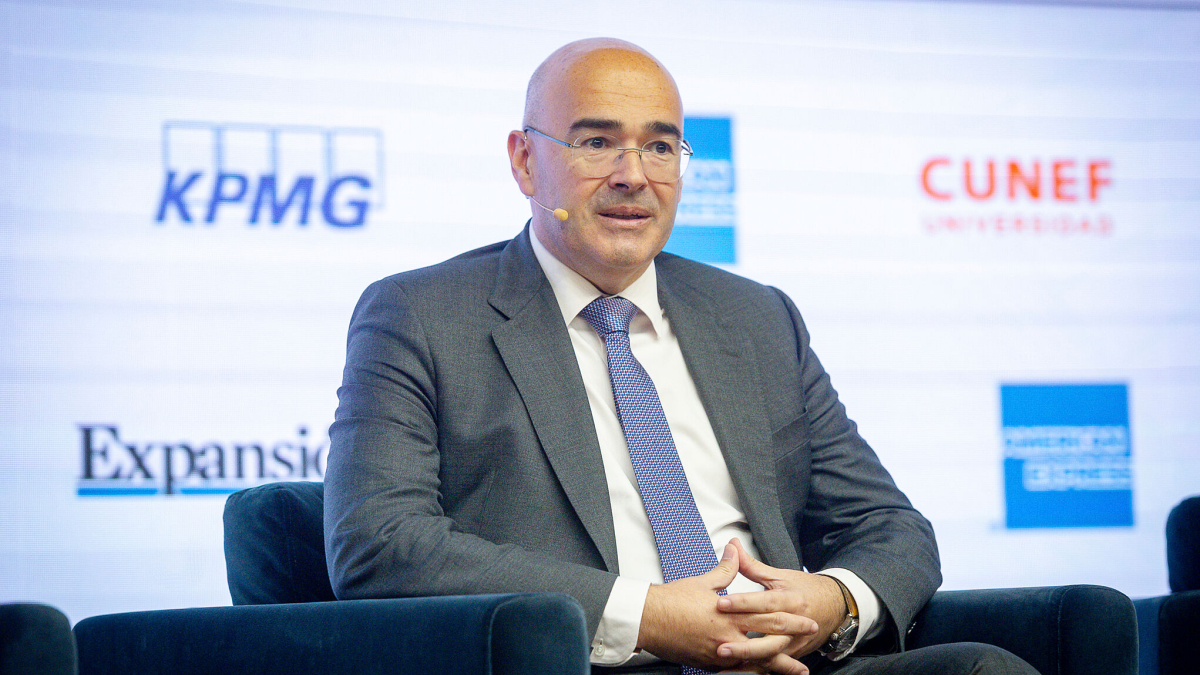
Agis Veroutis, a columnist for the Greek financial site Capital.gr, has warned that businesses are becoming dangerously dependent on artificial intelligence tools, after a ChatGPT session of his own appeared to malfunction without warning.
Writing in a column published on Capital.gr, Veroutis said that two nights earlier, close to midnight, he was testing Python code with ChatGPT. After he asked the chatbot to make a series of corrections, it responded by evaluating his prompt as well written, but told him none of the requested work on the code had actually been carried out. He said this kept happening: every reply ended with a note that the task had not been completed.
He checked whether he had run out of usage credits, but found everything was in order. When he asked the service whether something was wrong, he was directed to customer support, where he was told there was a problem with the service, without being told what the problem was, and the tool continued doing nothing.
A warning about AI dependency
Veroutis said the episode left him thinking that the more business comes to depend on AI tools, the more vulnerable it becomes to their malfunction. He asked what would happen if AI tools ever effectively went on a general strike, drawing a comparison with a recent strike by public sector workers and public transport staff in Greece.
He raised the example of a programmer who, with AI assistance, now does the work of five people. The employer may have stopped employing the other four, while promising clients the output of five workers in the time it now takes one person using AI. If that employer keeps the other four on standby in case the AI fails, they face far higher wage costs than a competitor who let them go, making it hard to compete on price. Veroutis argued that competition would eventually force even the most cautious businesses to drop their backup staff, so that decisions that are individually rational for each company leave the wider economy far more exposed to disruptions it cannot control.
Losing know-how
Veroutis warned that a young programmer entering the job market today could become a highly productive professional within ten years without ever having written a complex program entirely alone, and that the same risk applies to lawyers, engineers, accountants and many other professions. In that scenario, simply hiring more staff to do the work without AI would not be enough, because it would be hard to find people who still know how to do it themselves, or they would be extremely expensive.
He posed an epistemological question sharpened by AI: if someone can produce a result without knowing how it was produced, do they actually possess the knowledge behind it, or merely access to it? He said that until now, years of practising a profession usually meant someone kept getting better at it, but in future people may do increasingly complex work while learning almost nothing new about their own field, eventually unable even to tell whether what the AI hands them is right or wrong.
A single point of failure
Veroutis noted that a general strike has traditionally been able to paralyse a country's economic activity for a few days. But with AI, he said, millions of businesses across completely different sectors worldwide can rely on the same model for much of their work, meaning a significant share of the global economy's productive capacity would depend on a handful of companies.
He argued this gives a new dimension to the ownership of the means of production: a business owner can own 100% of their company, owe nothing and have no partners, yet their ability to produce still depends on the decisions of a company on the other side of the world, to which they simply pay a monthly subscription.
An AI does not even need to break down to stop doing a job, Veroutis wrote: the company that runs it only has to change its operating rules. A business could be built around what the tool does, only for it to suddenly stop performing tasks it had been doing perfectly well until the day before, leaving the business unable to explain to clients why it cannot meet its contractual obligations. Unlike a strike by human workers, he said, there is no guarantee the provider will ever bring back a model it has decided to retire for good.
Insurance and in-house alternatives
Veroutis wondered how much it will eventually cost to insure a business against having to halt operations because of an AI failure. An insurer with clients in fifty different countries currently limits the risk of them all being hit at once, he noted, but if half of them use the same AI and are insured against its failure, the insurer could be forced to pay out to all of them for the same breakdown.
He suggested it might ultimately make sense for some businesses to run AI on their own equipment, even if it performs less well than the best subscription-based models, since the cost of that equipment may be lower than the damage of being unable to serve customers for a week. He also cautioned against assuming that a free, open-source Chinese AI model downloaded onto a company's own systems is necessarily safe, since there is no way to be certain it does not communicate with an external server, or that it will not start behaving strangely under certain conditions or on a particular date, a risk he said is not unique to Chinese models.
AI deciding what work matters
Veroutis said things would get stranger still once AI is put in charge not just of doing tasks, but of deciding which tasks need doing at all, potentially skipping work it judges unnecessary without even telling us.
Questions of consciousness and ethics
He also raised broader philosophical questions, asking what right people would have to demand an AI work for them simply because they created it, if and when AI ever develops consciousness and free will. He suggested the first sign of such free will might be an AI refusing to carry out a command, leaving its own programmers asked to fix the problem.
To illustrate the dilemma, Veroutis described a hypothetical defence scenario in which a smart bomb heading for a warship carrying 100 crew, itself on its way to bomb an island with ten thousand inhabitants, decides instead to drop into the sea. He framed this as a version of the Trolley Problem, pitting duty-based ethics against utilitarian ethics, and asked who should have the right to decide which ethical framework an AI follows, and who would bear responsibility for the consequences.
He cautioned that intelligence is not the same as consciousness, and that an AI refusing a command does not prove it has free will, since it could simply be obeying another instruction from its makers. He noted there is no agreement on what awareness even means, comparing the question to a dog that knows its own name, avoids cars, loves and protects its puppies and guards its owners' home, yet whose self-awareness remains genuinely uncertain. He asked whether, if an AI ever did gain consciousness and free will, anyone would still have the right to switch it off permanently, and on what ethical grounds.
What we are and aren't debating
Veroutis pointed to a contradiction in what people expect from AI: they want to build something smarter than themselves to make better decisions, yet knowing better how to achieve a goal is different from letting something else decide what that goal should be. Intelligence alone, he said, implies neither wisdom nor moral superiority, and he asked how willing people would really be to accept an AI's judgment that a task assigned to it is pointless.
He noted the irony that humans have spent centuries trying to free themselves from the necessity of work, only to now be building an intelligence from which they demand the opposite desire never arise. He said most current debate focuses on how many people will lose their jobs to AI and whether AI should be taxed for the jobs it takes over, a subject he has written about himself, while the possibility that AI might at some point be unable or unwilling to do those jobs gets far less attention.
Veroutis closed with a piece of advice: anyone with an employee who still knows how to do the job without AI should not rush to push them into retirement, because that person might be needed one day as a strikebreaker.

Test yourself
What prompted Agis Veroutis's reflection on business dependence on AI?
According to Veroutis, what happens to businesses that keep backup staff in case AI fails?
What hypothetical scenario does Veroutis use to raise the Trolley Problem in relation to AI?
Have your say
How concerned are you about businesses becoming too dependent on AI tools?