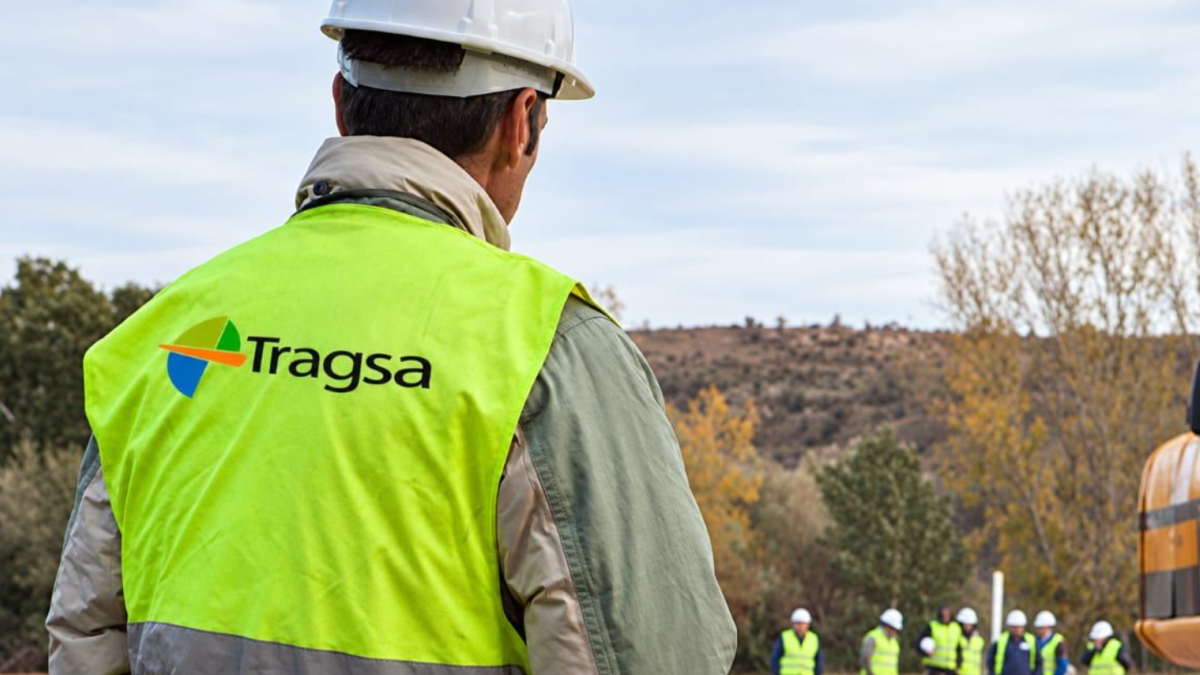
Spain's government has approved a royal decree that limits how freely public administrations can hand work directly to Tragsa, the state-owned construction and agricultural engineering company at the centre of a growing dispute with private construction and engineering firms.
The decree curbs the use of so-called "encargos", direct assignments of public works and consultancy contracts to Tragsa that bypass the open tendering process used for private contractors. Tragsa has captured a large share of that market over the past five years.
Sources close to the government said the Ministry of the Presidency, the Treasury and the Ministry of Agriculture took into account warnings raised by Spain's Advisory Board on Public Procurement, a body under the Treasury. In a critical report issued a couple of weeks earlier, the board had challenged a draft version of the decree, arguing it sidestepped doctrine set by the Supreme Court.
Following a ruling issued in 2025, Spain's highest court barred state contracting bodies from turning to Tragsa indiscriminately, requiring that each assignment clearly demonstrate economic efficiency compared with a traditional tender.
The original draft decree sought to create an automatic presumption, known in Spanish legal terms as iuris et de iure, under which an assignment would be considered justified simply if Tragsa submitted a technical report showing its rates were lower than the market's. After the Advisory Board's opinion, the final text downgraded that report's weight, reducing it to what the decree calls a "qualified element of judgment" that must include a detailed breakdown of costs.
The decree also moved where the rule sits in law, following the board's recommendations. The original proposal would have created a standalone article, numbered 15 bis, alongside rules on control commissions and pricing. The version the government finally approved instead folds the measure into article 7 as a new eighth section, the article that governs how assignments are prepared and formalised.
The relocation makes clear that assessing efficiency or the operational reasons behind an assignment is now a mandatory, inseparable step in drawing up the administrative file before any contract is awarded.
Council of Ministers approval
The same sources said the wording approved by the Council of Ministers on Tuesday also fixed gaps in the draft concerning legal alternatives to direct assignment and the rules on extensions. Unlike the original proposal, which focused solely on economic efficiency, the final text requires public managers to justify in the file either of two routes set out in article 86.2 of Spain's Law on the Legal Regime of the Public Sector, including justification on grounds of urgency or public security.
The decree also adds a transitional provision. The new requirements will not apply to assignments already formalised, but they will apply obligatorily to any future extensions agreed on those assignments.
Tragsa and Ineco's growth
Tragsa and Ineco are the two state-owned firms that have grown the fastest over the past eight years. Ineco, which answers to the Ministry of Transport, closed 2025 with revenue of 510 million euros, almost double what it earned in 2018. Tragsa, under the Ministry of Agriculture, billed 2.6 billion euros, more than triple its revenue eight years ago.
Tragsa's expansion has also lifted the results of SEPI, the State Industrial Holding Company that groups together state-owned firms including Tragsa, the postal operator Correos and the shipbuilder Navantia. SEPI reported record turnover of 7.384 billion euros in 2025 and profit of 130 million euros.
A jack-of-all-trades contractor
Tragsa has become an indispensable tool for multiple government bodies, which assign it work tied to its core mission, such as responding to natural disasters, fighting forest fires and carrying out agricultural projects. But it has also taken on less conventional jobs, including translation teams for dead languages such as Bable, the historic form of Asturian, refurbishments of ministry buildings, and the construction of sports centres and athletics tracks.
It is this second category of work where construction companies say administrations have abused direct assignments, bypassing the public works market where, in most cases, prices are lower than Tragsa's rates.
What happens next
The new requirements will not affect assignments already formalised, but they will apply obligatorily to any extensions of those assignments agreed in the future.
Test yourself
Why did Spain's Advisory Board on Public Procurement criticise the original draft decree?
How does the final decree treat Tragsa's own technical report on its rates?
How much revenue did Tragsa report in 2025?
Where it happened
Madrid, Spain