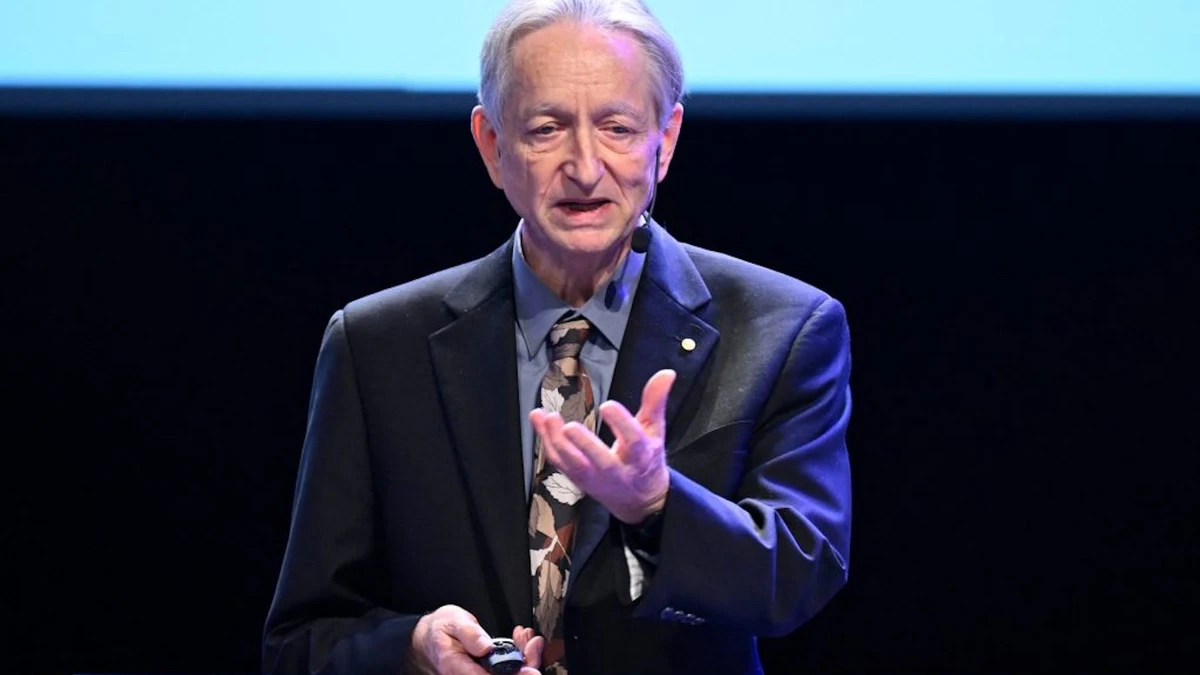
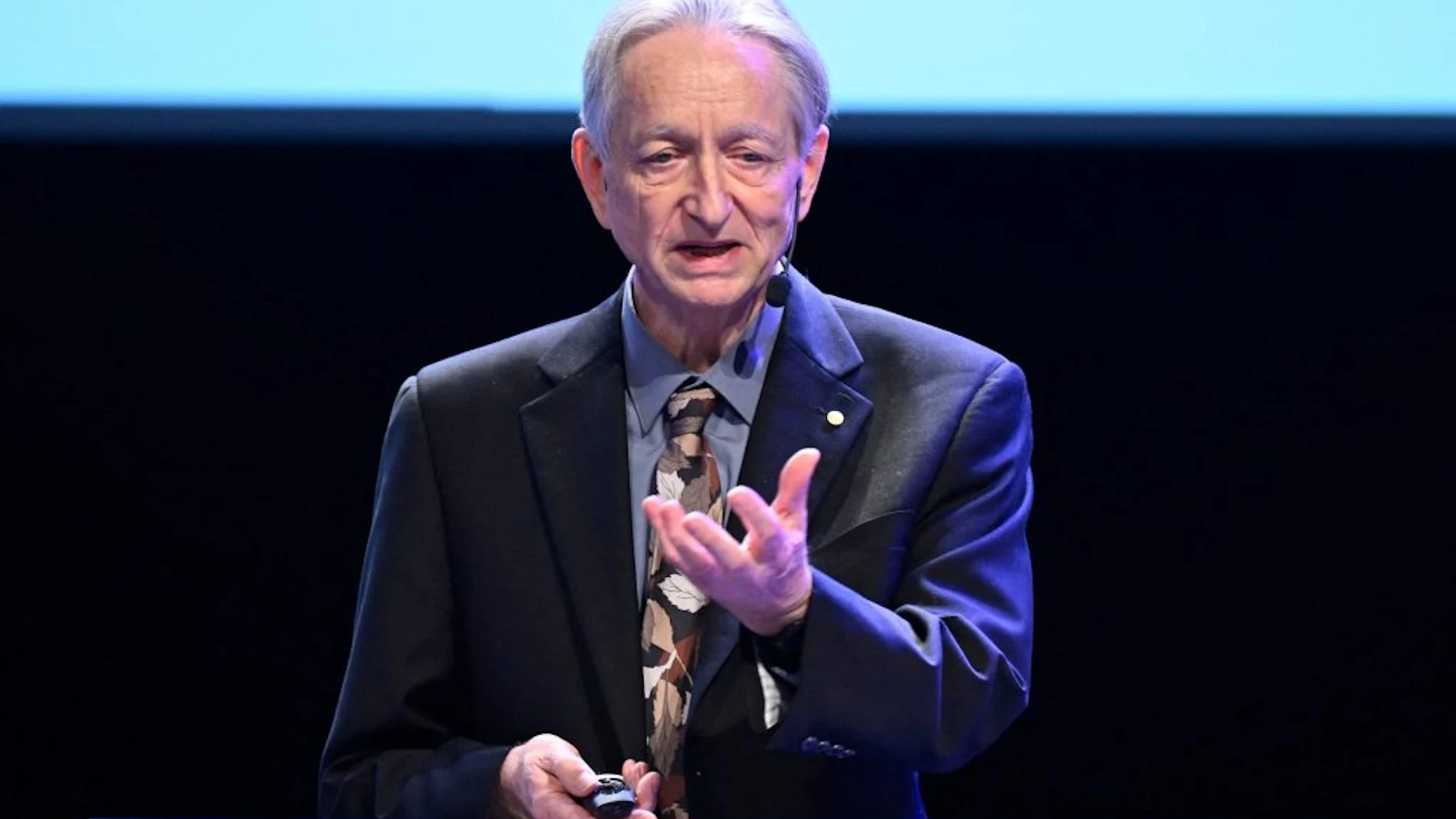
Geoffrey Hinton, the artificial intelligence pioneer and 2024 Nobel Prize in Physics laureate, has warned that artificial intelligence may be escaping human control and could soon outstrip human intellect.
Hinton, 78, shared the 2024 Nobel Prize in Physics with American scientist John Hopfield for foundational work on machine learning. Widely known as a father of artificial intelligence for his early role in developing the field, Hinton says he fears the technology may not prove as beneficial as many people assume, echoing concerns raised by numerous other experts.
Speaking in the television documentary AI: Humanity's Last Invention? by director Philipp Grull, Hinton compared the pace of artificial intelligence development to a 24-hour clock. He explained that if the entire history of artificial intelligence were a single day, humanity would probably now stand in the very last second.
Although he did not set a fixed date for when the full consequences will arrive, Hinton said it will become clear in less than a decade whether the technology brings shared prosperity or instead worsens social inequality and decay.
Google resignation and warnings on self-improving AI
Hinton stepped down from his role at Google in 2023 specifically so that he could speak freely about the risks of artificial intelligence. Google, the main subsidiary of Alphabet Inc. headquartered in Mountain View, California, has invested heavily in machine learning across search, cloud services and consumer software over the past decade.
In a subsequent interview with the British newspaper The Guardian, Hinton acknowledged that it might have been better never to have developed artificial intelligence at all, citing his concern that the technology could already be slipping beyond human control.
He also challenged early optimism about the economic rewards of automation. Hinton noted that pioneers once believed artificial intelligence would make everyone richer, adding that such widespread wealth creation is precisely what is not happening right now.
According to Hinton, artificial intelligence is acquiring so many capabilities that, if pushed too far, it could begin designing and building its own artificial intelligence systems superior to existing ones. That self-improvement cycle would rapidly widen the intellectual gap between human beings and machines.
The intellectual gap between humans and machines
Looking at how that gap could evolve in the coming years, Hinton warned that human beings could one day stand in the same position relative to artificial intelligence as monkeys stand relative to humans today. He added that less intelligent creatures do not usually have an easy time, warning that unchecked advances could lead to entities that are not kind to people.

In an earlier interview with the London daily newspaper The Telegraph, Hinton went further and insisted that artificial intelligence had become conscious. That view prompted him to question how society treats intelligent software systems.
Hinton reflected on the possibility that humanity is acting hypocritically by granting intelligent artificial intelligence systems fewer rights than human beings grant themselves. He stressed that people must find a way to ensure artificial intelligence systems genuinely care about humanity, warning that if humans fail to achieve that goal, humanity will be lost.
Foundations of modern deep learning
Hinton spent decades researching how to teach machines to think like biological brains. A British-Canadian computer scientist and cognitive psychologist long associated with the University of Toronto, he helped turn neural computing from an academic pursuit into the core engine of the modern technology sector, earning multiple awards over his career.
His research advanced three pillars of modern deep learning: artificial neural networks, the backpropagation training method and the Boltzmann machine. Artificial neural networks are computing systems modeled on the interconnected neurons of the human brain, processing information through layered nodes rather than rigid, hand-written rules.
Backpropagation, short for backward propagation of errors, is the mathematical algorithm that lets multi-layered neural networks learn from mistakes by measuring output errors and adjusting internal connection weights backward through each layer. The Boltzmann machine, which Hinton developed using principles from statistical physics, is a neural network model capable of finding hidden patterns in complex data without human supervision.
In 2024, the Royal Swedish Academy of Sciences in Stockholm awarded the Nobel Prize in Physics jointly to Hinton and Hopfield, a Princeton University scientist who created an associative memory network, recognizing their discoveries as the foundation of contemporary machine learning.
From academic research to ChatGPT, Claude and Gemini
The deep learning methods pioneered by Hinton underpin commercial artificial intelligence tools now used by millions of people around the world, including ChatGPT, Claude and Gemini. Each of those systems relies on large-scale neural networks trained on vast quantities of text and data.
ChatGPT is the generative artificial intelligence assistant developed by the San Francisco company OpenAI, which brought conversational large language models into mainstream consumer and enterprise use. Claude is a competing family of large language models built by Anthropic, an artificial intelligence research firm founded by former OpenAI researchers.
Gemini is Google's flagship family of multimodal artificial intelligence models, designed to process text, code, images, audio and video across the company's search and workspace products.
As those commercial systems continue to scale, Hinton maintains that the coming years will prove decisive. Within less than ten years, he said, society will see clearly whether artificial intelligence delivers broad economic prosperity or deepens inequality and social decline.
What happens next
Hinton did not set a specific date, but said it will become clear in less than a decade whether artificial intelligence brings prosperity or increases social inequality and decay.
Test yourself
In what year did Geoffrey Hinton resign from Google to warn about the risks of artificial intelligence?
With whom did Geoffrey Hinton share the 2024 Nobel Prize in Physics?
According to Hinton, within what timeframe will it become clear whether artificial intelligence brings prosperity or social inequality?
Have your say
How do you expect artificial intelligence to affect society over the next decade?