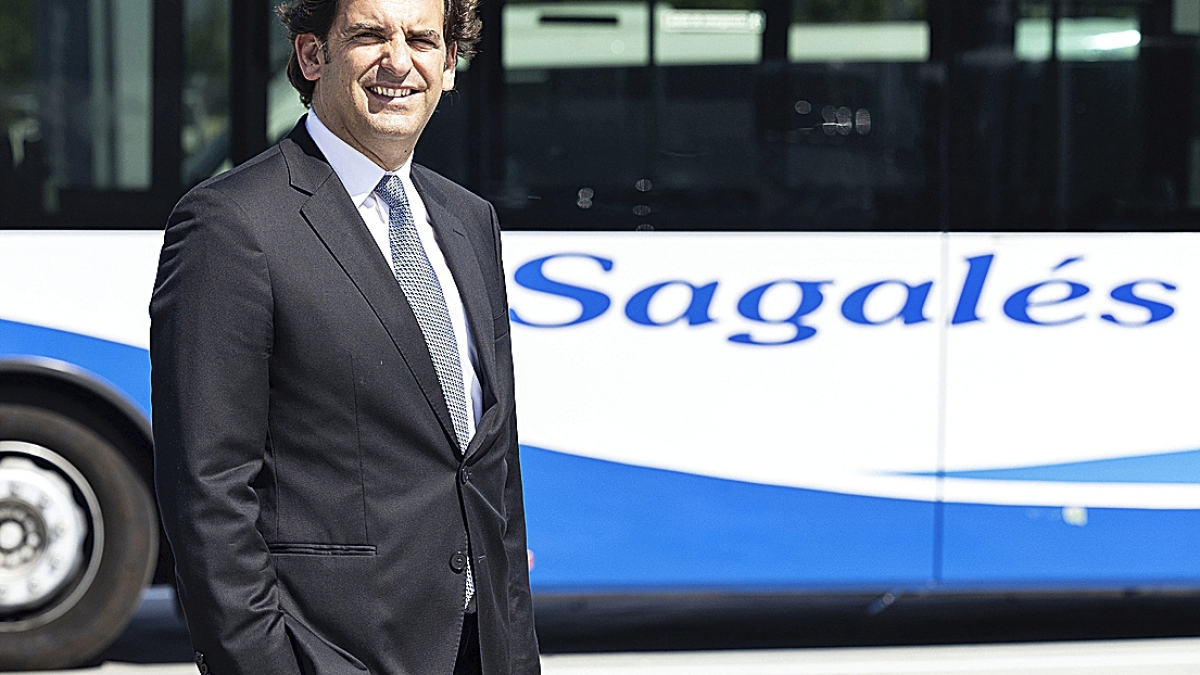
Sagalés, a Catalan public transport operator based in Mollet del Vallès, near Barcelona, is run today by the 13th generation of the same family, whose documented business history stretches back 385 years to 1641.
The group posted revenue of 164 million euros in 2025, up 13% on the previous year, and expects to grow again in 2026 to reach around 170 million euros, according to chief executive Ramon Sagalés.
Family businesses rarely survive this long. Only 10% of family-owned companies reach the third generation, and between 3% and 5% make it to the fourth. Sagalés has gone far beyond that, making its longevity unusual even among long-running family firms.
The company's first documented commercial activity dates to 1641, when its founder, Josep Sagalés, registered as a paraire, the Catalan term for an artisan who bought and prepared wool. He lived in Caldes de Montbui, a town near Barcelona where his descendants still live today.
Caldes de Montbui sits on a historic transhumance route linking the region with the Pyrenees, Ramon Sagalés said, a detail that helps explain why the family's original trade centred on wool.
The founder combined the wool trade with carrying food and other goods by cart, a sideline that proved far more lucrative than the wool itself. As Barcelona and the surrounding area industrialised, the family expanded into other sectors, bringing ice blocks from wells in Moià and Castellterçol, along with food, passengers and paving stones used to surface the streets of Barcelona, according to Sagalés.
From carriages to the first buses
Animal-drawn carts, tartranas and stagecoaches gave way in the first decade of the 20th century to the company's first bus and to the creation of the operator La Montañesa. The business kept growing and was collectivised after the outbreak of the Spanish Civil War, before Sagalés was formally constituted as a company in 1941.
Spain's postwar economic development brought new kinds of demand, and Sagalés added services such as transporting factory workers, school transport and chartered trips for tourists.
Growth through acquisitions
Sagalés now operates more than 250 lines with a fleet of around 800 buses and 1,800 employees, according to the chief executive. The company has diversified both geographically and across sectors.
It entered medical transport in 2018 with the acquisition of Ambulancias Lafuente, and in 2025 it added Dofi Jet, an operator of tourist boats on the Costa Brava. The strategy of buying small and medium-sized bus operators dates back to the 1960s and continues today. The most recent purchase was Rosabus, a tourist bus operator based in Seville, acquired over the summer.
Expanding beyond Catalonia
Through partnerships, Sagalés has also moved into other Spanish regions. Its first such move came in 2015, when it teamed up with the Mallorcan firm Caldentey to win interurban bus lines on the island. This year, it entered the Valencia region and Galicia alongside Denibus and Autocares Gabilanes.
The company's president is Francesc Sagalés, while his two children, Ramon and Anna, hold the roles of chief executive and corporate general director respectively.
A historian's view
Joan Carles Salmerón, a historian specialising in mobility and the author of a recent book on buses and coaches in Catalonia, said Sagalés managed the shift from animal traction to motor vehicles a little over a hundred years ago, a logical step at the time, and that in the 1950s and 1960s it went on to manufacture its own buses. Those two moments, he said, were among the company's great milestones.
What happens next
Sagalés expects revenue to grow again in 2026 to around 170 million euros, according to chief executive Ramon Sagalés.
Test yourself
In what year did the Sagalés family's first documented commercial activity take place?
What was Sagalés' revenue in 2025?
Which company did Sagalés acquire over the summer to expand into tourist buses in Seville?
Have your say
Do you think family-run businesses are better placed for long-term success than other companies?
Where it happened
Mollet del Vallès, Spain