Shanghai Lexicographical Publishing House has released a monumental 9,000-entry encyclopedia to standardise ancient Chinese manuscripts written on bamboo and silk. The Dictionary of Bamboo and Silk Manuscript Studies provides the first unified technical framework for deciphering historical texts produced long before the widespread adoption of paper.
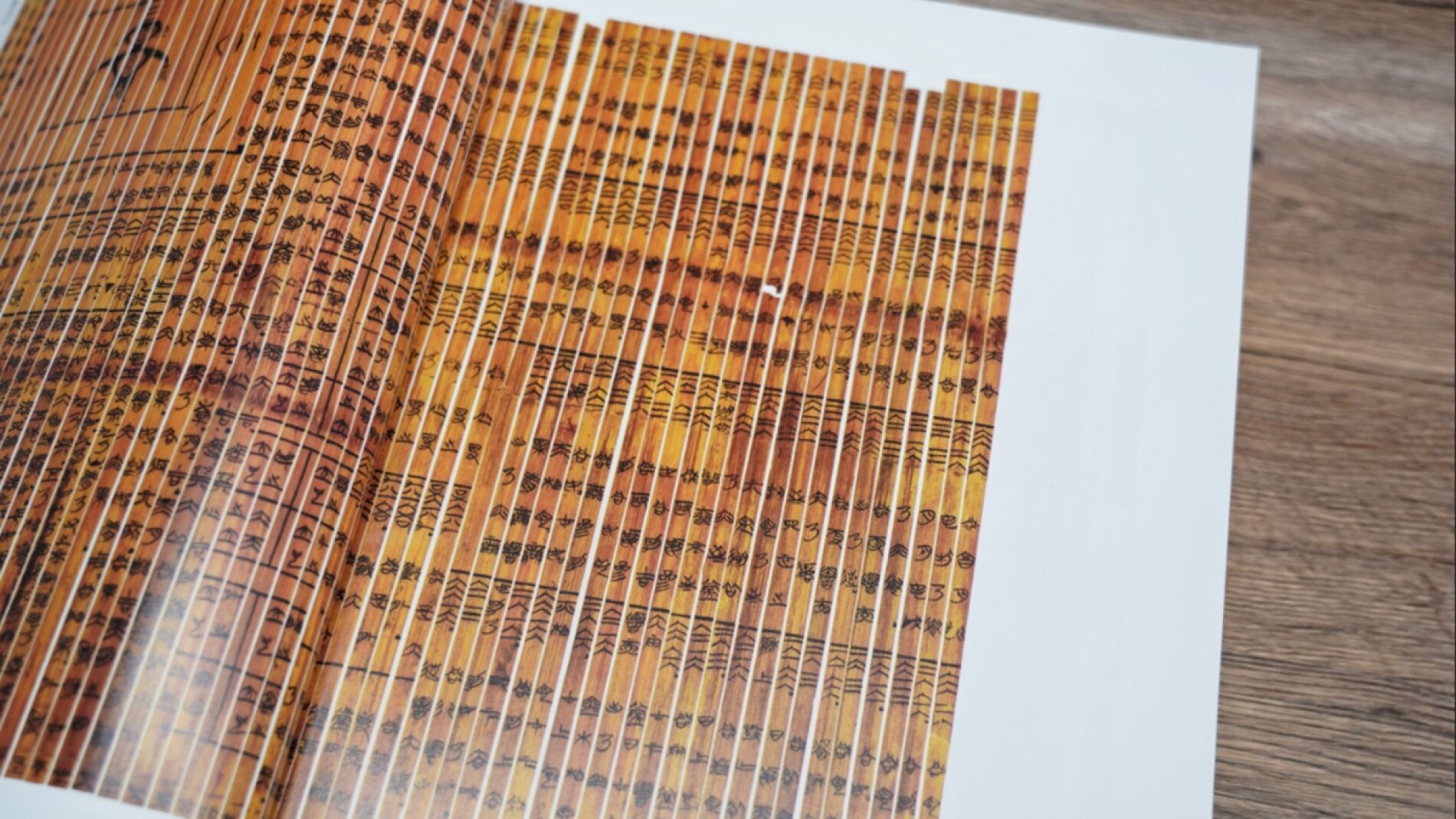
The new publication closes a long-standing academic gap by organising more than 9,000 entries and 600 color illustrations. Produced by a committee of more than 60 top-tier specialists following successive rounds of academic review, the compilation standardises decades of archaeological findings from across East Asia.
Publisher Zhao Hang emphasized that the project incorporates research from Japanese and South Korean scholars alongside Chinese institutional findings. He noted that this collaborative effort establishes a shared technical framework for international sinology, which is the academic study of Chinese history, language, and culture.
Standardising ancient writing materials
Feng Shengjun, chief editor of the dictionary and vice president of the Chinese Society for the Study of Ancient Writing, explained that bamboo and wooden strips served as the primary vehicle for Chinese writing before paper became common. He stated that these organic materials sustained the memory of Chinese civilization for thousands of years.
Feng noted that standardising and interpreting excavated documents under a uniform format converts tomb fragments into an organic narrative. He added that this systematic approach allows the historical evolution of Chinese thought to be understood with greater clarity, precision, and completeness.
Long before paper democratised written communication, ancient scholars recorded edicts, medical treatises, dynastic penal codes, and philosophical verses on thin plant slats and pure silk canvases. Until the end of the Zhou dynasty in 256 BC, scribes wrote characters using soot ink on narrow bamboo strips measuring about 23 centimetres in length.
Scribes bound these individual bamboo strips together with cords made of leather or silk to construct complete manuscript volumes. Ancient writers reserved plain wooden boards for brief administrative dispatches, while reserving bamboo rods for major intellectual, legal, and literary works.
Calligraphy and administrative challenges
The introduction of the animal hair brush, traditionally attributed to General Meng Tian during the third century BC, refined clerical script calligraphy, known as lishu. General Meng Tian served under the Qin dynasty during its military expansion and administrative consolidation.
Despite calligraphic refinements, ancient governments faced severe logistical problems because silk remained prohibitively expensive and bamboo was extremely heavy. Historical chronicles record that Qin Shi Huang, the first emperor who unified China, was forced to examine more than 60 kilograms of bamboo tablets every day to manage state administration.
The academic discipline of bamboo and silk manuscript studies emerged in the early 20th century following major archaeological discoveries, led by excavations at Dunhuang along the Silk Road in northwestern China. Dunhuang is famous for its desert caves containing thousands of ancient manuscripts.
Although the academic field grew rapidly after the Dunhuang discoveries, research remained scattered among archaeologists, legal scholars, paleographers, and manuscript conservators. The new dictionary unifies these disparate efforts under one normative standard.
Discoveries reshaped historical scholarship
Scholars regard the new encyclopedia as an analytical master key comparable to a Rosetta Stone for Eastern antiquity. Experts compare the historical value of these recovered bamboo and silk texts to the Dead Sea Scrolls uncovered at Qumran or the Oxyrhynchus Papyri found in Egypt.
Over the past half century, archaeological excavations across China have reshaped sinology by unearthing original sources that formed the bedrock of Eastern civilization. At the Mawangdui necropolis, archaeologists discovered the earliest known versions of the Dao De Jing by philosopher Lao Tzu, revealing philosophical nuances buried for two millennia.
Excavations at the Yuelu Academy uncovered the legal framework used by the Qin dynasty to unify the empire through law and punishment. In addition, manuscript collections preserved at Tsinghua University and in Shanghai brought back to light historic chronicles and specialized treatises that traditional scholars had long considered lost.
These recovered rods and canvases demonstrate how high metaphysics, jurisprudence, preventive medicine, and military administration coexisted in ancient record-keeping. The dictionary maps out this complex legacy, providing readers with direct access to the voice of an ancient civilization before paper was invented.