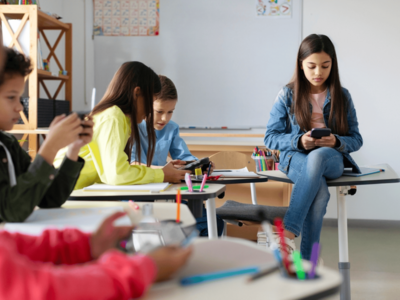
Primary school students who own a personal cell phone achieve lower scores in reading comprehension tests than classmates who do not have their own devices, according to a study conducted by researchers at the University of California, Los Angeles.
The research, published in the peer-reviewed scientific journal Behavioral Sciences, evaluated third-grade and sixth-grade pupils attending public schools and Coptic Church educational institutions across Los Angeles County.
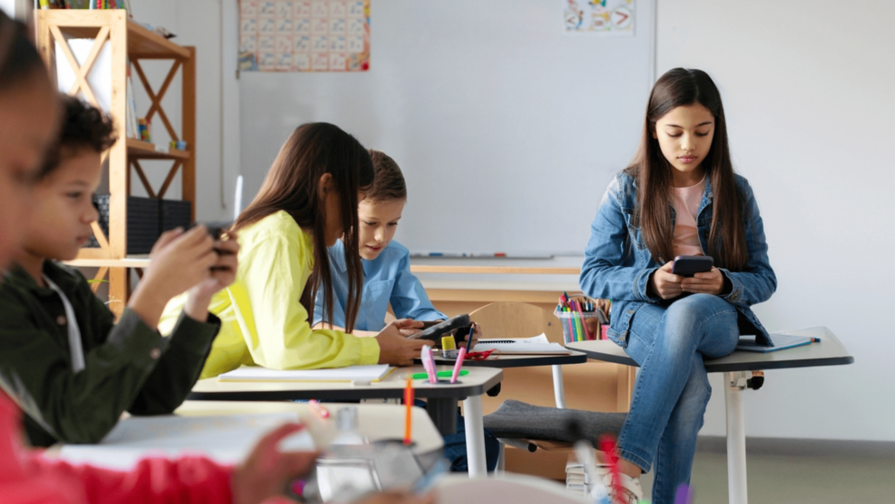
During the study, participating children read short text passages, answered specific questions designed to measure how much of the material they understood, and completed a questionnaire detailing their personal device ownership and daily screen habits.
The results demonstrated a statistically significant association between owning a personal cell phone and obtaining lower performance scores on the reading comprehension assessments.
Researchers discovered that the lower test scores persisted regardless of the physical location of the mobile device during testing, showing consistent results whether the cell phone was placed directly on the student's desk, stored away out of sight, or kept entirely outside the school building.
In addition, the investigation found no statistically significant relationship between the age at which a child received their first mobile phone and their overall reading comprehension performance.
Lead author Patricia Greenfield, a professor of psychology at UCLA, explained that the research team identified no specific age at which providing a child with a phone was better or worse for reading comprehension, noting that the negative association appeared consistently in both third grade and sixth grade.

The study authors emphasized that their findings reflect a statistical correlation rather than a direct cause-and-effect relationship, stressing that owning a cell phone has not been proven to directly cause lower reading comprehension and that additional factors require further academic investigation.
UCLA, located in Los Angeles, California, is a premier public research university, while Los Angeles County contains the largest public school system in California alongside private religious schools serving the local Coptic Orthodox Christian community.
Reading Comprehension on Paper Versus Digital Screens
The UCLA findings build upon a growing body of scientific research examining how digital media affect learning, including a comprehensive meta-analysis that synthesized data from more than 450,000 participants across multiple international studies.
That meta-analysis revealed that leisure reading conducted on digital screens has only a very weak correlation with overall reading comprehension, and among school-aged children, screen-based reading may even share a negative relationship with reading performance.
By contrast, reading printed text on paper demonstrated a significantly more favorable association with comprehension across all evaluated age groups.
Researchers affiliated with ERI Lectura at the University of Valencia reported that under specific educational conditions, reading comprehension performance can be considerably higher when reading printed paper than when using a cell phone, tablet, or desktop computer.

Academic experts attribute this performance difference to the digital screen environment, which constantly presents pop-up notifications, embedded hyperlinks, incoming messages, and interactive features that disrupt deep mental focus and concentration during reading.
The study noted that these digital distractions occurred regardless of whether children were reading a digital book, researching information online, or chatting with friends, as electronic devices maintain multiple open pathways for distraction.
The University of Valencia in Spain houses ERI Lectura, an interdisciplinary research structure that brings together experts in psychology, education, and linguistics to study reading behavior, digital literacy, and cognitive text processing.
Early Childhood Screen Access and Language Development
Further research focusing on young children between four and six years of age revealed that having regular access to electronic devices with reading functions, including smartphones, tablets, and e-readers, did not necessarily mean children used them to read.
In fact, investigators found that children with access to a larger number of electronic devices exhibited a lower overall frequency of reading activity.
Concerns regarding screen exposure extend to even younger children, according to a two-year longitudinal study published in the peer-reviewed medical journal JAMA Pediatrics.
The longitudinal study tracked 747 Norwegian children with an average age of 4.9 years, identifying associations between higher screen time use and reduced performance in specific aspects of early language processing.
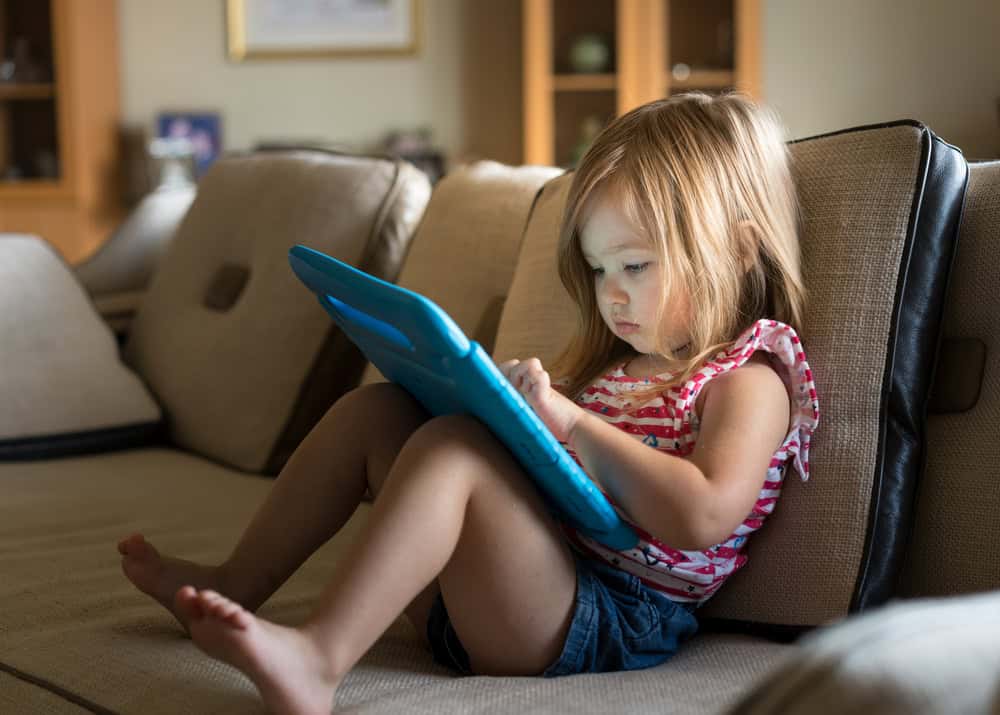
Norwegian children who owned their own personal electronic devices similarly displayed lower performance levels in standardized linguistic processing evaluations.
The authors of the Norwegian study also highlighted the impact of parental screen habits, warning that heavy phone use by parents during family interactions can reduce critical opportunities to talk, listen, respond, and expand young children's vocabulary.
Published monthly by the American Medical Association, JAMA Pediatrics is the oldest continuous pediatric journal in the United States, publishing clinical research on child health, cognitive growth, and adolescent development.
Evaluating Technology and the Role of Reading
Educational researchers stress that digital technology is not fundamentally incompatible with reading, but simply providing children with access to electronic devices does not guarantee that they will read more frequently or comprehend text more effectively.
The researchers noted that the primary challenge facing parents and educators is understanding the role technology plays in children's daily routines and determining what essential developmental activities digital devices may be replacing.
Developing strong reading comprehension requires sustained time, undivided attention, and deep concentration, qualities that traditional print reading continues to foster more effectively than screen media.
The findings, reported by Dominican newspaper Diario Libre, align with broader educational discussions surrounding back-to-school preparations, encouraging children to swap short-form social media apps like TikTok for books, and adopting proven methods to build lasting reading habits.