Four leaders of the SPAS nationalist club received life sentences for the 2006 Cherkizovsky Market bombing in Moscow that killed 14 people.
The attackers detonated two bombs 55 seconds apart on August 21, 2006, along the wholesale market's 41st alley between a cafe and a public restroom. Eight people died at the scene, including a two-year-old boy and a 14-year-old girl, six others died later in hospitals, and 47 sustained injuries. Most victims were workers from Tajikistan, Uzbekistan, Moldavia, and China, alongside citizens of Russia, Ukraine, and Belarus.

Cherkizovsky Market, officially registered as the KBF AST Trade and Fair Complex, was Moscow's largest wholesale market before its closure, known informally as Cherkizon from the Turkic suffix for land due to its predominantly Central Asian vendor workforce. The System for Training Army Special Forces, known as VPK SPAS, operated as a Moscow-based military-patriotic organization whose members engaged in ethnic violence.
Arrests and FSB involvement
Traders and security guards apprehended two perpetrators at the scene immediately after the explosions. The suspects were identified as 20-year-old Muscovite Ilya Tikhomirov and 4th-year Mendeleev University of Chemical Technology student Oleg Kostarev, a native of Glazov in Udmurtia. Though both initially claimed sole responsibility, police linked them to VPK SPAS. A third perpetrator, 18-year-old Valery Zhukovtsov, escaped the market but was arrested on August 22.
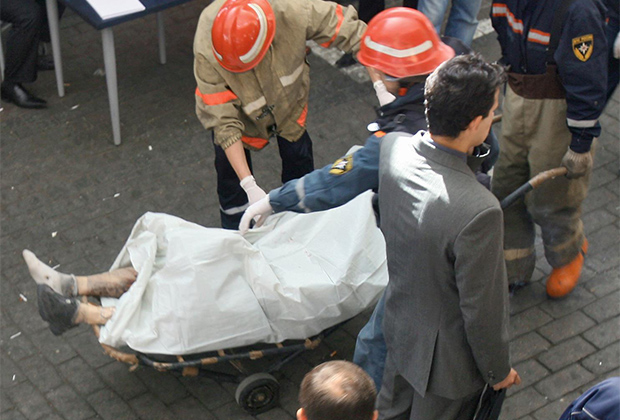
Investigators analyzed phone records and location data from prior months, connecting group members to several unsolved explosions across Moscow during spring and summer 2006. On September 4, 2006, law enforcement officers detained 25-year-old VPK SPAS leader Nikolay Korolev. Four days later, on September 8, investigators arrested 36-year-old Federal Security Service (FSB) Warrant Officer Sergey Klimuk.
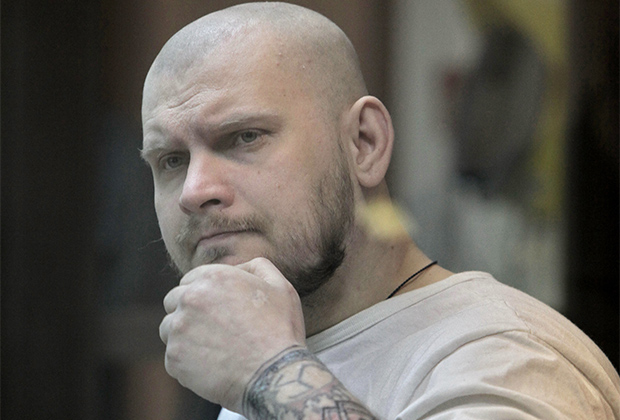
Klimuk attracted attention because his telephone received multiple calls from the bombers immediately before the market blast. Seeking to protect himself, Klimuk approached counterintelligence officers in his unit to claim he only knew Korolev and the bombers casually. However, his detailed knowledge raised suspicions, leading Moscow Military District FSB officers to notify prosecutors, who detained Klimuk outside the FSB building.
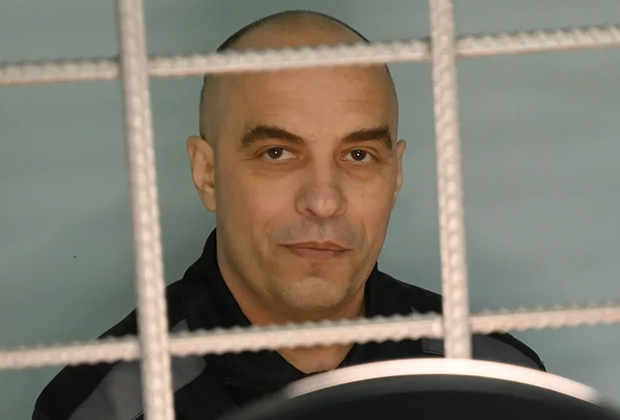
Moscow prosecutor's office investigators established that VPK SPAS operated a clandestine, hierarchical network with assigned roles and specialized groups. According to case records, the group aimed to conduct public bombings across Moscow and Moscow Oblast to promote Slavic racial supremacy and pressure state authorities into enacting legislation to shut down businesses owned by non-Slavs. Group members shifted from brawls with anti-fascists and North Caucasians to explosive attacks in April 2006, believing Caucasian groups were responsible for earlier fatal Moscow bombings.
Early bombings and Pushkinskaya murder
The group carried out its first bombing on April 22, 2006, targeting the Liliana Academy of Bioanalytics and Psychological Assistance in Seliverstov Lane. Korolev instructed Tikhomirov to build a milk-can bomb containing at least one kilogram of TNT equivalent. Tikhomirov requested psychological aid at 8:50 p.m., entered the restroom after being asked to return the next day, and activated the device knowing three people were nearby. The bomb exploded five minutes later.
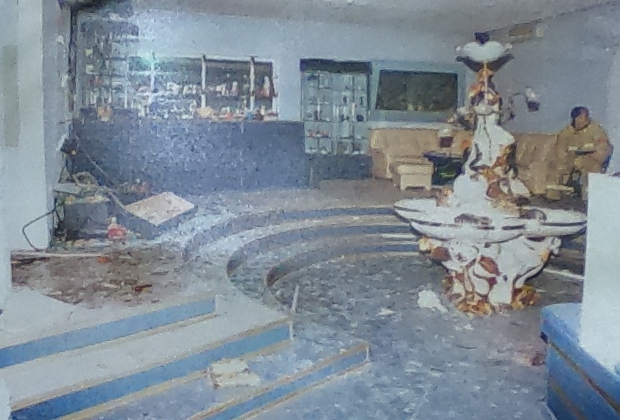

Korolev selected the date to coincide with Holy Saturday and targeted the salon believing it practiced black magic and had offended a female Orthodox student. On interrogation, Korolev stated he believed the owner was Jewish, which he said added joyful notes to the attack.
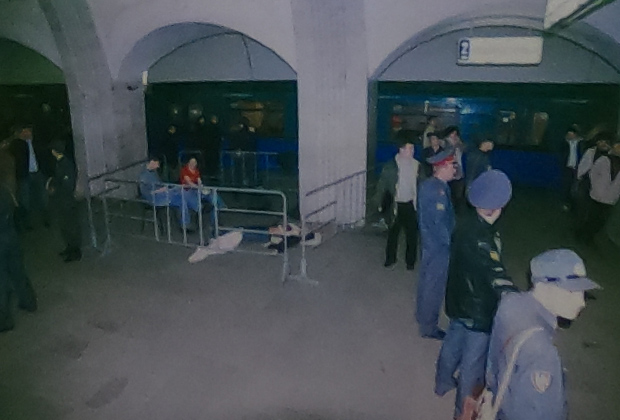
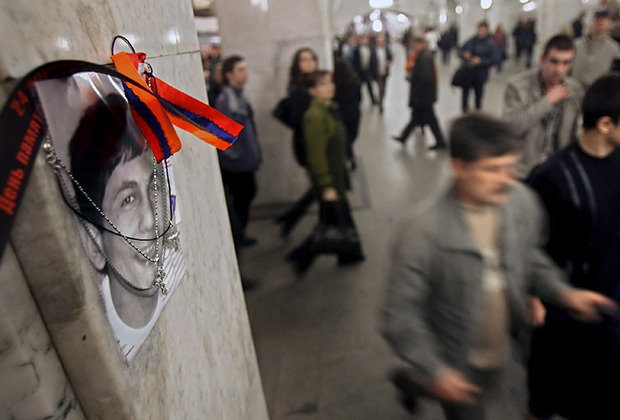
On the same day, SPAS member Nikita Senyukov stabbed 16-year-old Armenian student Vigen Abramyants in the chest at Pushkinskaya metro station. Abramyants, a student at the Moscow Institute of Management, arrived with friends believing he was meeting an anti-fascist activist to coordinate tactics against skinheads. The meeting was a trap set by SPAS members who launched a swift attack upon arrival. Following the stabbing, Korolev testified that Senyukov requested white shoelaces, a skinhead custom signifying a killer. Subway police initially coerced a 16-year-old schoolboy into confessing, but he recanted and was released six days later. A week after the killing, local Armenians blocked Arbat Street in protest.
Summer bombing campaign
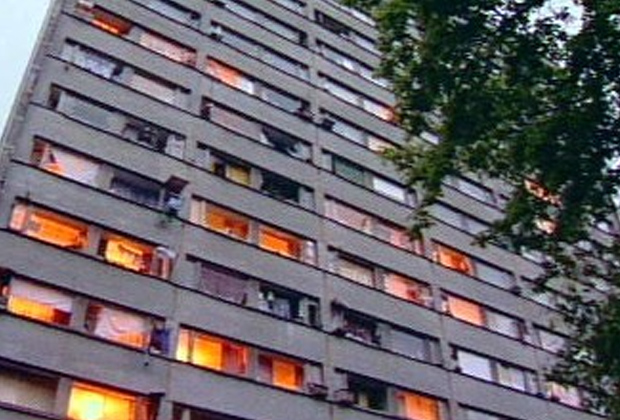
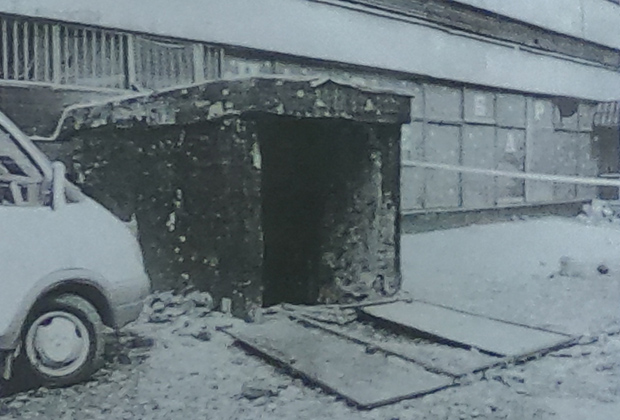
On May 29, 2006, Korolev planned an attack on a dormitory housing Caucasian workers from Lefortovo and Rogozhsky markets on Podyemnaya Street. Tikhomirov, who worked security for a neighboring Old Believer Orthodox community, claimed community members suffered from dorm residents and wanted to scare them into returning home. During the night of May 30, Korolev and Tikhomirov brought a 20-liter metal canister filled with 25 kilograms of explosives and 10 liters of gasoline to the building in a GAZelle van. They placed the device at an unguarded basement entrance to maximize blast damage. Their driver panicked after the blast and abandoned them, forcing both men to take a taxi home.
Korolev targeted a trade pavilion on Dezhnev Drive near his home on June 16, 2006, enlisting Kostarev, Zhukovtsov, and Dmitry Fedoseenkov. Group members ground explosive components in a manual meat grinder inside a Khoroshevskoye Highway garage. On June 17 at 1:30 a.m., Fedoseenkov placed the bomb and detonated it upon receiving a cell phone command from Korolev. Korolev later noted that he drank only milk while the shop sold only beer and cigarettes. The store closed after its general director, a Russian woman, ceased operations due to safety concerns for her staff.
On June 23, group members produced 4.5 kilograms of explosives in Kostarev's dormitory room at Mendeleev University. The next day, they assembled a bomb inside an aluminum can and tasked Senyukov with attacking a cafe near Bratislavskaya metro station. Due to graduation crowds in Moscow, Senyukov redirected the attack to the Empire of Success slot machine hall on Maryinsky Park Street, which he believed was owned by North Caucasians. Tikhomirov inserted the fuse on a nearby playground, and Senyukov forced SPAS member Nikolay Kachalov under threat of violence to plant and detonate the device. Senyukov and Kostarev filmed the blast, which wounded three female passersby aged 17 and 18.
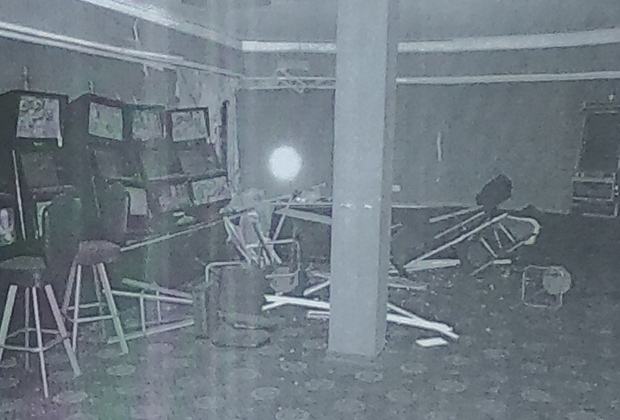
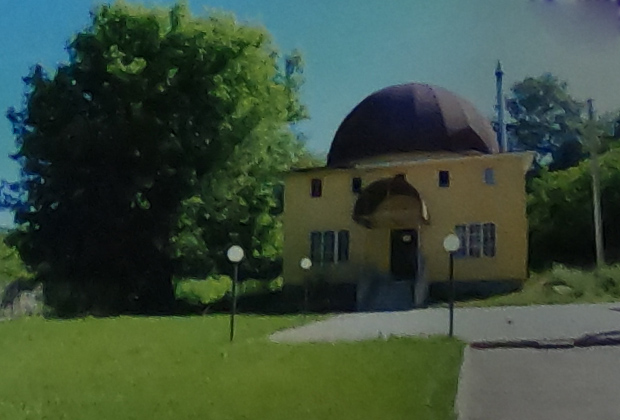
Kostarev manufactured three kilograms of explosives in a glass chandelier shade for a June 30 attack on a Perervinsky Boulevard cafe, where Zhukovtsov planted the bomb while Kostarev recorded video. On July 3, Korolev planned a blast at a Muslim prayer room in Yakhroma near his friend's dacha prior to the International Forum of Religious Confessions in Moscow. Disguising the trip as a barbecue outing, Tikhomirov assembled a three-kilogram bomb that detonated against the prayer room wall at 2:30 a.m. on July 4.
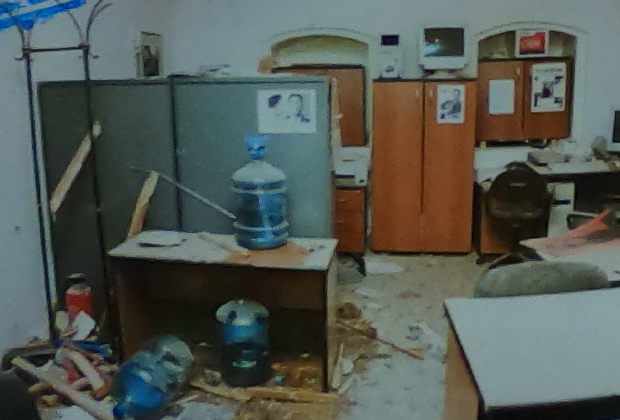
Klimuk selected the next target on July 25 following a contract dispute with the chief editor of the Russky Vestnik newspaper. Klimuk had contacted Korolev in January after watching a television broadcast on Korolev's knife-fighting skills. Tikhomirov prepared a one-kilogram bomb disguised as a milk carton, which Kostarev placed on the newspaper's windowsill near Tretyakovskaya metro station at 9:35 p.m., causing minor structural damage without injuries.
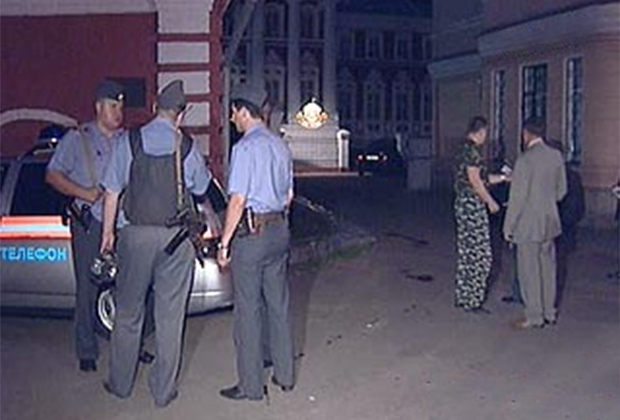
On July 26, group members assembled two kilograms of explosives in plastic soda bottles and traveled to Ostrovityanova Street. They planted the device beneath a trade pavilion at building number 53 and detonated it at 11:45 p.m. before walking to Konkovo metro station. Two store clerks sustained severe injuries requiring hospitalization.
Market attack planning and trial
Klimuk and Korolev initiated the Cherkizovsky Market plan between July 25 and August 4, bringing in Tikhomirov, Kostarev, and Zhukovtsov. Klimuk promised financial rewards, and group members testified that Klimuk planned to steal fur coats, cash, and valuables during the resulting panic, an assertion Klimuk denied. Kostarev produced 25 kilograms of explosives in his university dorm room, packing 20 kilograms for the market attack and holding five kilograms for a subsequent strike. Korolev and Klimuk proposed adding nails, bolts, and ball bearings to the bombs, but Kostarev and Tikhomirov rejected shrapnel due to short fuse safety risks.
The perpetrators conducted site reconnaissance on August 11 and finalized logistics at Partizanskaya metro station on August 19. On August 21 at 7:00 a.m., Kostarev and Tikhomirov assembled two sports-bag bombs at Tikhomirov's apartment and traveled to the market with Zhukovtsov. They connected batteries to the initiators inside Eurasia cafe, set both bags along the 41st alley, and departed. Watching from a distance, Klimuk telephoned Korolev to report that both bombs were left in the same location, reducing the intended widespread damage.
On December 4, 2007, prosecutors referred the case to the Moscow City Court. All defendants opted for a jury trial, believing jurors would view nationalistic motives leniently. After answering 270 specific questions, the jury unanimously convicted the primary defendants without recommendation for mercy. On May 15, 2008, the court sentenced Nikolay Korolev, Ilya Tikhomirov, Oleg Kostarev, and Sergey Klimuk to life imprisonment. Valery Zhukovtsov received a 20-year sentence, Nikita Senyukov received 13 years (reduced on appeal to 10 years by the Supreme Court due to his underage status at the time of the crimes), and Dmitry Fedoseenkov and Nikolay Kachalov each received two years.
Defendants filed over five volumes of appeals regarding sentence severity, while Klimuk claimed investigators framed him to include an FSB officer in the case. One year after the verdict, authorities permanently closed Cherkizovsky Market. Market owner Telman Ismailov faced criminal charges, fled Russia, and obtained political asylum in Montenegro after authorities denied extradition requests.