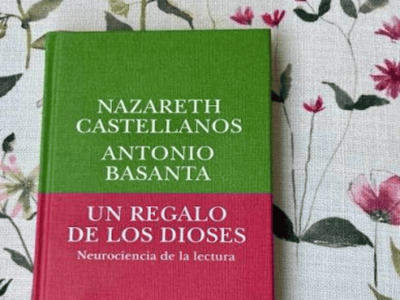
Neuroscientist Nazareth Castellanos and philologist Antonio Basanta have published a new book examining how reading alters brain activity and supports mental health, released in Spain by Editorial Siruela.
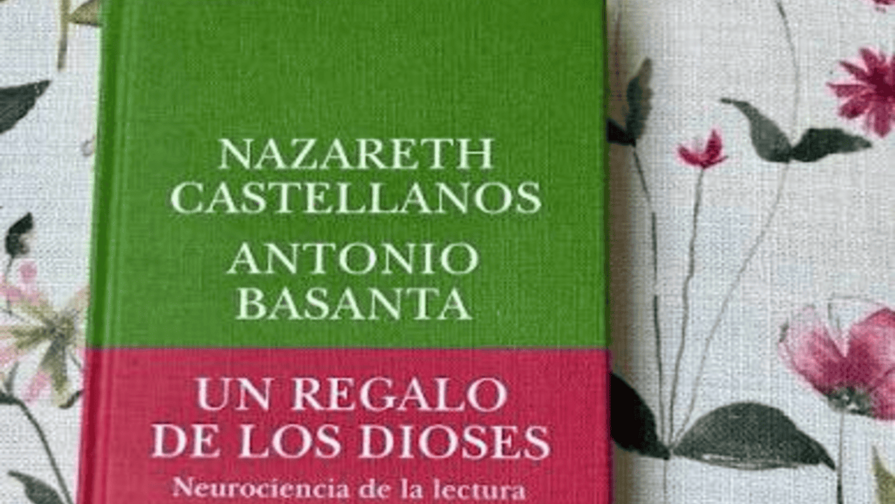
The work, titled Un regalo de los dioses: Neurociencia de la lectura, explores the intersection between biological science and literary culture, detailing how acquiring literacy reshapes neural pathways and influences emotional well-being.
Spanish author and classicist Irene Vallejo endorsed the release, praising the collaborative project for bringing science and humanism together to examine reading as an everyday work of art. Vallejo described the exchange between the two specialists as a revealing, dazzling and delightful Socratic dialogue.
Uniting Science and Humanism
The release drew attention in a literary review by philologist and lexicographer Maria Jose Rincon, writing in the Dominican newspaper Diario Libre from Santo Domingo. Rincon observed that the book arrives at a moment when public conversation frequently invokes neuroscience in an unscientific and arbitrary manner, prompting her to call for a careful and unhurried reading of the text.
In their dialogue, Castellanos and Basanta directly confront the modern division between the sciences and the humanities. The authors challenge the widespread cultural assumption that technical science and humanistic thought represent an irresolvable dichotomy, asking why society insists on treating the two traditions as separate.
According to both authors, curiosity serves as the primary engine driving both scientific inquiry and humanistic study. They maintain that the two fields represent immediate connection points and inseparable synonyms, united by an identical passion for knowledge.
The Physical Experience of the Reading Brain
Castellanos, a physicist and neuroscientist who specializes in researching cerebral activity and working as a science communicator, outlines the physical dimensions of engaging with printed text. She explains that reading functions as a bodily experience that slows and synchronizes human breathing.
She further notes that the visual navigation of the eyes, moving steadily from one word to another, from line to line, and across pages, directly modulates the brain. The physical process of reading requires the brain to coordinate visual inputs, internal sound recognition, and semantic interpretation simultaneously.
In cognitive science, the human brain possesses no innate biological center dedicated exclusively to reading. Instead, the brain relies on neuroplasticity to repurpose visual and language networks, making the disciplined practice of following text a transformative workout for attention and memory.
Reading the World Before Written History
Basanta, a philologist who holds a doctorate in Hispanic literature and authored the critical volume Leer contra la nada, approaches the subject through the cultural legacy of the printed word. In his previous work, Basanta championed reading as an act of personal freedom, critical reflection, commitment, and creative resistance against intellectual passivity.
In the new dialogue, Basanta insists that reading represents an essential instrument of knowledge and a shared collective legacy placed into human hands with every good book. The authors note that the human capacity for reading emerged long before the historical invention of written alphabets.
Castellanos and Basanta explain that early humans first learned to read the surrounding physical world and one another. Early communities developed curiosity and focused attention as an innate biological mechanism to communicate with their environment and fellow human beings.
This early interpretative mechanism played a crucial role in the development of human empathy. By closely observing and understanding others who resembled them, early humans fostered increasingly close interpersonal relationships, laying the groundwork for complex social bonds.
The Infinite Power of the Spoken Word
Effective human communication ultimately required the development of the word, which the authors identify as the most astonishing communicative instrument ever invented. Basanta points out that the human word is nearly infinite in its creative and expressive potential.
Thousands of years after the advent of written records, the authors argue that society requires attentive, comprehensive, dedicated, critical, and empathetic reading more than ever. They emphasize that readers need books not only to understand external events, but also to decipher the internal experiences and emotions they carry within themselves.
The authors note that simply opening a book allows an individual to integrate the visual, the auditory, and the interpretative faculties of the brain. They conclude that reading achieves its richest reward when readers take what they absorb and share it with others in calm, fruitful, and open dialogue.
Publishing and Background Context
The work is published by Editorial Siruela, an established Spanish independent publishing house founded in Madrid in 1982. Siruela is widely recognized for issuing philosophical essays, world literature, and interdisciplinary works that examine culture through both analytical and literary perspectives.
Endorser Irene Vallejo gained international literary prominence with her award-winning history of ancient books and reading, published in Spanish as El infinito en un junco. Her recommendation reflects the ongoing effort among Spanish-language scholars to highlight reading as a vital cultural practice rather than an obsolete technology.
Reviewer Maria Jose Rincon, an academician of the Dominican Academy of Language who holds Chair Z, concluded that the book offers a necessary counterweight to superficial popular science. The authors propose that readers approach books with patience, allowing regular reading habits to steadily cultivate focus, empathy, and intellectual clarity.