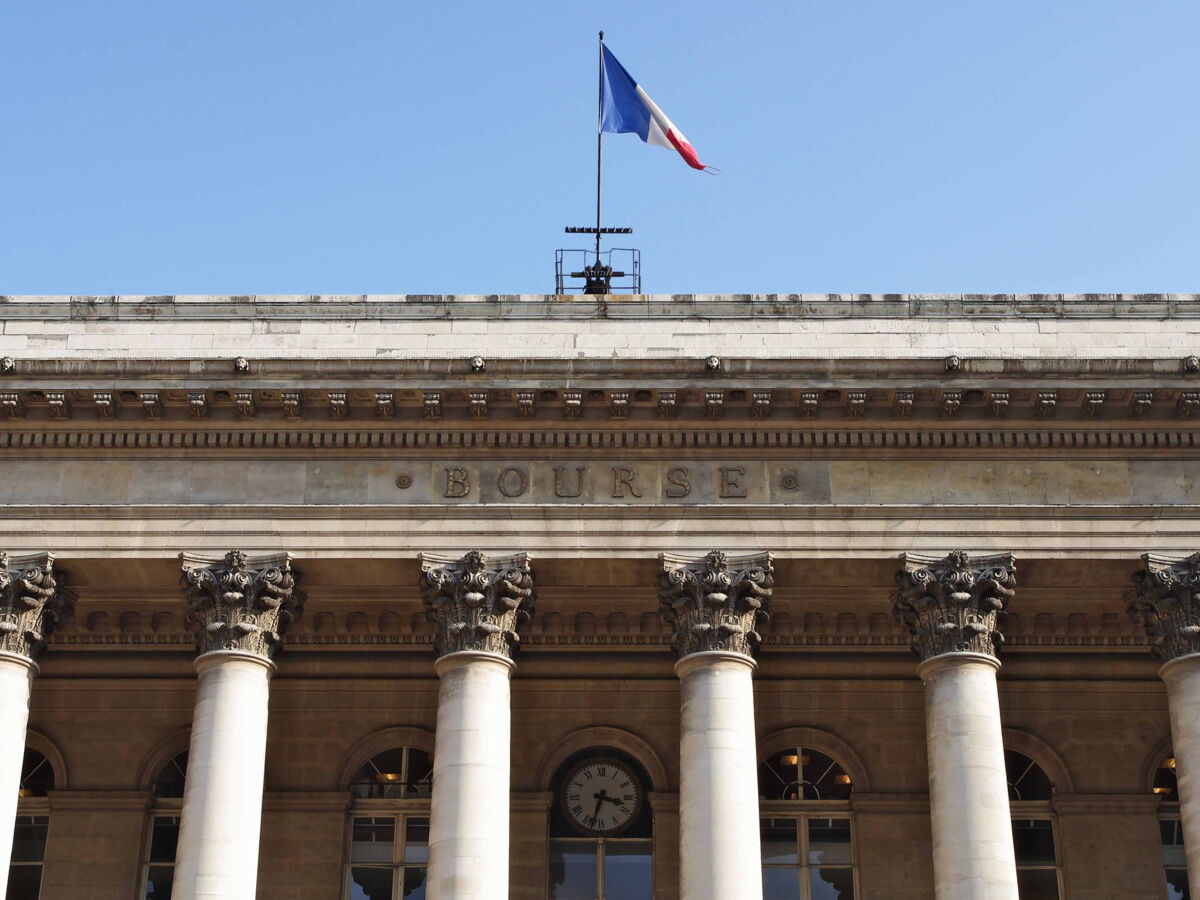
The Paris Stock Exchange advanced on Thursday, November 12, sending France's flagship CAC 40 index up 0.74% to 8,394.82 points as governance turmoil at Nvidia rattled global technology shares.

French equities benefited from having lower exposure to artificial intelligence stocks than rival markets in Asia and the United States. On the previous day, the CAC 40 had gained 0.66% to 8,332.87 points around 10:15 a.m. Paris time, according to a market report by Capital and Agence France-Presse.
Ipek Ozkardeskaya, an analyst at the Swiss financial services group Swissquote, explained that Nvidia's difficulties on Thursday morning were reinforcing an investment rotation toward non-technology stocks.
The CAC 40, or Cotation Assistee en Continu, is France's benchmark stock market index, tracking 40 of the largest publicly traded companies listed on Euronext Paris. Unlike US benchmarks that carry heavy weightings in semiconductor and software leaders, the Paris index is weighted primarily toward luxury goods, industrial manufacturing, banking, consumer products and traditional energy companies.
Nvidia board meeting over CEO Jensen Huang
The shift in market sentiment followed press reports that US semiconductor giant Nvidia Corporation was preparing to oust its iconic co-founder and chief executive officer, Jensen Huang. According to several US media outlets, Nvidia's board of directors met on Wednesday evening San Francisco time to decide on Huang's possible departure after he was shaken by an extramarital affair with a Chinese woman suspected of espionage.
The calling of the board meeting at the company, which is headquartered in Santa Clara, California, caused shock across Silicon Valley and beyond. The outcome of the discussions remained unknown on Thursday morning Paris time.
Andreas Lipkow, an analyst at the financial services firm CMC Markets, said Huang had shaped the semiconductor manufacturer like few other corporate executives and had turned it into one of the most important companies in the global artificial intelligence wave through his strategic vision. Lipkow added that uncertainty would therefore be considerable if a change in leadership were actually to take shape.
Huang co-founded Nvidia in 1993 and has served as its chief executive since its inception. Under his leadership, the company expanded from designing three-dimensional graphics chips for personal computer video games into supplying the high-performance graphics processing units used in data centers to train and run artificial intelligence models worldwide.
Losses for European semiconductor stocks in Paris
While the broader Paris market traded in positive territory, nervousness surrounding Nvidia spread to semiconductor sector stocks across Europe. In Paris around 10:15 a.m. local time, shares in STMicroelectronics fell 0.87% to 41.81 euros, while Soitec dropped 1.38% to 106.85 euros.
STMicroelectronics is a Franco-Italian electronics and semiconductor manufacturer and CAC 40 constituent that supplies microcontrollers, sensors and power chips for automotive and industrial applications. Soitec, based near Grenoble in southeastern France, designs and manufactures engineered semiconductor materials, including silicon-on-insulator wafers used in smartphones, automotive electronics and connected devices.
AI market sentiment and central bank policy risks
Until the governance questions emerged at Nvidia, investor confidence in artificial intelligence had been regaining momentum. Ozkardeskaya noted that better-than-expected earnings results from CoreWeave had given investors something more appealing to focus on than inflation, while the upcoming initial public offering of Anthropic had also revived market appetite for a fresh dose of artificial intelligence.
CoreWeave is a US cloud computing infrastructure provider that specializes in GPU-accelerated data center capacity for artificial intelligence developers. Anthropic is a US artificial intelligence research and safety company known for developing the Claude family of large language models.
Looking ahead, Ozkardeskaya cautioned that the rotation toward non-technology stocks could run into expectations of more restrictive monetary policies from central banks, while falling energy prices could accompany part of that pressure.