

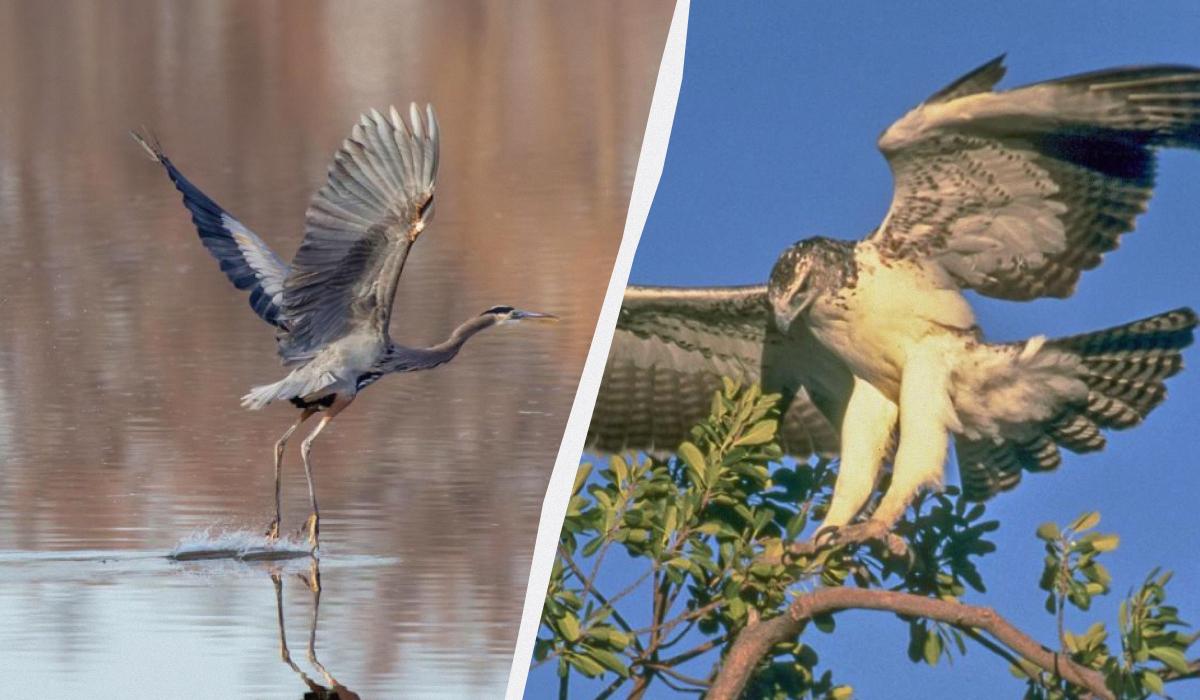
Nature magazine Discover Wildlife has detailed the specific physical characteristics that define birds of prey, explaining why species such as penguins and herons are excluded from raptor status despite hunting live animals.
According to the publication, classification depends on particular anatomical tools used to capture and kill prey rather than diet alone. The term raptor traces back to ancient Latin roots.
The word raptor originates from the Latin verb rapere, which means to grab or take by force. The term translates to an abductor or thief. It describes a bird with exceptionally sharp vision that uses curved talons on short or medium legs to grasp prey before killing it with a sharp hooked beak.
The English expression bird of prey emerged in the 14th century as a translation of the Old French phrase oiseaux de proie, which derived from the Latin avis praedae, meaning birds that grab in front of themselves.
In older English phrasing, the word of denoted a close association or property rather than direct ownership. Similar historic constructions include beast of burden, man of honour, walk of shame, and skies of blue. While most of these phrases now belong to formal or poetic language, bird of prey remains in common use.
Discover Wildlife suggested that bird of prey remains popular because it sounds gentler than raptor, a word that often evokes images of tearing flesh and prehistoric dinosaurs from popular films.
Physical Anatomy and Hunting Tools
Many birds hunt living creatures without qualifying as raptors. Penguins, herons, storks, crows, kingfishers, gulls, robins, and shrikes prey on fish, small mammals, snakes, worms, and caterpillars. However, they lack the specific anatomical combination of talon strength and beak shape required for raptor classification.
Vultures represent a unique exception in ornithology. Vultures are classified as raptors even though they scavenge carcasses rather than killing live prey. They possess the structural features of birds of prey, although their physical tools are not adapted for efficient killing.
The publication noted that the classification of vultures demonstrates how nature frequently resists rigid rules and consistency.
Taxonomy and Genetic Research
Historical efforts to group predatory birds date back centuries. Carl Linnaeus, the 18th-century Swedish biologist and physician who established modern scientific naming systems for living organisms, made the first major attempt to organize birds of prey into structured families and species.
Linnaeus divided birds of prey into four primary groups under the collective name Accipitres. These groups comprised Vultur for vultures, Falco for eagles, hawks, and falcons, Strix for owls, and Lanius for shrikes.
Later ornithologists refined these categories while continuing to rely on visible physical traits. This approach remained standard until technological advances enabled deeper biological analysis.
During the 1970s, researchers began utilizing DNA analysis to determine evolutionary relationships among bird species. Genetic testing revealed that several species had been misclassified based solely on outward appearance.
Discover Wildlife highlighted vultures as a clear example of these genetic revelations. Old World vultures inhabiting Europe and Africa share direct genetic links with eagles and hawks. Conversely, New World vultures native to North and South America are more closely related to storks and cranes.
Despite genetic discoveries, modern taxonomy continues to rely heavily on physical structures of the beak, legs, and feet when defining raptors. For example, the secretary bird features a hooked beak and sharp talons alongside long legs similar to a stork. Because of its predatory tools, experts classify it as a raptor, illustrating that animal classification remains complex.
Urban Adaptation of Peregrine Falcons
The physical capabilities of raptors also enable remarkable environmental adaptations. Ukrainian news outlet UNIAN previously reported on the success of the peregrine falcon, a member of the falcon family recognized as the fastest predator on the planet.
Peregrine falcons were once threatened with extinction across the United Kingdom. Today, more than 100 breeding pairs inhabit the Greater London area.
UNIAN reported that the urban skyline of the British capital, characterized by high-rise buildings, hospital roofs, construction cranes, and cathedral spires, provides an ideal artificial habitat that mimics the remote coastal cliffs where the species historically nested.


