Spanish publishing house Arpa editores has released new translations of Plato's Republic and Aristotle's Politics featuring commentary from prominent contemporary philosophers in Madrid.
The updated editions pair classic foundational texts of Western political thought with a preface by Javier Gomá, director of the Fundación March, and a postface by Ángel Gabilondo, Spain's Ombudsman.
Antonio Guzmán Guerra, a veteran Hellenist and expert on Plato with decades of translation experience, prepared the new Spanish text for the Republic.
Federica Pezzoli, a philologist at the Complutense University of Madrid who has focused her career on Aristotle's Politics, translated the companion volume.
New translations address ancient controversies
Pezzoli's translation updates Aristotle's text while directly addressing traditional critiques of the philosopher, including long-standing accusations of misogyny. Her analysis focuses on the debate surrounding women in Platonic utopias and Aristotle's subsequent reactions to those proposals.

The publisher emphasized that both works were translated directly from their original classical Greek into modern Spanish by specialized scholars.
Writing in La Razón, David Hernández de la Fuente noted that the release comes amid a surge of interest in classical texts, where some competing editions rely on ethically questionable practices such as translating through intermediate languages or recycling out-of-copyright historical translations.
Arpa editores launched the dual release as flagship titles in its ongoing project to retranslate classical Greek and Roman literature for each new generation of readers.
Modern thinkers link classical theory to current crises
Gomá and Gabilondo met at the Fundación March in Madrid prior to the summer to discuss the contemporary relevance of both philosophical works.

Their respective preface and postface frame the classical theories around modern democratic concerns, including civic responsibility, justice, institutional exemplarity, and public governance.
Hernández de la Fuente wrote that revisiting the foundational debate between Plato and Aristotle has heightened urgency as contemporary democracies confront populism, institutional degradation, and political corruption.
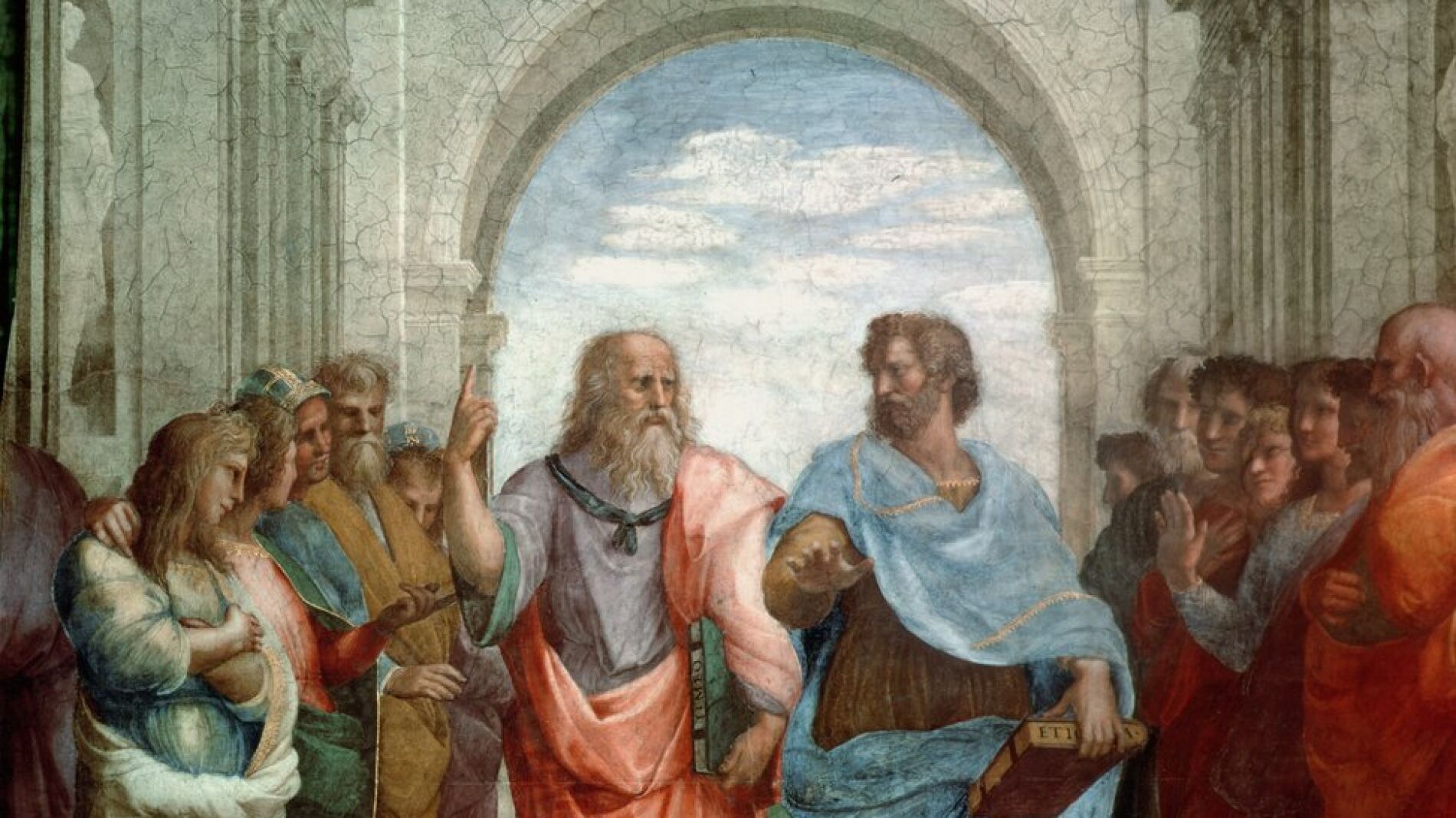
Hernández de la Fuente drew a vivid comparison to a historic boxing match between Plato, described as the broad-shouldered master of the Academy, and Aristotle, characterized as the relentless logician of the Lyceum.
The two 4th-century BC works established core questions regarding optimal political regimes, fair community organization, power distribution, and the prevention of civil strife.
Centuries of Western political debate
Political discourse across Western history has drawn continuously on the arguments laid out in the Republic and the Politics since their creation in ancient Athens.
Readers engaged with both texts during the final years of the Roman Republic under Marcus Tullius Cicero, marking the last participatory system of classical antiquity.
Later scholars continued the debate through the Roman Empire, while Islamic philosophers including Aflatun and Aristutalis adapted their concepts to frame governance within the umma.

Christian thinkers in medieval Europe debated Platonic and Aristotelian models across universities, papal courts, and municipal squares, examining ideal statecraft alongside educational structures outlined in Books VII and VIII of the Politics.
The intellectual rivalry was revived in Renaissance Italian city-states through figures such as Leonardo Bruni and Niccolò Machiavelli, a heritage depicted visually in Raphael's fresco The School of Athens.
Modern political systems, from the American 13 colonies and the French Revolution to liberal democracies and totalitarian regimes, have similarly rested on reinterpretations of Plato and Aristotle's core governance frameworks.