


Spain's Supreme Court has ruled that only qualified architects may certify minimum safety and health conditions for irregular residential buildings seeking legal status in Andalusia.
The judgment by the Third Section of the Administrative Litigation Chamber resolves a long-running professional boundary dispute between architects and technical architects across the southern Spanish region.
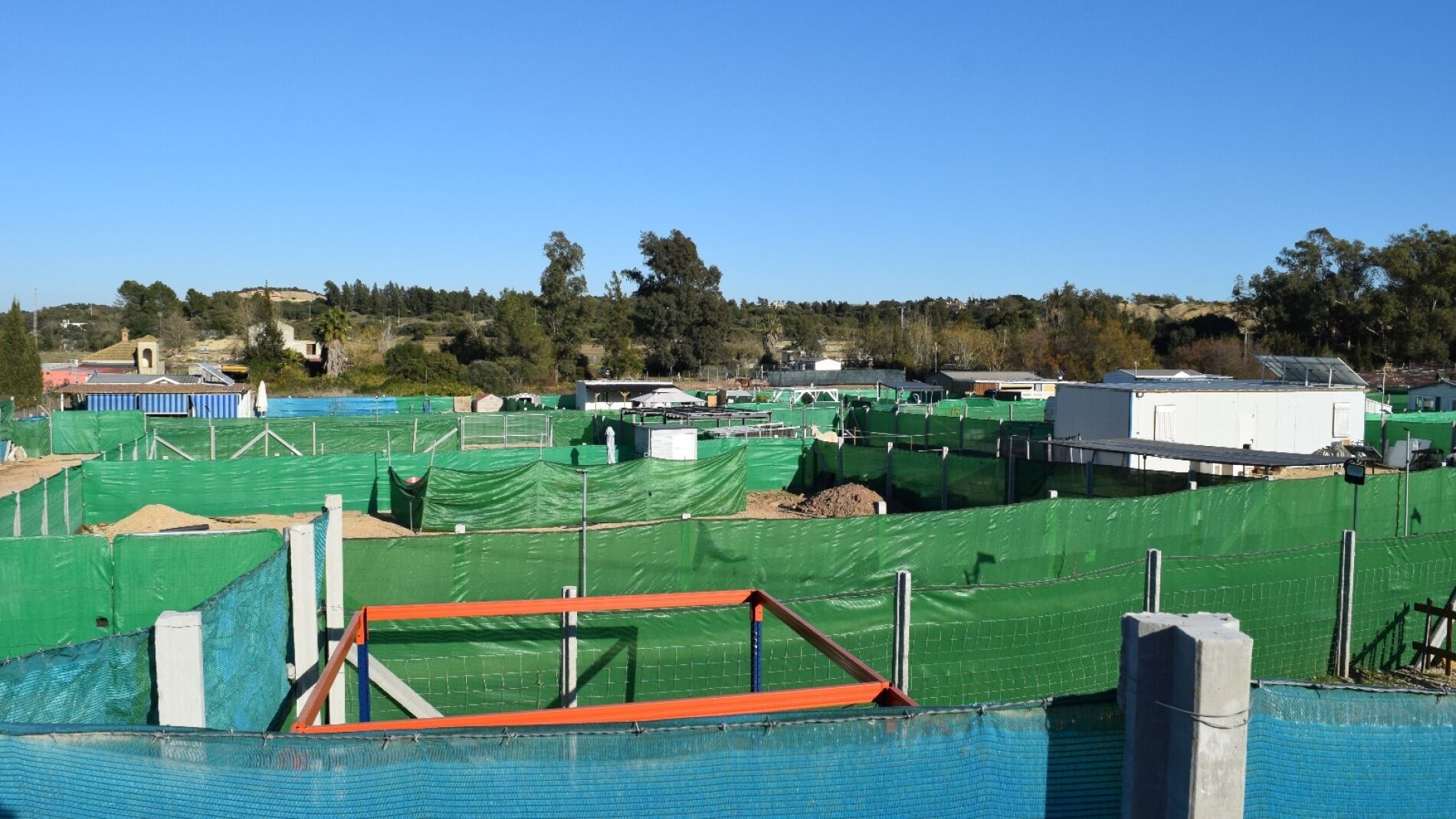
Delivered under sentence number 587/2026 on May 11 with Judge José Luis Gil reporting, the ruling reserves this legal certification exclusively for architects while excluding technical architects and quantity surveyors.
The decision directly affects thousands of urban planning regularisation files in Andalusia. Under regional planning rules, owners of unpermitted residential properties can apply for an assimilated to out of order declaration, known locally as AFO status, to recognise existing structures and gain access to basic municipal utilities.
Origin of the dispute in Guaro
The legal battle began in 2017 in the municipality of Guaro, located in the province of Málaga. Guaro Town Council halted an application for an AFO declaration because the technical documentation had been signed by a technical architect rather than a fully qualified architect.
The municipal decision followed a legal report issued on January 26, 2016, by the Legal Services of the Provincial Council of Málaga, which concluded that certifying residential building safety was the exclusive competence of architects.
The Official College of Quantity Surveyors and Technical Architects of Málaga challenged the stoppage in court and initially won. On April 21, 2020, Administrative Litigation Court Number 6 of Málaga upheld the quantity surveyors' appeal.
That decision was appealed by the Official College of Architects. On September 22, 2022, the High Court of Justice of Andalusia dismissed the architects' appeal and ruled that both professions shared authority, relying on Andalusian Decree-Law 3/2019, which used the generic phrase competent technician. The Supreme Court has now overturned that regional ruling in favour of architects.
Supreme Court technical reasoning
In its decision, the Supreme Court rejected interpreting the term competent technician in Decree-Law 3/2019 as allowing any technical qualification indiscriminately. The tribunal stated that the required certificate involves a comprehensive technical evaluation of the existing structure rather than an isolated verification of specific building elements or a simple check of conservation status.
The court held that this global technical assessment, involving structural safety, habitability, and fitness for residential use, links directly to the authority to design and direct building projects. Under Article 10.2.a of Spain's 1999 Building Regulation Law, project direction for Group A buildings, which includes residential housing, is reserved exclusively for architects.
The tribunal added that the AFO regime demands higher technical scrutiny rather than lower standards. Because irregular buildings lack initial urban planning legality, public administrations must enforce maximum guarantees regarding safety and sanitation before authorizing residential occupation, reinforcing the need for professionals with full legal authority over residential design.
Distinction from completion certificates
The Supreme Court also corrected the Andalusian high court for equating the AFO certificate with a final work completion certificate. Under national building regulations, a final work certificate has a dual function signed jointly by the director of work, who is an architect, and the director of execution, who is a technical architect.
The tribunal noted that the two documents cannot be equated, explaining that the AFO certificate has its own distinct content that aligns more closely with the specific role of the work director.
The legal doctrine applies to proceedings under Andalusian Decree-Law 3/2019. That decree-law has since been repealed by the General Regulation of Andalusian Law 7/2021, which eliminated the generic phrase competent technician from its text.
The Supreme Court declined to order either party to pay legal costs, acknowledging that the professional dispute involved evident legal complexity. The ruling closes the litigation originating in Guaro and establishes definitive jurisprudence on certification rights for residential properties in Andalusia.


