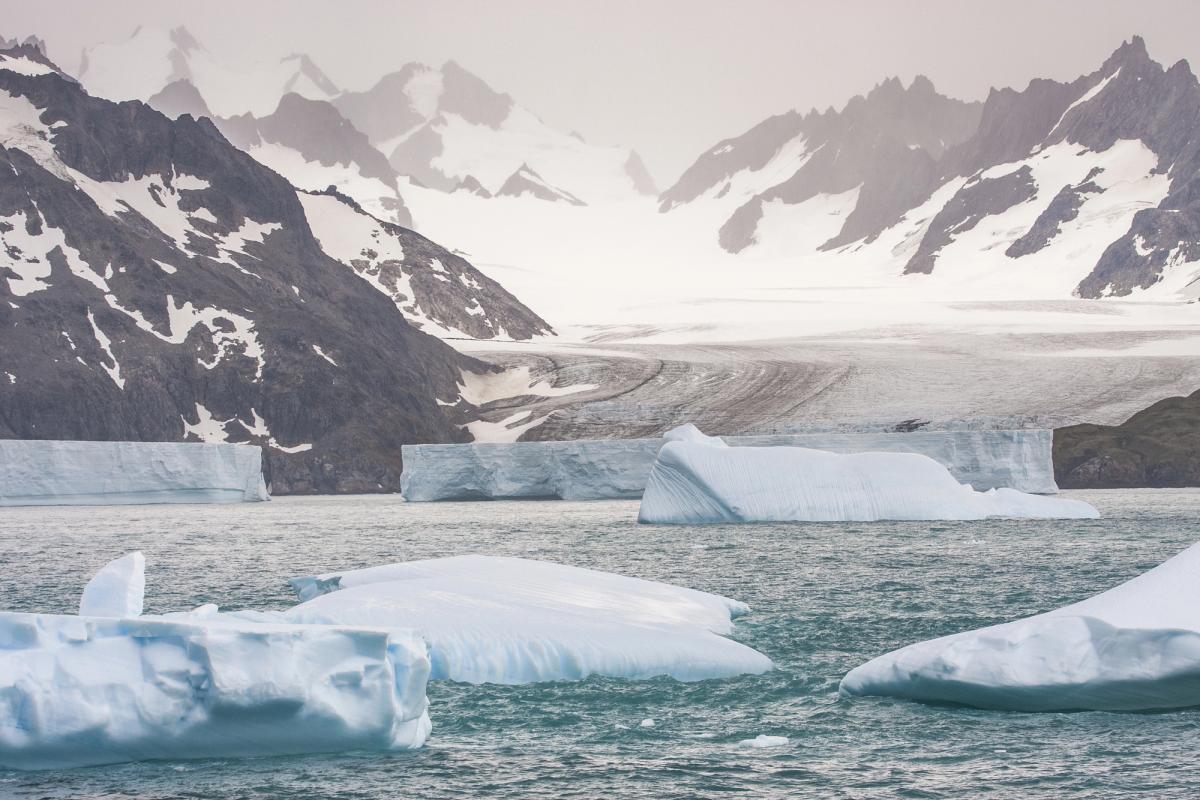
An international team of scientists has found that two major earthquakes recorded in 2025, measuring magnitude 7.5 and 7.6, struck along an ancient tectonic structure long presumed inactive near Antarctica. Both quakes hit the Drake Passage, the stretch of ocean separating South America from Antarctica, National Geographic reported.
Their epicenters were only 15 kilometers apart, and the two events were separated by just 49 days.
The discovery was published on October 30, 2026, in the journal Communications Earth & Environment, and challenges a long-held assumption in geology. According to the study, a tectonic plate no longer moving on its own does not mean its ancient fractures have lost the ability to generate earthquakes.
The research, led by Emanuele Lodolo of Italy's National Institute of Oceanography and Experimental Geophysics, suggests that some geological scars can retain their fragility over extraordinarily long periods.
A vanished plate that can still rupture
Earth's surface is divided into tectonic plates that move slowly over the mantle below. Their boundaries are the planet's main zones of seismic activity, where stress builds up in rock and is periodically released as earthquakes. But Earth's tectonic history is far more complicated than today's plate map suggests.
Over millions of years, some plates have vanished entirely as independent structures, usually because they slid beneath other plates in a process known as subduction. Others were absorbed into larger tectonic systems. One of these is the ancient Phoenix plate, remnants of which lie near the Antarctic Peninsula.
The researchers examined the two large earthquakes in the region and found that their epicenters matched the location of an ancient transform fault. Such faults form when two sections of oceanic crust slide past each other in opposite directions; once that movement stops, the structures left behind are known as oceanic fracture zones.
These zones have traditionally been considered tectonically dead. The new findings, however, show they can retain mechanical weaknesses that, under the right conditions, resurface.
Scars that never fully heal
To reconstruct what happened, the scientists combined seismic data with geophysical information about the seafloor, including seismic reflection profiles. The method allows researchers to study underground structures by sending waves into the earth and reading how they bounce back off different geological layers.
The results showed the earthquakes struck within the zone of the ancient fault, where deformation is still concentrated. The team pointed to two reasons a long-dormant structure might reactivate: the geometry inherited from the ancient fault concentrates stress in specific spots, and present-day interactions between the Scotia and Antarctic plates transmit force even to distant areas. As a result, a crack formed millions of years ago under entirely different conditions can once again play an important role.
The study also found evidence that volcanic material can seep into rock through these weakened structures. The researchers believe the ancient fracture now acts as a vast shear zone within the part of the Phoenix plate that continues to sink slowly beneath the South Shetland Islands.
In other words, the Earth's crust does not start with a clean slate each time its tectonic structure changes. It always inherits its cracks and weak points, the researchers said.
A new complication for seismic hazard maps
The implications extend well beyond Antarctic waters. Seismic hazard models typically focus on active plate boundaries, where powerful earthquakes most often occur. But so-called intraplate earthquakes, those that strike within a plate rather than at its edge, also occur.
The study shows that some ancient oceanic fracture zones can produce very powerful earthquakes even without being active plate boundaries. That does not mean every old fracture is necessarily dangerous, or that scientists can now predict when the next earthquake will occur, the researchers said.
Reactivation depends on current stress levels, the orientation of the structures and their mechanical properties. What has changed, according to the study, is scientists' understanding of where seismic energy can build up and be released.
Continents and oceans carry a physical memory of their geological past, the researchers said, and some of its pages, however final they appear, can still tear open again.