Utrecht University in the Netherlands announced on Tuesday that a roughly 1,700-year-old fragment of Homer's "Odyssey" has been identified in its library collection. The parchment, dated to between the third and fourth centuries, contains verses from Book XII of the ancient Greek epic.
The fragment was identified by Dutch researcher Mark de Kreij, who was studying a collection of ancient manuscripts belonging to Utrecht University. It joins around 30 other Odyssey fragments identified worldwide.
Overlooked for decades
The piece had sat unidentified in the Utrecht library for decades and was initially considered of little importance, the university said.
De Kreij told regional broadcaster RTV Utrecht that it was in fact something very special. He said it had been there, somewhere in Utrecht, but nobody knew it existed.
The researcher first recognised words characteristic of Homer's epic, and further analysis showed they matched Book XII of the "Odyssey," the classical Greek work that recounts Ulysses's journey home to Ithaca after the Trojan War.
Size of a playing card
The fragment measures 6.6 by 7.7 centimetres, roughly the size of a playing card, and shows discoloration and moisture stains, according to international news agencies.
Utrecht University said in a statement that the parchment likely came from a complete, small-format edition of the "Odyssey," about the size of a Kindle e-reader. It probably belonged to a reader of Homer living in the Faiyum oasis in Egypt around the year 300.
A turning point in the epic
The surviving verses describe one of the decisive moments of the "Odyssey": when Helios, the sun god, discovers that Ulysses's crew have slaughtered and eaten his sacred cattle despite being forbidden to do so. Helios asks Zeus to punish them, and a storm destroys the ship, killing the entire crew and leaving Ulysses as the sole survivor.
The university described the passage as a "crucial turning point" in the "Odyssey," which is made up of 24 books in total.
Bought from a German scholar's heirs
The fragment belongs to a collection of ancient Christian manuscripts that Utrecht University bought in the mid-20th century from the heirs of German academic Carl Schmidt.
Most of the parchment documents in the collection were written in Coptic, a language used in Egypt and written mainly with characters derived from the Greek alphabet. The collection also included Egyptian and Greek papyri that had received less attention over the years.
Despite its age, papyrologist Mark de Kreij said the fragment is not among the oldest documents he has worked with. He told the local TV channel it was actually quite recent by his standards, adding that he has what he called the most fun job in the world, that of a treasure hunter.
Announcement timed to Nolan film
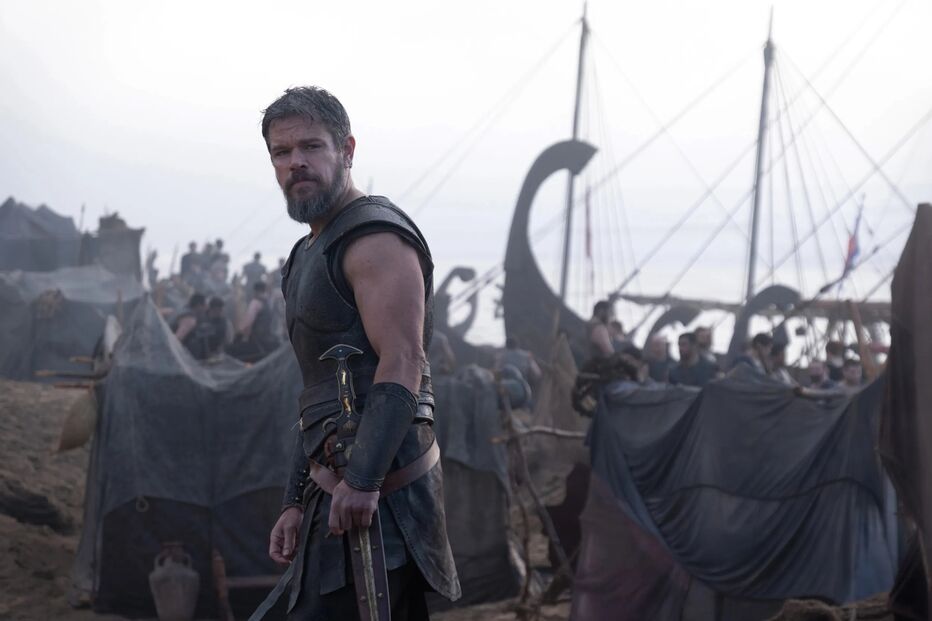
De Kreij found the fragment about two years ago, but the university chose to announce the discovery now, coinciding with renewed interest in Homer's work following the premiere of "The Odyssey," the film adaptation directed by Christopher Nolan.
According to Utrecht University, only about 30 fragments of the "Odyssey" from the early centuries of the Christian era exist anywhere in the world. One is held at the Metropolitan Museum of Art in New York, which also put it on display this summer following the premiere of Nolan's film.