
Dominican choreographer and dancer Alina Abreu is celebrating her 40-year artistic career with the world premiere of her original ballet, La Ciguapa, at the Teatro Nacional Eduardo Brito in Santo Domingo this November.
The classical ballet production brings one of the most famous legends of Dominican folklore to the national stage, fusing dance, original music and fantasy to tell the story of a mythical mountain creature.

Performances will run from November 13 to November 15 in the Sala Carlos Piantini, the main auditorium of the national theatre.
Abreu, who wrote and produced the piece, has created a work that translates a deeply rooted oral tradition into the language of classical ballet. The production aims to combine national identity with visual fantasy, designed to transport audiences to the remote, high-altitude landscapes where the mythological figure is said to dwell.
The ciguapa legend
The ballet is inspired by the ciguapa, a mysterious and elusive figure in Dominican mythology. According to traditional folklore, ciguapas are magical, wild creatures who inhabit the deep forests, caves and high mountainous regions of the Caribbean island.
They are typically described as female figures with long, thick hair that covers their bodies. However, they are most famously characterised by a unique anatomical anomaly: their feet point backwards. This trait means that their footprints lead in the opposite direction to the one they are travelling, making it impossible for hunters or trackers to follow them through the wilderness.
Legends often portray them as nocturnal and shy, though some tales describe them luring travellers into the woods. The story is a staple of Dominican oral tradition, passed down through generations and frequently explored in the country's literature and visual arts.
Choreographic challenges
Translating the physical trait of the backward-facing feet into classical ballet presented a specific challenge for the production. Classical ballet relies on a strict technique of turned-out legs and pointed toes, moving forward and upward.
To address this, Abreu developed a specialised choreographic language specifically to recreate the backward-oriented feet of the ciguapa. This adaptation turns the creature's defining physical anomaly into a central element of the character's stage presence and movement vocabulary.
The title role of La Ciguapa will be danced by Laura Isabel Fernández, a demanding part that requires blending classical technique with the distinctive, unnatural gait required by the choreography.
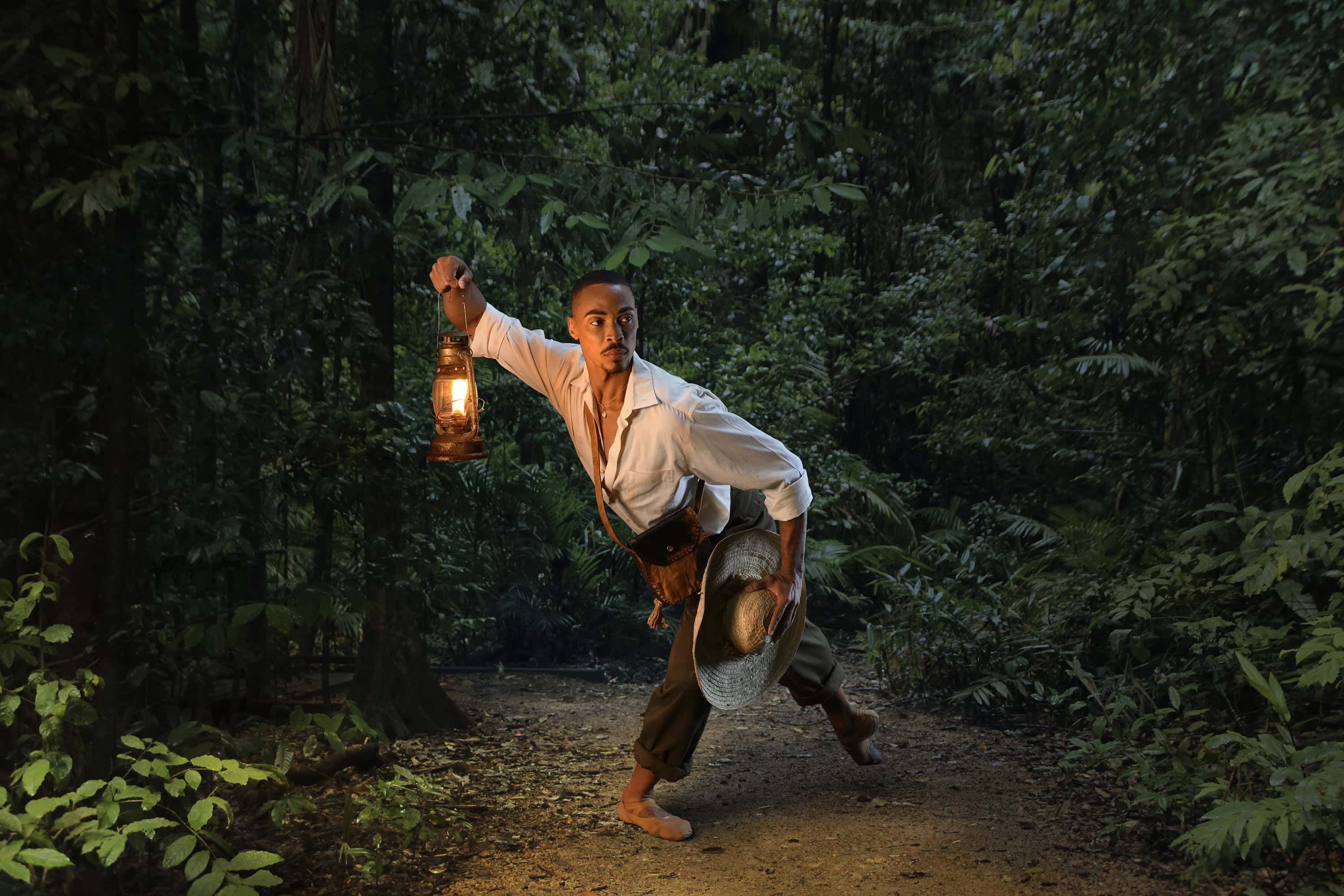
She will be joined on stage by Alexander Duval, who is cast in the role of El Pilonero. In traditional Dominican culture, a pilón is a large wooden mortar and pestle used in rural areas to crush coffee beans, spices or plantains, and the figure of the pilonero is closely associated with agrarian life and the Dominican countryside.
Creative team and staging
The Teatro Nacional Eduardo Brito, located in the Plaza de la Cultura in the capital city, is the premier cultural institution in the Dominican Republic. Its main stage, the Sala Carlos Piantini, is named after the prominent Dominican symphony conductor and regularly hosts the country's most significant operatic, symphonic and theatrical events. The venue provides a large-scale canvas for the visual elements of Abreu's new work.
The production features an original musical score and musical direction by Junior Basurto Lomba.
The wider creative team draws from prominent figures in the Dominican performing arts. Theatrical direction is handled by Waddys Jaquez, a well-known Dominican playwright and director recognised for his work in both musical theatre and drama.
The set design, tasked with recreating the mystical mountain environment, is by Fidel López, one of the country's most established scenographers. Costume design is by Magaly Rodríguez, with lighting design and execution by Emmanuel Ferry.
Four decades in dance
Abreu is a central figure in the development of classical dance in the Dominican Republic. Over her four decades in the industry, she has worked extensively as a dancer, a teacher and a choreographer. Her career has been heavily focused on the technical and artistic education of young performers, shaping the development of ballet in the country.
Abreu stated that her 40 years in the profession represent a continuing platform to create new works and to train future generations of dancers. She noted that these upcoming artists must be committed not only to technical excellence on stage, but also to human values, discipline and sensitivity.
The choreographer indicated that La Ciguapa reaffirms her dedication to advancing dance in the Dominican Republic. By bringing this specific national legend to the stage, she is using the universal language of classical ballet to explore the roots of the nation's culture.
Performance schedule
The ballet will stage evening performances at 8:30 p.m. on Friday, November 13, and Saturday, November 14. A final presentation is scheduled for 7:00 p.m. on Sunday, November 15.
Tickets for the world premiere are currently available through Uepa Tickets and at CCN Servicios sales counters located in Nacional and Jumbo supermarkets.