

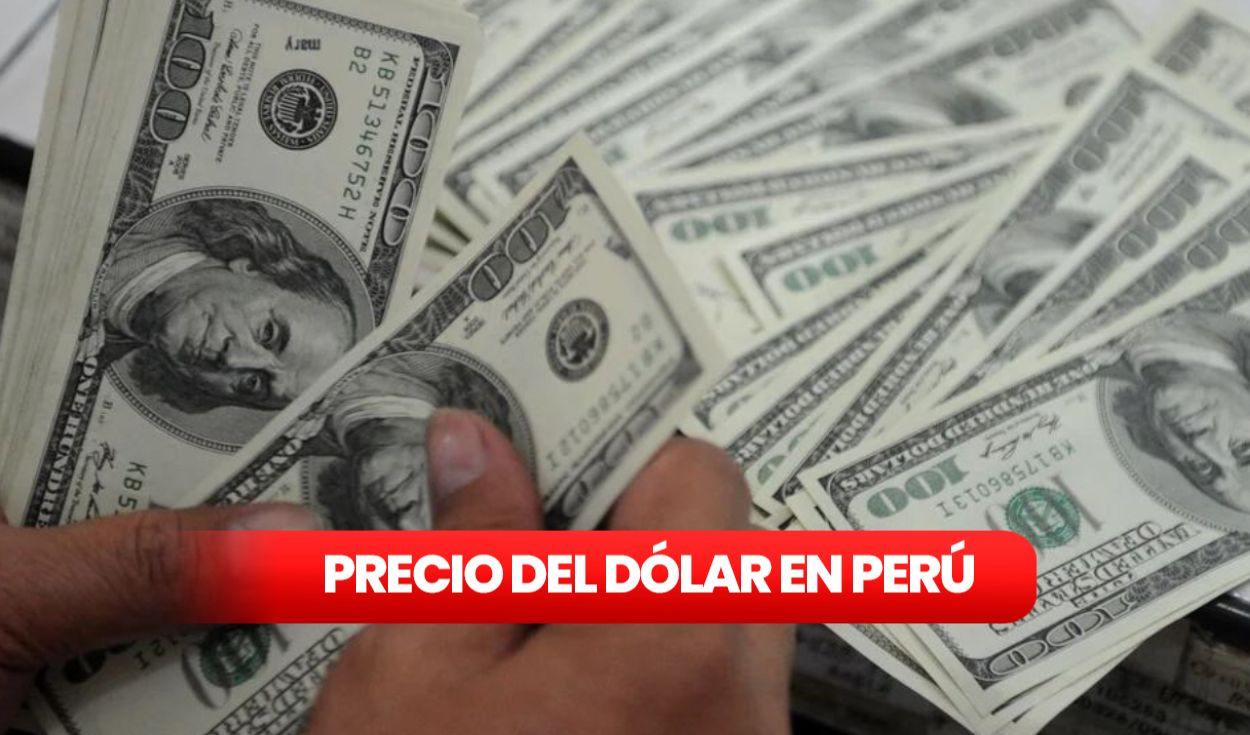
The United States dollar closed at S/3.462 in Peru on Monday, November 2, 2026, according to the Central Reserve Bank of Peru (Banco Central de Reserva del Perú, or BCRP), while the country's parallel currency market traded at S/3.440 for buying and S/3.475 for selling.
In its daily market coverage compiled by journalist Isabel Nomberto and updated at 15:38 local time, the Lima daily newspaper La República reported the central bank's closing figure at 15:35 on November 2. The BCRP closing rate of S/3.462 compared with a rate of S/3.470 recorded a day earlier, a movement the report described as an upward shift for the session.
Earlier in the trading day, preliminary market data from the financial information portal Bloomberg recorded an opening exchange rate of S/3.4683 at 07:51 local time. The daily figures track how the US currency trades across official institutions, commercial banks, currency exchange houses, and street money changers throughout Peru.
Exchange rates at Peruvian banks and SUNAT
Commercial and state banks across Peru posted wider buying and selling spreads than the parallel market on November 2. At Banco de Crédito del Perú (BCP), the country's largest commercial lender and a unit of the financial holding company Credicorp, the dollar traded at S/3.525 for buying and S/3.540 for selling.
Interbank, the banking flagship of the Peruvian retail and financial conglomerate Intercorp, listed its buy rate at S/3.493 and its sell rate at S/3.576. Scotiabank Perú, the local subsidiary of Canada's Bank of Nova Scotia, quoted the US currency at S/3.519 for buying and S/3.558 for selling.
At Banco de la Nación, the state-owned bank that handles public sector transactions, the exchange rate stood at S/3.480 for buying and S/3.600 for selling. BBVA, the Peruvian arm of the Spanish banking group Banco Bilbao Vizcaya Argentaria, posted a buy price of S/3.468 and a sell price of S/3.608, the highest selling quote among the five banks listed.
For tax and accounting purposes, the National Superintendency of Customs and Tax Administration (Superintendencia Nacional de Aduanas y de Administración Tributaria, or SUNAT) set its institutional reference rate at S/3.458 for buying and S/3.467 for selling, in a morning update at 07:53 whose subheading carried a September 20 date label. SUNAT is Peru's national tax and customs authority, operating under the Ministry of Economy and Finance.
Jorge Carrillo Acosta explained at 07:29 that the exchange rate published by SUNAT serves specifically as a benchmark for tax obligations. He noted that the rate allows individuals and businesses to determine the official figure they must record in their accounting ledgers when buying, selling, or filing tax declarations involving foreign currency, even though that figure can differ from commercial bank or exchange house prices.
Role of the Central Reserve Bank of Peru
As explained in the report at 14:56, the exchange rate represents the value of one currency relative to another. In Peru, this benchmark tells consumers and businesses how many Peruvian soles are needed to purchase one US dollar, or how many soles they will receive when selling the foreign currency.
The Peruvian sol, denoted by the symbol S/ and the currency code PEN, has served as the nation's monetary unit since replacing the inti in 1991. Because Peru maintains a partially dollarized economy where deposits, loans, and contracts frequently use US dollars alongside the sol, currency movements directly affect household and corporate budgets.
Under Peru's monetary framework, the Central Reserve Bank of Peru can intervene in the foreign exchange market to curb sharp fluctuations in the value of the dollar. According to the report's 14:55 update, these central bank operations are designed to moderate episodes of market volatility without establishing a fixed price for the US currency.
Why the dollar exchange rate matters in Peru
The report noted at 09:52 that the dollar had been falling and explained that exchange rate movements are governed by supply and demand. When the supply of dollars in the market exceeds demand, the price of the US currency drops, whereas when demand surpasses supply, the exchange rate rises.
Even when the rate moves by fractions of a sol, shifts in the currency have broad domestic consequences. Jorge Luis Ojeda emphasized at 11:56 that Peru is highly dependent on the exchange rate because a large portion of the national economy relies on imported goods paid for in US dollars.
Ojeda pointed out that Peru imports wheat using foreign currency, which directly determines the cost of feed in the livestock industry as well as the production of bread and other wheat derivatives. Those production costs in turn influence the price of the basic family food basket, while fuel is similarly purchased on the international market in dollars.
Price differences and counterfeit dollar checks
Because Peru operates a decentralized retail currency market, the price of the dollar varies across commercial banks, physical and online currency exchange houses (known locally as casas de cambio), and independent street money changers (cambistas) in the parallel market. Each financial institution or exchange operator sets its own buying and selling margins.
In its 13:43 update, La República advised readers to compare available quotes across different providers before exchanging soles or dollars. Alongside price comparisons, the publication shared a video guide at 12:03 advising consumers to verify security features on banknotes to determine whether their dollar bills are genuine or counterfeit.
Origin of the Peruvian slang term coco for the dollar
In addition to tracking market quotes, the coverage explained at 10:51 why Peruvians colloquially refer to US dollars as cocos. At Banco de Crédito del Perú, for instance, the bank operates a currency exchange product named Cocos y Lucas for customers converting between dollars and soles, pairing the slang word for dollars with luca, the traditional Peruvian vernacular term for one sol.
According to the report, the nickname traces back to the portrait of the first US president, George Washington, on the face of the United States one-dollar bill. Because the Spanish equivalent of the name George is Jorge, and people named Jorge are customarily given the nickname Coco in Spanish, the moniker became standard Peruvian slang for the greenback.


