Ukraine commemorates the victims of the Stalinist Great Terror on August 5, marking the launch of the Soviet Union's most severe purging campaign in 1937.
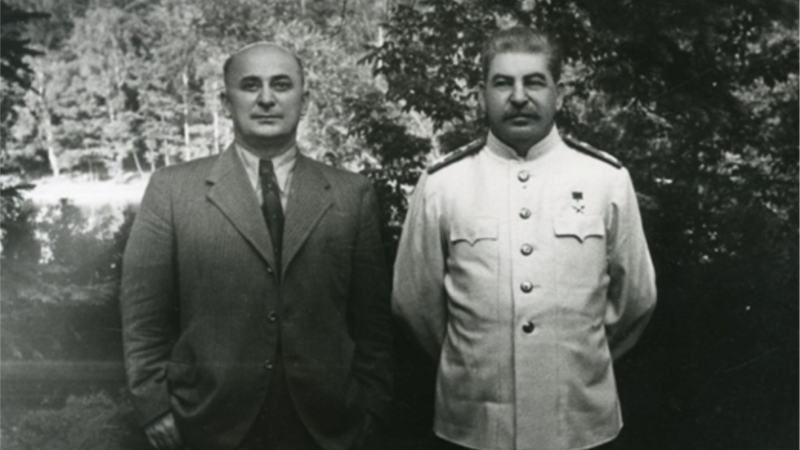
The repressions began after Resolution P 51/94 on anti-Soviet elements, passed by the Politburo of the Central Committee of the All-Union Communist Party on July 2, 1937, took effect on August 5, 1937. People's Commissar of Internal Affairs Nikolai Yezhov justified the measures, which Joseph Stalin edited personally. The NKVD issued Order No. 00447 to execute the policy, targeting anyone communist leaders deemed unfit for society.
Official Soviet archive statistics opened in 1989 show that 681,692 people received death sentences for political reasons across the Soviet Union during 1937 and 1938. Records from the OGPU, NKVD, MVD, and MGB indicate these executions accounted for 85 percent of all official state killings during the Stalinist era.
Executions and regional quota limits
The campaign opened with purges inside Communist Party ranks and security agencies. To accelerate sentencing, the Politburo of the Central Committee of the Communist Party of Ukraine ordered regional party branches to form extrajudicial bodies known as regional troikas.
Order No. 00447 established rigid punishment quotas for Soviet citizens. Category I decisions ordered execution by shooting, while Category II decisions mandated imprisonment in NKVD GULAG labor camps. The initial Category I quota for the Ukrainian Soviet Socialist Republic stood at 26,150 people.
Soviet officials expanded the killing quotas rapidly over the following months. In January 1938, the Moscow leadership raised Ukraine's Category I execution limit to 83,122 people. Ukrainian People's Commissars of Internal Affairs Izrail Leplevsky and Oleksandr Uspensky submitted repeated requests to Moscow seeking additional execution numbers.
Historical records indicate that mass repressions against Ukrainian citizens started long before 1937. Earlier state actions against rural populations took the form of forced collectivization, dekulakization, and the Holodomor genocide. The Great Terror specifically targeted intellectual workers and administrators, attempting to eradicate Ukraine's leadership class through mass shootings. Other forms of state repression persisted until the collapse of the Soviet Union.
Courts in the Ukrainian SSR sentenced 198,918 people during the Great Terror, sending roughly two-thirds of them to execution squads. At the Sandarmokh ravine near Medvezhyegorsk in Karelia, NKVD forces shot 1,111 prisoners between October 27 and November 4, 1937. The victims included 287 Ukrainians or individuals with direct ties to Ukraine.
Sandarmokh massacres and intellectual purge
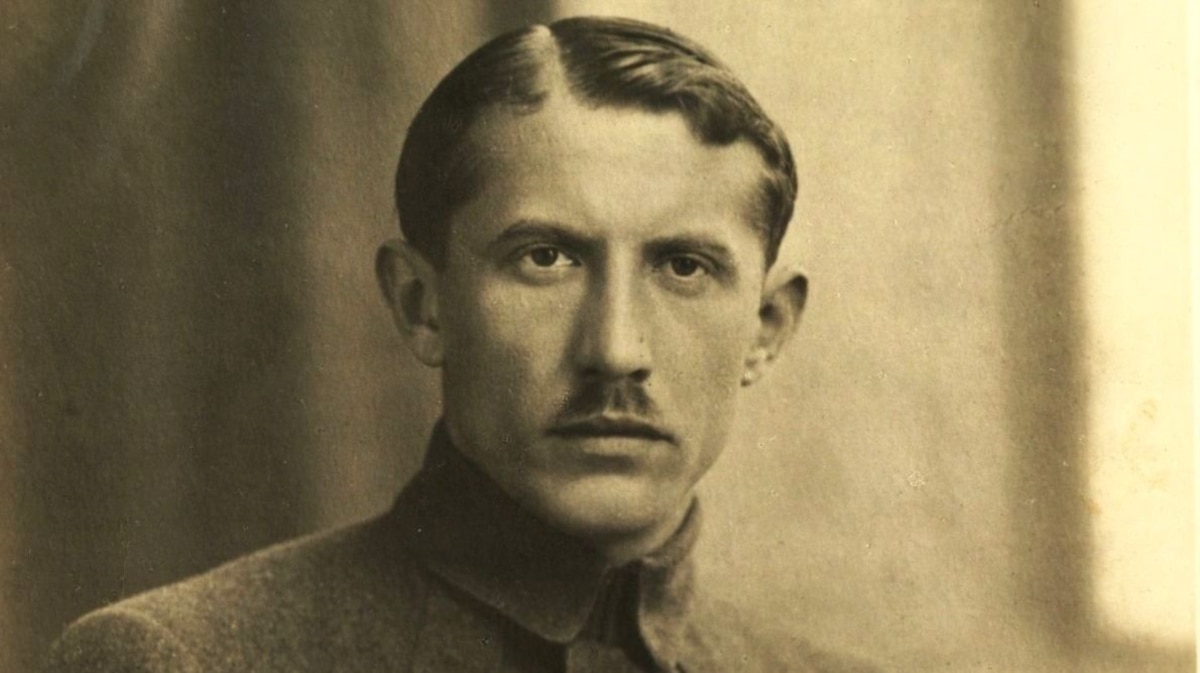
St. Petersburg Memorial representatives and historian Yury Dmitriev identified the initial excavation site at Sandarmokh on July 1, 1997. Research compiled by Radio Svoboda documented the execution of leading figures from the Ukrainian Renaissance of the 1920s, including theater director Les Kurbas, playwright Mykola Kulish, poet Marko Voronyi, scholar Mykola Zerov, and writer Valerian Pidmohylnyi.
Soviet authorities sent tens of thousands of citizens to prisons and labor camps during the crackdown. Security organs released only 0.3 percent of all arrested individuals. The Great Terror served as the final phase of a two-decade effort by Bolshevik authorities to suppress Ukrainian resistance and consolidate control across former Russian Imperial territories.
Archival disclosures and genocide ruling
Independent Ukraine continues to unseal and publish confidential documents from Soviet security services. Archives have digitized files on UNR intelligence operations and UPA military training involving Colonel Ivan Lytvynenko, alongside KGB records from Operation Block, which resulted in the arrests of roughly 90 Ukrainian dissidents.
The Center for Research on the Liberation Movement published training manuals from the KGB detailing methods used against Ukrainian, Jewish, Belarusian, and Lithuanian national movements. The center also digitized the criminal file of poet Mykola Zerov and collaborated with the SBU Archive to publish the case of Yuriy Tyutyunnyk, which includes a final letter written to his daughter before his execution. Public releases include over 1,000 intelligence documents from Ukraine, Georgia, and former Czechoslovakia regarding persecuted artists.
In January 2010, under President Viktor Yushchenko, a Ukrainian court examined 3,500 documents across 253 volumes to try the organizers of the 1932 to 1933 Holodomor, including Joseph Stalin. The ruling confirmed that Soviet leaders committed genocide against the Ukrainian national group by creating conditions intended for its physical destruction.
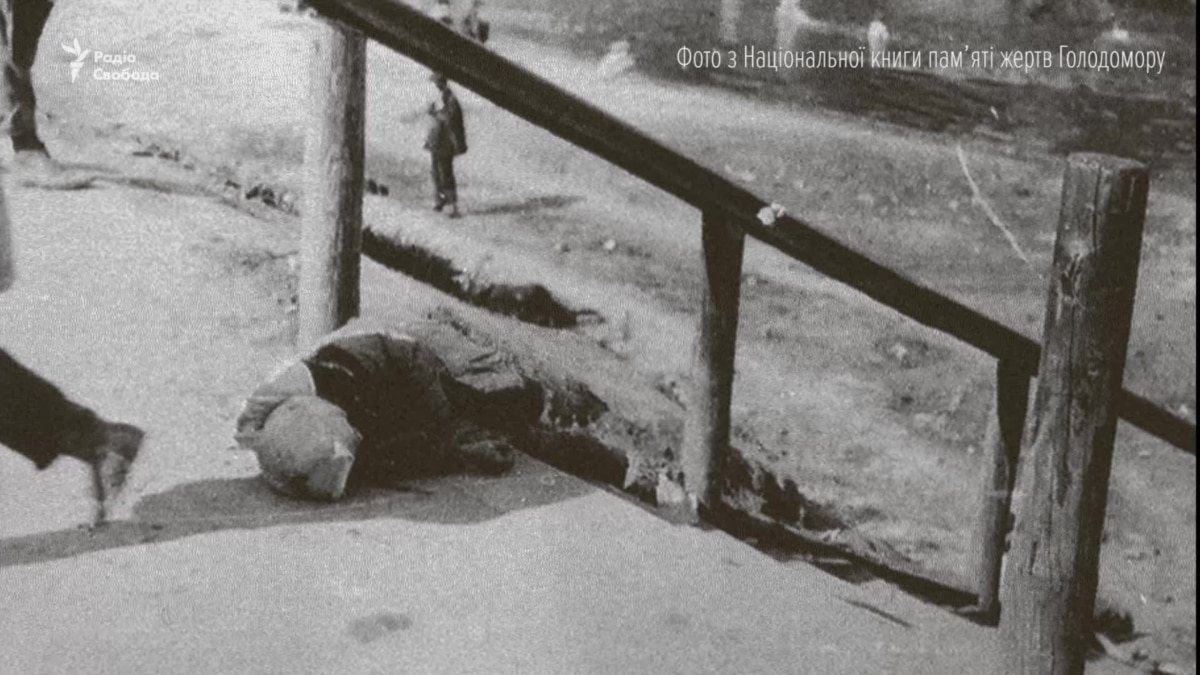
Public condemnation of Soviet security organs expanded after Ukraine enacted decommunization legislation in the spring of 2015. Radio Svoboda produced a video report detailing how Stalin used genocide as retaliation against Ukrainian national resistance.
Dissident reburials and Russian repression
During the perestroika period under Mikhail Gorbachev and the immediate aftermath of the Soviet collapse, Russia initially permitted historical research into Stalinist crimes. Researchers and families accessed archives, visited execution sites, and held joint Ukrainian-Russian academic conferences.
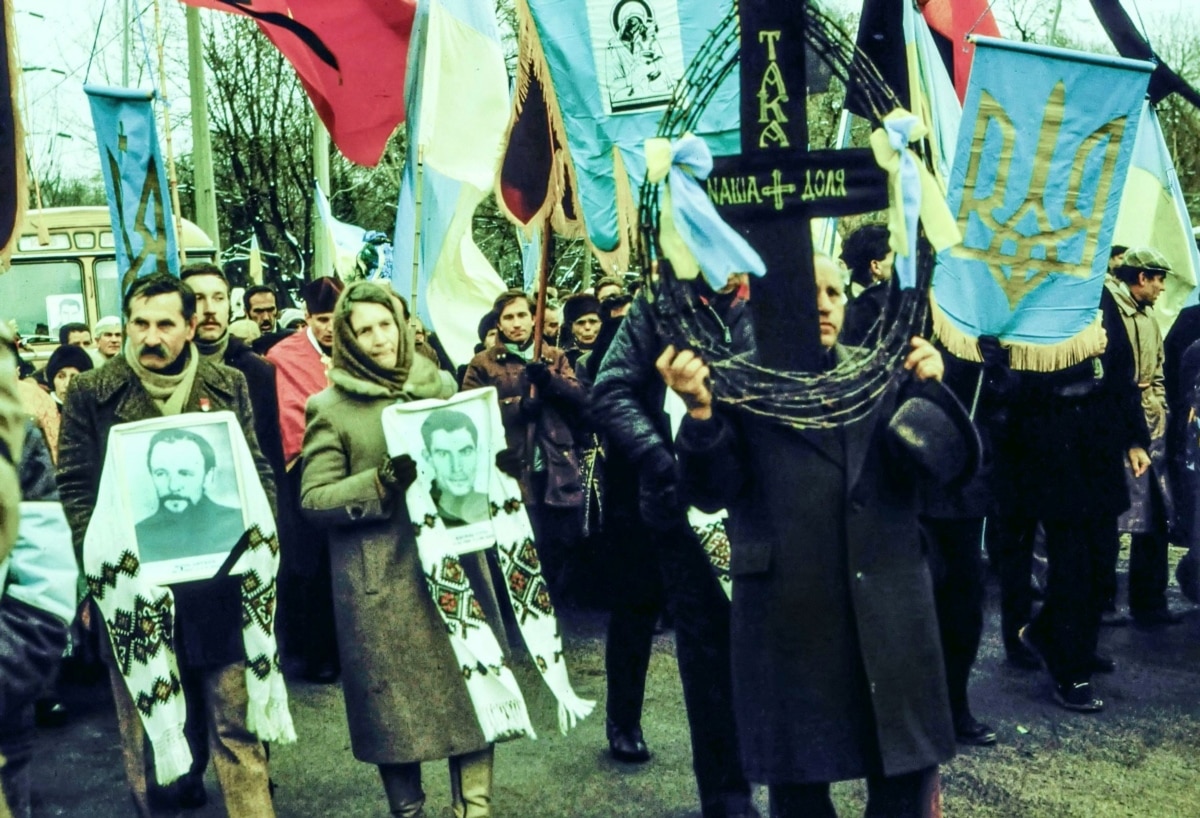
In November 1989, Ukrainian activists and former political prisoners received permission to exhume the remains of dissidents Vasyl Stus, Yuriy Lytvyn, and Oleksa Tykhyi from GULAG sites. Organizer Volodymyr Shovkoshytnyi coordinated the transport of their remains back to Kyiv for reburial.
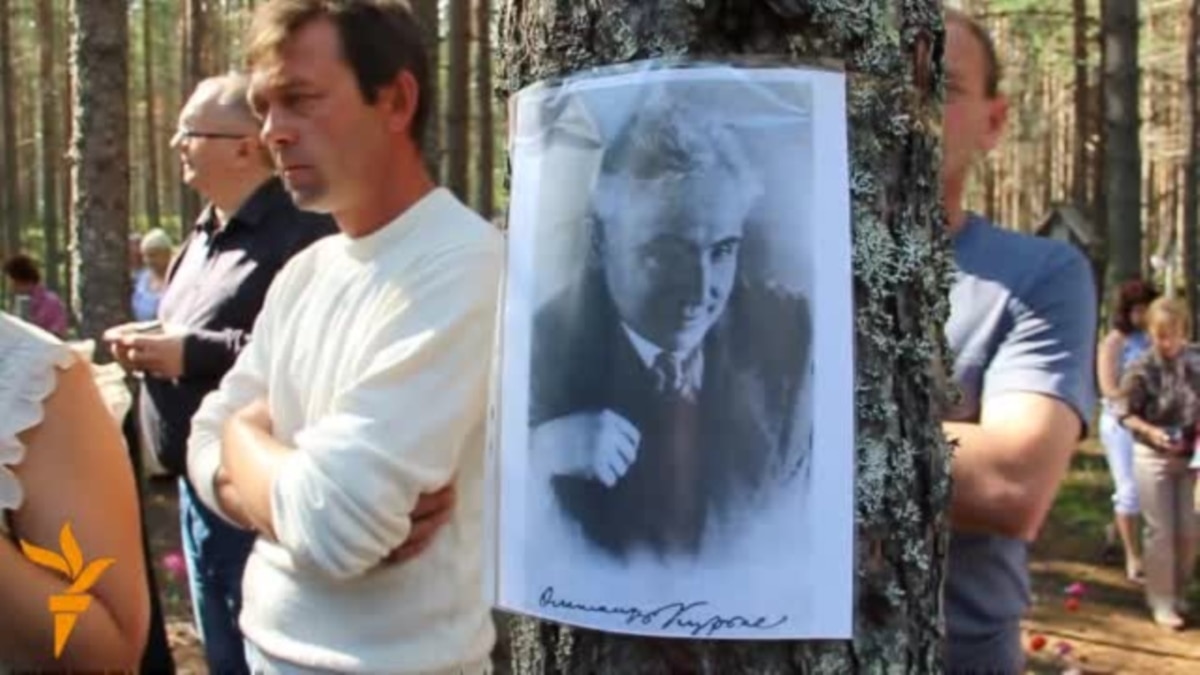
Following Yury Dmitriev's discovery of the Sandarmokh execution grounds, international delegations visited Karelia annually to honor victims. Members of the Ukrainian Memorial society, researchers, and journalists conducted commemorative trips based on victim registries prepared by Radio Svoboda and researcher Serhiy Shevchenko.
Historical openness ceased after former KGB colonel Vladimir Putin assumed the presidency of Russia. Official obstacles halted access to state archives, and authorities blocked international memorial activities. Russian border officials removed researcher Serhiy Shevchenko from a delegation bus on August 3, 2012, barring him from entry, before issuing a similar ban against former political prisoner Vasyl Ovsiyenko.
Russian authorities reorganized the Perm-36 repressions museum into an exhibition honoring NKVD guard forces, while removing memorial exhibits from Solovki to emphasize only monastic history. Russian courts imprisoned historian Yury Dmitriev on fabricated charges of pornography and sexual abuse of his adopted daughter.
Philosopher Serhiy Hrabovsky noted that the Russian state actively rehabilitates Stalin and Soviet security agencies whose total victim count matches the combined toll of the SS, SD, and Gestapo. Hrabovsky stated that Putin publicly praises Chekist valor, maintains December 20 as Security Services Day, and retains the modified 1937 Bolshevik anthem.
Human rights defenders report that current Russian governance mirrors Soviet-era repression through arbitrary arrests, torture, Siberian exile, and systemic intimidation. Russia continues to erect monuments to Stalin, display his portraits at state events in Moscow, label groups like the OUN, UPA, and Stepan Bandera as Nazi accomplices, and prosecute archival researchers under state security laws.