

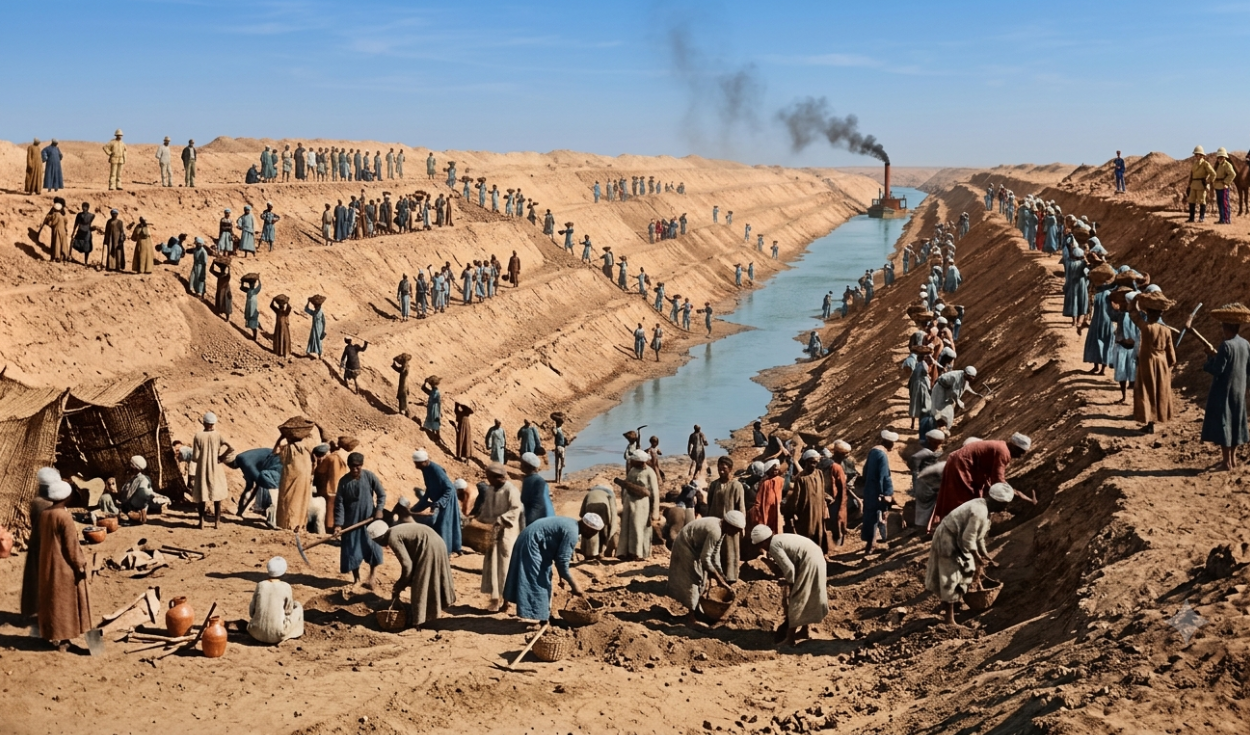
The Suez Canal, the 160-kilometer waterway linking the Mediterranean Sea and the Red Sea, was dug largely by hand between 1859 and 1869 using forced Egyptian labor, before Egypt lost control of the project it had built just years after its opening.
Work began in 1859 under French diplomat Ferdinand de Lesseps at the site where Port Said now stands, authorized by Egypt's viceroy. The goal was to cut through the Isthmus of Suez to connect the Mediterranean and Red Sea with a navigable channel, and the construction took ten years, running from 1859 to 1869.
A forced labor system
With the desert site short of workers, Egyptian authorities turned to the corvee, a traditional system of obligatory labor that had previously required peasants known as fellahs to maintain the canals of the Nile. Tens of thousands of men were conscripted by decree and sent, unpaid, to dig sand under the sun for years.
The human cost
An estimated 400,000 peasants took part in the works between 1859 and 1862, and tens of thousands died during construction, according to the report. Lack of drinking water, cholera epidemics and accidents from the exhausting manual labor were among the main causes of death, and complaints soon emerged describing the conditions as close to slavery.
The figures should be treated with caution. For decades a toll of 120,000 deaths circulated, an estimate later popularized by President Gamal Abdel Nasser, though no historical records confirm it. What is documented is that the number of victims was high.
Britain and the Ottomans intervene
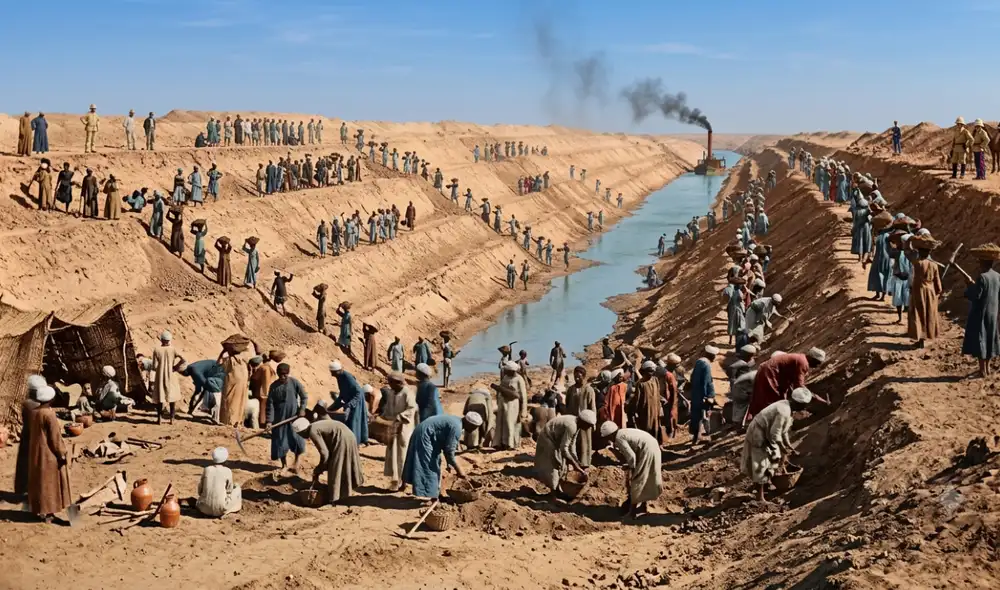
Notably, the strongest criticism of the forced labor did not come from Egyptian society. Britain questioned the use of this obligatory workforce, while the Ottoman Empire pressured to halt the works. As a result, the fellahs were gradually replaced by foreign workers, including Greeks, Italians and Dalmatians, while the project also saw significant mechanization through steam dredgers capable of digging far faster than manual labor.
Debt forces a sale to Britain
When the Suez Canal opened in 1869, it immediately became a symbol of European power and expansion. For Egypt, though, the project brought a heavy financial burden, since the government had taken on enormous debts to finance its participation and interest kept growing.
In 1875, strangled by debt, Egypt was forced to sell its shares in the Suez Canal Company to the British government to raise funds. Within a few years, the country that had supplied most of the labor and borne the greatest human sacrifice lost control of one of the world's most strategic trade routes.
From nationalization to modern expansion
The idea of joining the Red Sea and the Mediterranean predates the Lesseps project by millennia. During the reign of Pharaoh Senusret III, around 2000 B.C., a system of canals already connected the Red Sea with the Nile delta, though the modern canal marked a key difference in that control of the infrastructure ended up in foreign hands.
Egypt did not regain control of the waterway until 1956, when Gamal Abdel Nasser decreed its nationalization. The canal was later expanded in 2015 to allow ships to transit in both directions simultaneously as global maritime trade grew.


