Spanish Minister of Presidency Félix Bolaños defended the central government's handling of the Ceuta migration crisis before the Congress of Deputies on Wednesday.
Bolaños denied that officials had advance warning of the July 30 border surge in which 70,000 migrants entered the enclave, while opposition lawmakers accused ministers of protecting Morocco.
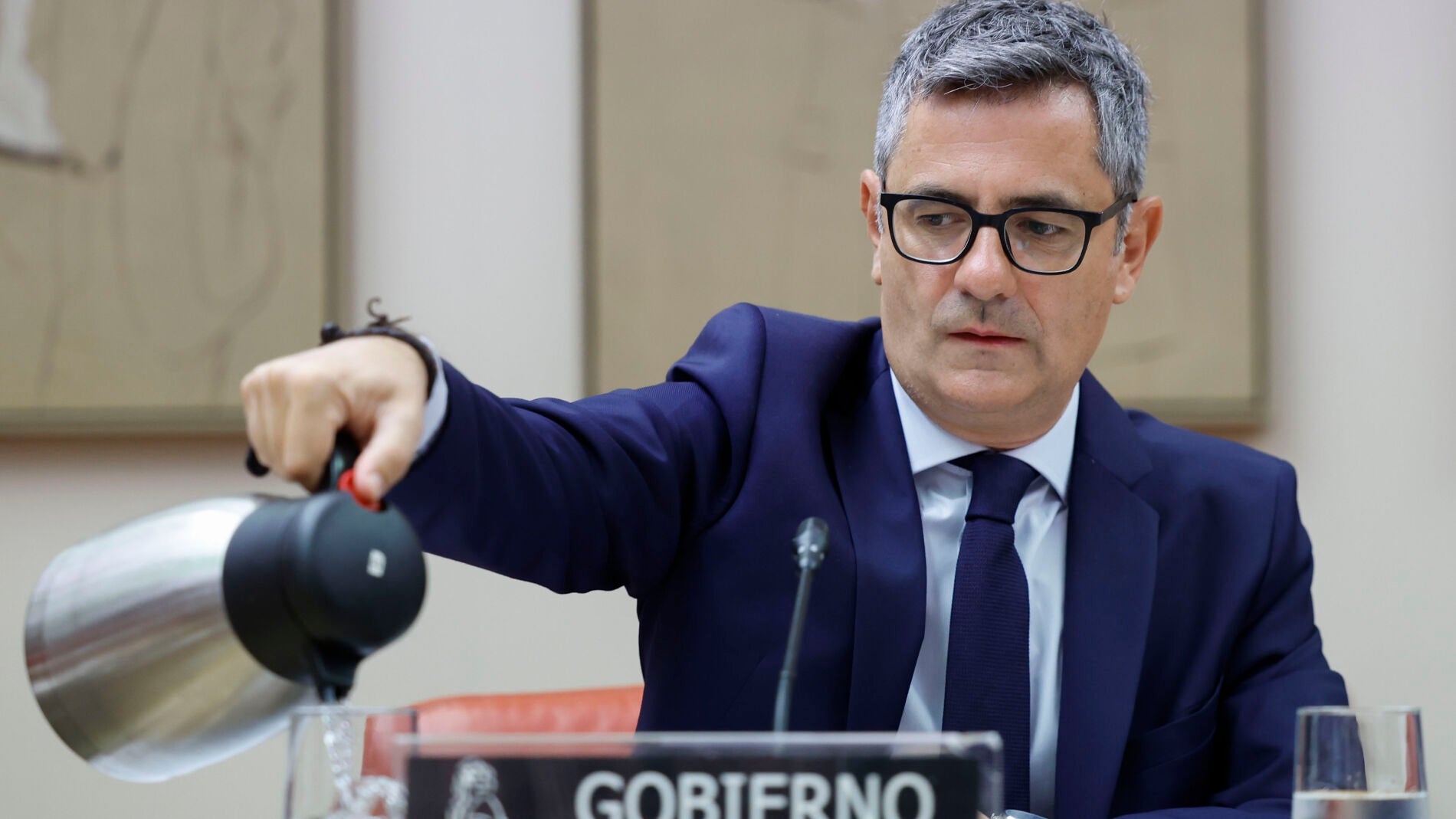
The appearance follows testimony from Defense Minister Margarita Robles earlier in the week. Yesterday, Bolaños and Territorial Policy Minister Ángel Víctor Torres, who heads the central government's single command for the emergency, faced questions in the lower house of the Spanish parliament.
Ceuta is a Spanish autonomous city located on the North African coast sharing a border with Morocco. The territory has faced significant strain following the mass entry that began on July 30.
Cabinet Split Over Intelligence Warnings
During the parliamentary session, Bolaños sought to counter statements made by Robles, who previously told lawmakers that reports from the National Intelligence Center had warned of a potential surge. Other cabinet members, including Interior Minister Fernando Grande-Marlaska, have repeatedly denied receiving such warnings.
Bolaños maintained that the Spanish government possessed no prior or precise information regarding the arrival of 70,000 people on July 30 and July 31, describing that statement as the truth. However, parliamentary groups across the political spectrum questioned his account, noting that Robles retains a reputation for honesty even when it damages her position, whereas Marlaska remains the most frequently censured minister in the cabinet.
Two days prior to the session, Podemos leader Ione Belarra publicly highlighted Robles's credibility, a sentiment shared privately by other lawmakers.
Opposition Charges of Inaction and Diplomacy
Parliamentary partners and opposition deputies alike delivered sharp reproaches to both ministers. Government allies argued that the central administration responded too late, while opposition parties accused officials of covering up Moroccan involvement.
Cuca Gamarra, spokesperson for the conservative People's Party on the National Security Commission, characterized the events in Ceuta as an invasion. Gamarra accused the government of refusing to use the term to avoid offending Morocco, claiming the neighboring country had at least consented to, if not encouraged, the border crossings.
Gamarra asked Bolaños what the government owed Morocco and what it feared. She stated that security assessments had been provided by the National Intelligence Center, the Armed Forces Intelligence Center, the Civil Guard, the National Police, and Ceuta President Juan Jesús Vivas, yet border defenses were not reinforced.
Lawmakers from the right-wing party Vox launched harsher attacks, with spokesperson Pepa Millán stating that the executive had blamed everyone except Morocco and its own incompetence. Millán declared that while the government was trapped by blackmail, Spanish citizens would not be made hostages to it. During the debate, one Vox deputy directed personal insults at Bolaños.
Government Response on Morocco and Sánchez
Bolaños rejected the allegations, stating there was no evidence that Morocco had led or organized the mass entry. He warned that casting suspicions on a neighboring partner with whom Spain must cooperate was dangerous, adding that opposition lawmakers needed a basic course in diplomacy.
Facing criticism from parliamentary allies over government inaction, a Basque Nationalist Party deputy asked where the state was during the emergency, while a deputy for Republican Left of Catalonia described Prime Minister Pedro Sánchez's leadership as absent, deficient, and open to improvement.
Bolaños defended Sánchez's management, explaining that the prime minister had been working remotely by phone every day and issuing instructions. Bolaños added that a single work day for the prime minister amounted to more than several days of work by some opposition members, a remark that drew widespread annoyance from parliamentary groups.
Deportations and Accommodation Plans
Territorial Policy Minister Ángel Víctor Torres attempted to reassure lawmakers by stating that urgent deportation remained a priority for the government. He emphasized that all returns must adhere to legal frameworks, individual case files, and proper identification procedures.
Torres addressed the timeline for restoring normality in Ceuta, noting that while the royal decree establishing the single command allows for a renewable four-month period, officials intend to shorten that timeframe.
Torres also announced that Sánchez will chair an extraordinary meeting of the Monitoring Committee via videoconference on Friday. The meeting is expected to approve new accommodation sites for migrants to relieve pressure on local sports centers following recent controversy over their use.