Ancient philosophers responded to political and natural catastrophes by combining inner calm with civic action, offering a model for dealing with modern global emergencies, David Hernández de la Fuente wrote in La Razón.
As the academic year begins, the world faces overlapping crises spanning the climate, migration, the economy and war, with the current constant state of alarm mirroring the turbulent periods of antiquity, the author noted. He pointed to disturbing records regarding water and air temperatures, wildfires, the cost of living and the arrival of migrants.
The modern concept of a "state of exception," in which a crisis reveals who holds sovereign authority, was formulated by the political philosopher Carl Schmitt in his work "Ausnahmezustand" and later expanded by Giorgio Agamben, the essay noted. This dynamic was visible during the recent coronavirus pandemic.
Ancient societies had formal mechanisms for such emergencies, including the Roman Republic's use of dictatorships and the ultimate decree of the Senate.
Active and contemplative life
Following the death of Alexander the Great, and later during the Roman Empire, philosophical schools including the Stoics, Epicureans, Cynics, Skeptics and Platonists focused on how individuals should respond to an uncontrollable universe.
The rival schools founded by Epicurus and Zeno both proposed "ataraxia," or an absence of disturbance, as a first step to achieve inner calm.
The Epicureans advocated remaining detached from surrounding crises. The Stoics argued that individuals must follow their inner calm with action to fulfill their missions, balancing the contemplative and active lives, or "bios theoretikós" and "bios praktikós."
This Stoic combination was later echoed in the "ora et labora" of medieval monks and the "theoria cum praxi" of the philosopher Gottfried Wilhelm Leibniz, Hernández de la Fuente wrote.
The Roman emperor Marcus Aurelius exemplified this balance, writing his contemplative "Meditations" while managing wars, a pandemic and migration crises.
The fall of Rome
During the decline of the Roman Empire in the fourth and fifth centuries, pagan Neoplatonists followed the Epicurean model and retreated into their schools as the system collapsed.
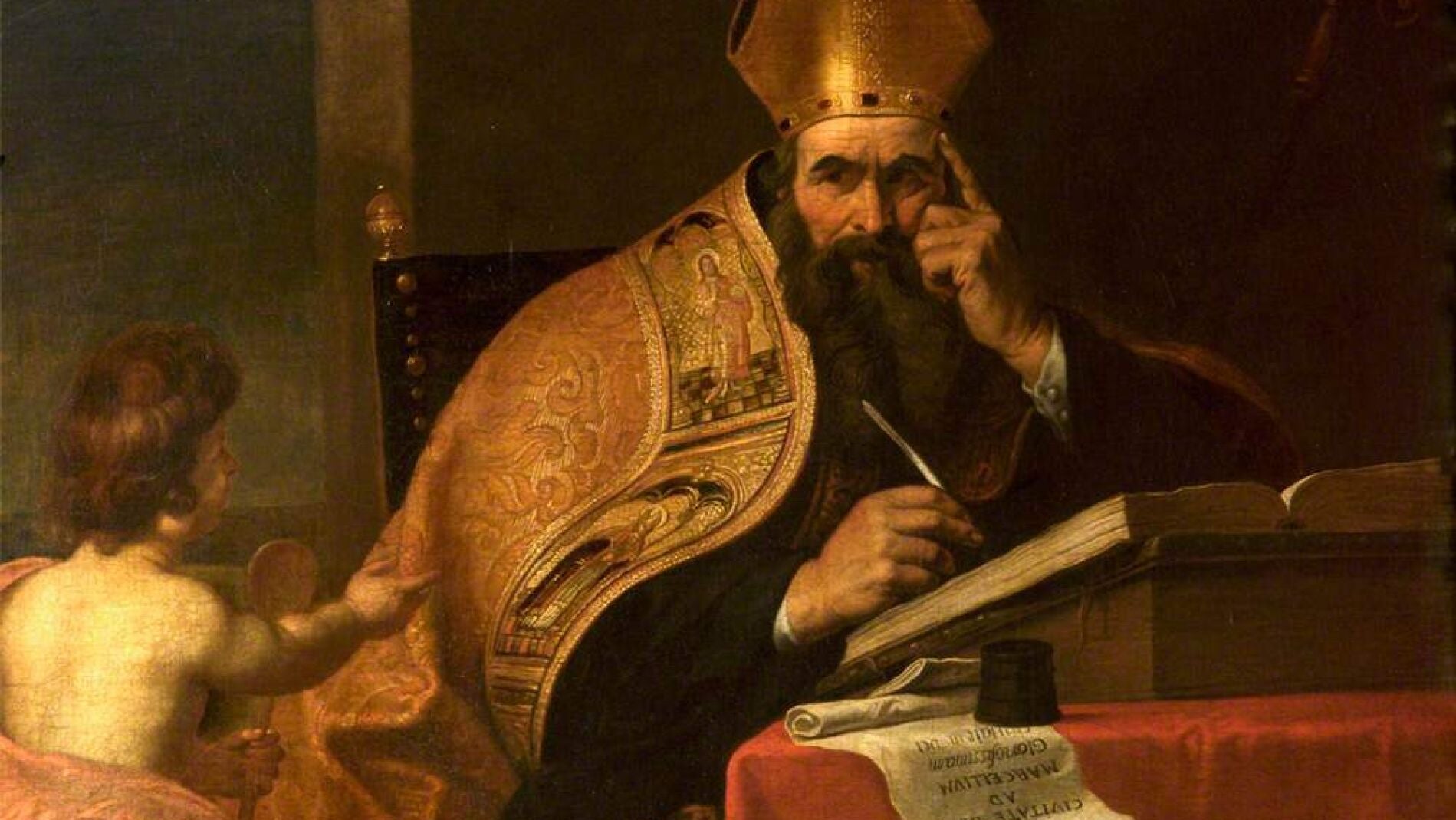
In contrast, Christian Neoplatonist bishops such as Augustine of Hippo and Synesius of Cyrene, who Christianized Platonism in Latin and Greek, took active roles in the crises of their time.
Synesius organized the armed defense of Cyrene against Libyan tribes, while Augustine managed a refugee crisis following the sack of Rome and died during a siege by the Vandals.