Spain is short by roughly 750,000 homes after years of building far fewer properties than the number of new households forming each year, according to figures from the Bank of Spain covering 2021 to 2025. The shortfall has turned housing into the country's top public concern, according to the Centro de Investigaciones Sociológicas (CIS), the state polling body.
The political backdrop is the case of Mari Carmen, an 87-year-old woman whose eviction set off a wave of protests. Two housing decrees were subsequently rejected by the Congress of Deputies, a failure that contributed to an early election call. Two days before Mari Carmen died, the government later pushed through a new decree with the help of the Congress's standing committee, shortly before voters went to the polls.
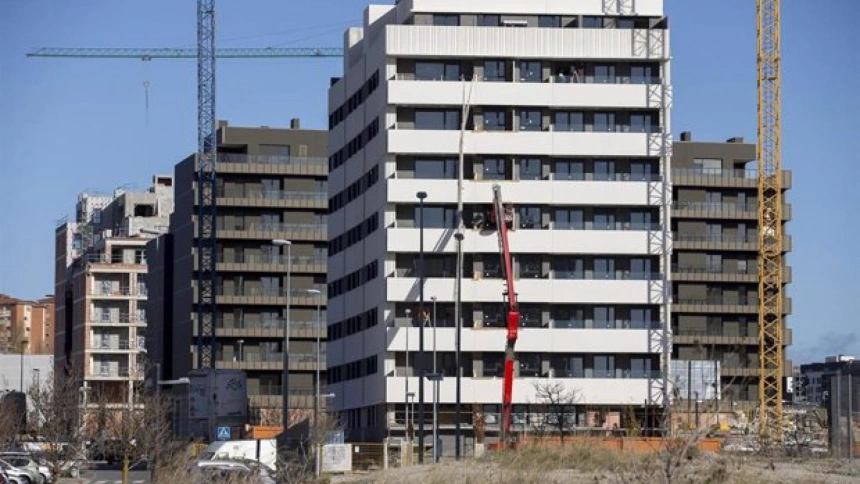
Each year Spain builds around 100,000 homes while about 240,000 new households are formed, the Bank of Spain says. Spain has added more than 3 million residents since 2018, many of them immigrants, pushing employment and demand to record levels that supply has failed to absorb.
A 100-square-metre home cost about 142,000 euros on average eight years ago; it now costs close to 200,000 euros, a 40% rise, according to the Consejo General del Notariado, Spain's notaries' council. Wages rose 23% over the same period, according to the National Statistics Institute (INE). In Madrid and the Balearic Islands, average prices exceed 4,000 euros per square metre, more than double the national average, while Guipuzcoa, Malaga and Barcelona all top 3,000 euros per square metre.
The number of rental households has nearly doubled in 20 years to almost 4 million. Renting an 80-square-metre home cost about 660 euros a month in 2018; it now costs more than 1,100 euros, a 66% increase, according to the property portal Fotocasa. Jose Maria Alfaro, president of the Federacion de Asociaciones Inmobiliarias, said something dysfunctional is happening in the country, where people who cannot afford to rent are now buying instead of people who cannot afford to buy renting, forcing households into heavy debt at the wrong life stage.
Household budgets under strain
Rent now consumes 40% of net household income, up 10 percentage points from three years ago, while the share going to mortgage payments has reached 30%, not counting the deposit or arrangement fees, according to the property portal Idealista. In Palma de Mallorca, renting or buying can absorb close to half of family income, well above the 30% threshold experts consider financially safe.
A study by the Fundacion BBVA and the Instituto Valenciano de Investigaciones Economicas found the poverty rate jumps to 23% once housing costs are deducted from income, rising to nearly 33% among young households. That helps explain why 67% of people aged 18 to 34 still live with a parent, according to the INE's Living Conditions Survey.
Renting a room because nothing else is available
More than a million people in Spain are stuck renting rooms or short-term accommodation, according to the Ministry of Consumer Affairs, locked out of the market by high prices and a lack of the stable employment landlords demand.
Lidia, a 50-year-old woman who lost her job and had to leave her flat, said she has been renting rooms since the pandemic because renting a flat has been impossible, and that she cannot even tell her daughters to come and eat because her life is reduced to one room she avoids leaving. She said the rooms she finds are always small, expensive and in poor condition, and that she once paid 450 euros for a damp room.
Lidia is among more than 2 million people supported by Caritas, the Catholic charity, which has warned that half of current tenants could not re-enter the rental market today because their income would not be sufficient.
How Spain got here
Rental housing made up half of Spain's housing stock 50 years ago; it is 16% today, after decades of policy favouring home ownership. Jose Garcia Montalvo, professor of applied economics at Pompeu Fabra University in Barcelona, said Spain has a problem with market-rate rent and needs to expand both social and affordable rental supply. Social housing makes up just 3.5% of the rental market against an 8% European average: 336,000 homes exist, according to the consultancy Atlas Real Estate Analytics, against 1.8 million households that need one. Spain would need 2.05 million such homes to match the European average.
Since 2021 Spain has built only half the homes it needs, due to a shortage of buildable land, rising costs and taxes, and a lack of workers; the Confederacion Nacional de la Construccion says the sector needs 700,000 more workers. Home purchases fell more than 13% in September compared with a year earlier, according to the INE, as high prices and costlier mortgages tied to the Euribor deter buyers, though the sector still expects to end the year above 660,000 sales. Experts say the current price rises stem from a lack of supply rather than excess credit, unlike in 2008, meaning they see no bubble risk.
Rental supply shrinking under price controls
Idealista says landlords are shifting to holiday or short-term lets, with one in five rental listings, 26,531 of them, disappearing in the past month, which it attributes to the government's decrees. The drop exceeds 20% in 12 regions: Madrid and Cantabria fell 26%; Navarra and Castilla y Leon 25%; Extremadura and Aragon 24%; Galicia 23%; La Rioja and the Basque Country 22%; and Catalonia, Asturias and Castilla-La Mancha 21%.
The Housing Law has applied since May 2023 in 271 municipalities, covering 80% of Catalonia, the only region to roll it out fully; the Basque Country, Navarra, Asturias and Galicia have also declared capped-price zones. The Fundacion de Estudios de Economia Aplicada found rental supply fell 22% in Barcelona and 20.5% across Catalonia between the first quarter of 2024 and the fourth quarter of 2025, against a 3.9% rise in Madrid, pushing demand to 462 contacts per listing in Barcelona versus 103 in Madrid. Prices rose 5.7% in Barcelona and Catalonia against 8.5% in Madrid and 10.8% nationally. Catalonia's land institute, Incasol, recorded 25% fewer contracts signed through the second quarter of 2026, which the regional government attributes to greater stability between landlords and tenants.
Alfaro argued the government's policies are discouraging supply and that more legal security, not less, is needed to bring homes to market. Montalvo said the new rules miss the real issue because they do nothing to speed up construction permits, and said he is pessimistic because lasting housing policy requires political agreement that currently does not exist, pointing to Vienna, which has run the same policy for 120 years. Bank of Spain governor Jose Luis Escriva said recently that any demand-side measure needs to be calibrated carefully so it does not produce unwanted effects, and that protections for vulnerable people should not include incentives that freeze or worsen housing supply.
The Housing Law and the Mari Carmen decree
Under the Housing Law, rents in capped zones cannot exceed the previous contract's rent, with exceptions, and large landlords with more than 10 properties must apply a state reference index. Letting agency and contract fees fall on the landlord, and tax relief of up to 90% applies to owners who rent out a primary residence, though regions must request capped-zone status to apply it.
The decree, in force for a month and a half, grants a two-year extraordinary extension to contracts expiring before 31 December 2028 if the tenant requests it; landlords can refuse only if they need the home for themselves or their children. Rent increases are capped at 2%, seasonal lets must be justified and run for one to twelve months, and total room rents in a shared flat cannot exceed the price of renting the whole property. The decree also limits purchases by vulture funds, offers tax advantages to landlords who charge lower rents, compensates owners unable to recover a home because an eviction was paused for a vulnerable tenant, and includes aid for first-time buyers.
Parties stake out positions for the 29N election
Ahead of the 29 November election, the PSOE proposes spending 1% of GDP on housing every year, creating a 100,000-home public rental and affordable-sale stock, extending contracts and temporarily freezing rents, offering young buyers interest-free loans of up to 50,000 euros, and raising taxes on large landlords.
The PP promises to build a million homes in four years by streamlining permits and freeing up land, cut VAT to 4% on a first home for buyers under 40, repeal the Housing Law and toughen measures against squatting. Vox proposes giving Spaniards priority for protected housing and rental aid, 0% VAT on new homes, a full exemption from the transfer tax on resale homes, restoring the tax deduction for buying a primary residence, evicting squatters within 24 hours, legal assistance for owners and harsher penalties. Frente Amplio, led by Ada Colau, wants to build 1.5 million public homes over 12 years, expropriate properties from large landlords, cap rents in capped zones, restrict tourist flats, tax the accumulation of housing and ban evictions of vulnerable people without alternative housing, with compensation for small landlords.
What happens next
Spain holds an election on 29 November, with housing policy a central issue among the PSOE, PP, Vox and Frente Amplio platforms.
Test yourself
How large is Spain's accumulated housing deficit between 2021 and 2025, according to the Bank of Spain?
By how much did average home prices rise over eight years, compared with wages?
What does Idealista say happened to rental listings in the past month?
Where it happened
Madrid, Spain