Environmental campaigners and forestry experts in Spain are warning of a severe risk of deadly flash floods and widespread water contamination as post-wildfire rains wash ash and heavy sediment across nearly 300,000 hectares of land scorched by record summer blazes.
The alert follows a deadly tragedy in Manzanedo de Valdueza, a town in the El Bierzo region of León province, where two women died after being swept away by a flash flood caused by heavy rainfall on hillsides left bare by previous fires and unmitigated by post-fire land management.
Official figures show that 295,405 hectares of land burned across Spain by August 24, driven by 44 large forest fires that set multiple national records. The fire in Burgohondo, in Ávila province, became the largest in Spanish history after burning 39,570 hectares, while a blaze in Gallardos, in Almería province, became the deadliest on record after 13 people died. Other historic blazes included Andalusia's largest fire at 40,100 hectares, Castilla-La Mancha's largest at 32,100 hectares, the Community of Madrid's largest fire at over 25,000 hectares, and the second largest fire in Aragón at 18,000 hectares.
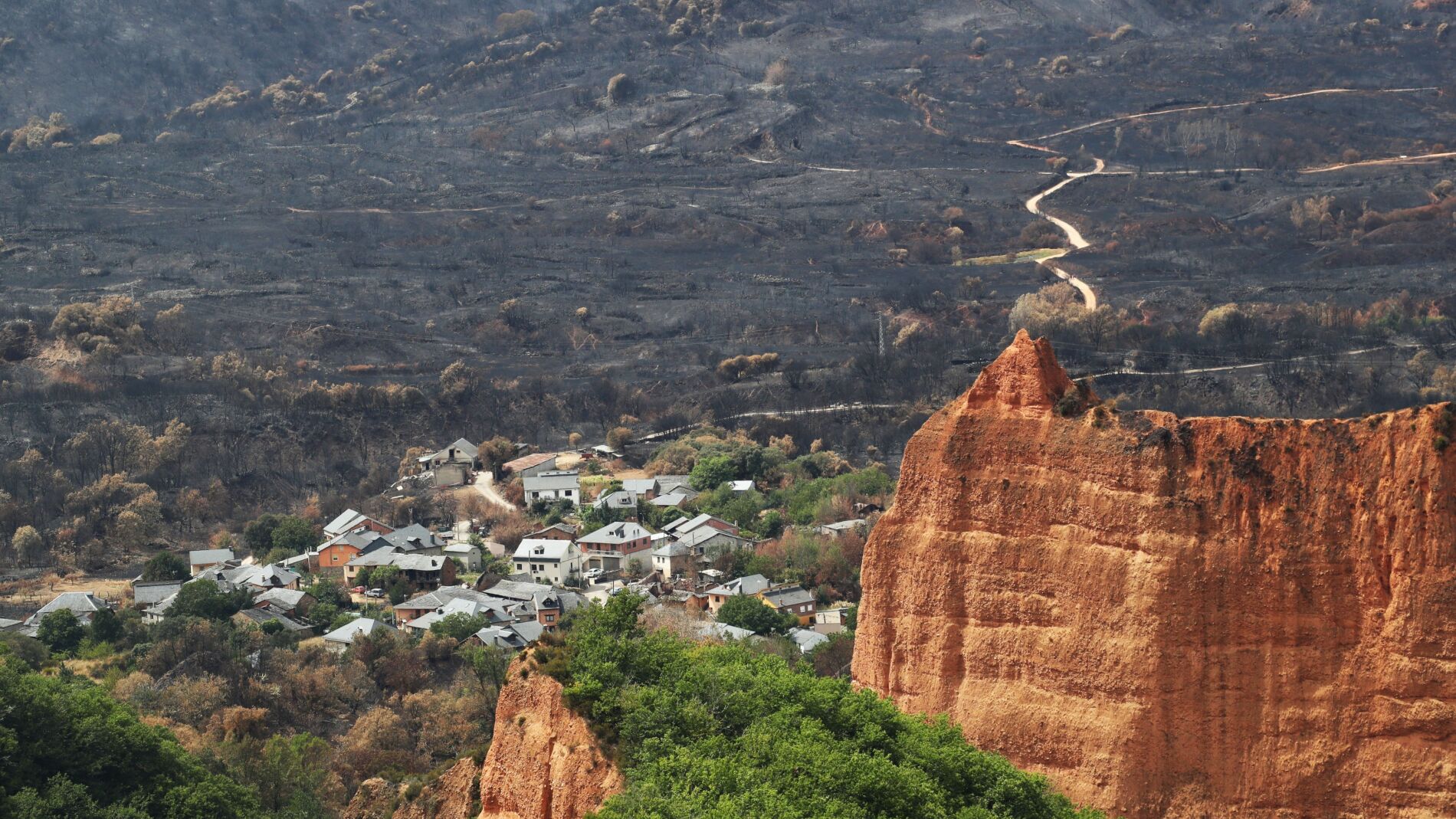
King Felipe VI and Queen Letizia visited the Orellán viewpoint in León on Wednesday to inspect the extensive environmental damage caused by recent blazes in the historic Las Médulas Park. Las Médulas is a historic landscape and former Roman gold mining area in the El Bierzo region of northwestern Spain, known for its red rock formations and chestnut groves.
During the visit, King Felipe VI made an urgent call for collaboration to overcome the destruction left by the August wildfires across northwestern Spain, particularly in the severely affected provinces of León, Zamora, and Ourense. The King acknowledged that much work remains to be done to help local residents and rebuild regional economies.
Emergency Risk of Post-Fire Erosion and Runoff
Experts note the common forestry adage that summer fires are extinguished in winter, emphasizing the need for continuous forest management and prevention. However, unmanaged burnt slopes present immediate hazards to both local biodiversity and human lives once the flames are gone.
A report published this week by the environmental organization Greenpeace warns that the highest risk of catastrophic soil loss and flooding occurs during the first few weeks immediately following a wildfire. When flames consume trees and ground vegetation, slopes lose the natural root structures that anchor topsoil, leaving terrain vulnerable to torrential summer storms.
Mónica Parrilla, the head of Greenpeace's wildfire campaign, stated that emergency intervention is vital to safeguard water supplies and topsoil from severe erosion. She explained that post-fire public debates frequently focus on long-term forest restoration, financial costs, and recovery, while ignoring the crucial immediate window required to stabilize soil and prevent toxic runoff from reaching rivers, reservoirs, and drinking aquifers.
Soil protection is particularly critical in Spain, where more than 70 percent of the national territory faces a high risk of desertification. According to data from the Food and Agriculture Organization of the United Nations, a specialized agency dedicated to food security and land conservation, generating just two to three centimeters of fertile topsoil can require up to 1,000 years, whereas torrential rain can wash that same layer away in a very short time.
Field Techniques and Scientific Evidence for Stabilization
To prevent irreversible land degradation, experts recommend immediate hillside interventions focused on steep slopes. Key measures include mulching, a soil conservation technique where protective organic material such as agricultural straw is spread over bare ground, alongside the installation of fascines, small stone dikes, and log barriers designed to catch sediment and slow down surface water runoff. These actions are complemented by clearing culverts, drainage channels, and stream beds to prevent blockages, as well as installing measures to control rills, gullies, and small landslides.
Scientific studies show widespread agreement that mulching is among the most effective emergency tools available after a wildfire. By covering exposed ground, mulching significantly reduces erosion and water runoff, increases rainwater infiltration into the ground, and accelerates ecosystem recovery during the critical first year when soil loss risks are highest.
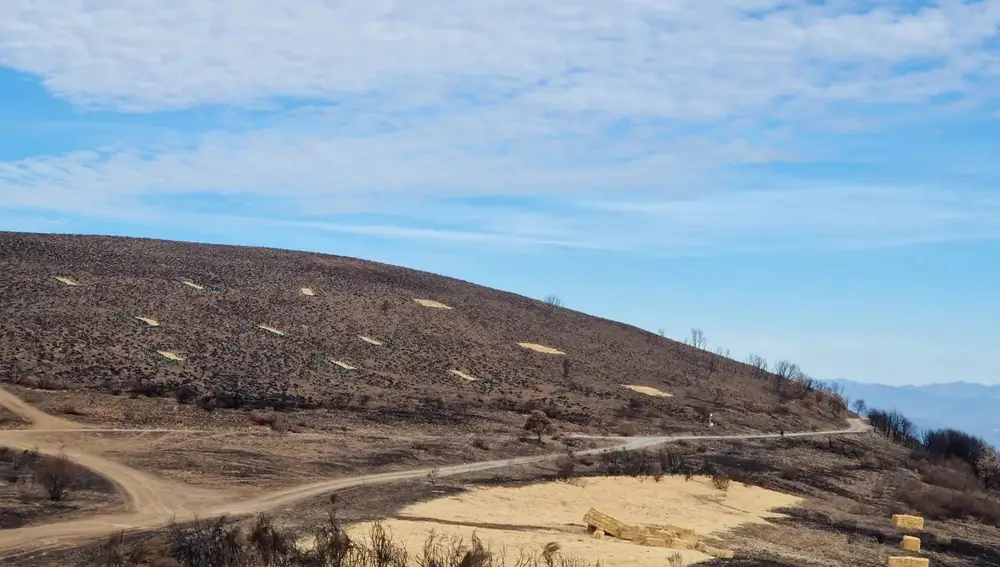
Research conducted following a major wildfire in Ponte Caldelas, located in the northwestern region of Galicia, demonstrated the high efficiency of rapid intervention. A 2022 study of the site showed that early mulch application, carried out by volunteers and coordinated by technical personnel, reduced soil erosion by 76 to 95 percent during the first year after the fire. The treatment maintained erosion reductions between 74 and 87 percent in the second year, confirming that rapid, science-based action minimizes long-term environmental damage.
Similar success was documented after the 2025 wildfire in Las Médulas in León province. A comprehensive technical evaluation coordinated by the Spanish National Research Council, Spain's state agency for scientific research, brought together more than 70 specialists in wildfires, biodiversity, geology, hydrogeology, drone surveying, and social risks. The team confirmed that spreading agricultural straw mulch over the most severely burned areas reduced soil erosion by an average of 85 percent, protecting the surrounding territory from severe degradation.
Infrastructure Gaps and Drinking Water Restrictions
Despite overwhelming technical evidence, experts emphasize that emergency post-fire stabilization remains an unfulfilled priority across Spain. Because the total area burned is vast, authorities must allocate emergency resources based on strict technical criteria, prioritizing steep slopes, protected natural areas, vulnerable water supplies, and regions with high risks of reservoir contamination.
Specialists are calling for the immediate creation and implementation of a standardized national protocol for rapid post-fire impact assessments. Such common guidelines would allow technical teams to evaluate land damage quickly and guide urgent decision-making before seasonal rains cause irreversible damage to watersheds.
The lack of systematic post-fire intervention has already produced severe consequences during recent summer storms. Since June, heavy downpours falling on ground charred by last year's fires have devastated several communities in northwestern Spain. In areas such as Valdeorras and Viana, heavy flows of mud, ash, and water flooded residential homes and triggered mudslides due to the complete lack of hill vegetation.
The resulting runoff polluted municipal water supplies, forcing numerous local councils to enact drinking water restrictions and request official disaster zone declarations from the government. Similar contamination issues have impacted eastern Spain, where municipalities in the province of Castellón have recently been left without usable drinking water following post-fire rainstorms.