Spain came to a halt on Wednesday, November 11, during a nationwide 24-hour general strike over housing costs, falling wages, and precarious working conditions.
The mobilization was initially triggered by grassroots housing rights groups following the eviction and subsequent death of Maricarmen Abascal, an 87-year-old woman.
Campaigners demanded affordable rent controls, substantial wage increases, a statutory reduction in working hours, and decisive government action against real estate speculation.
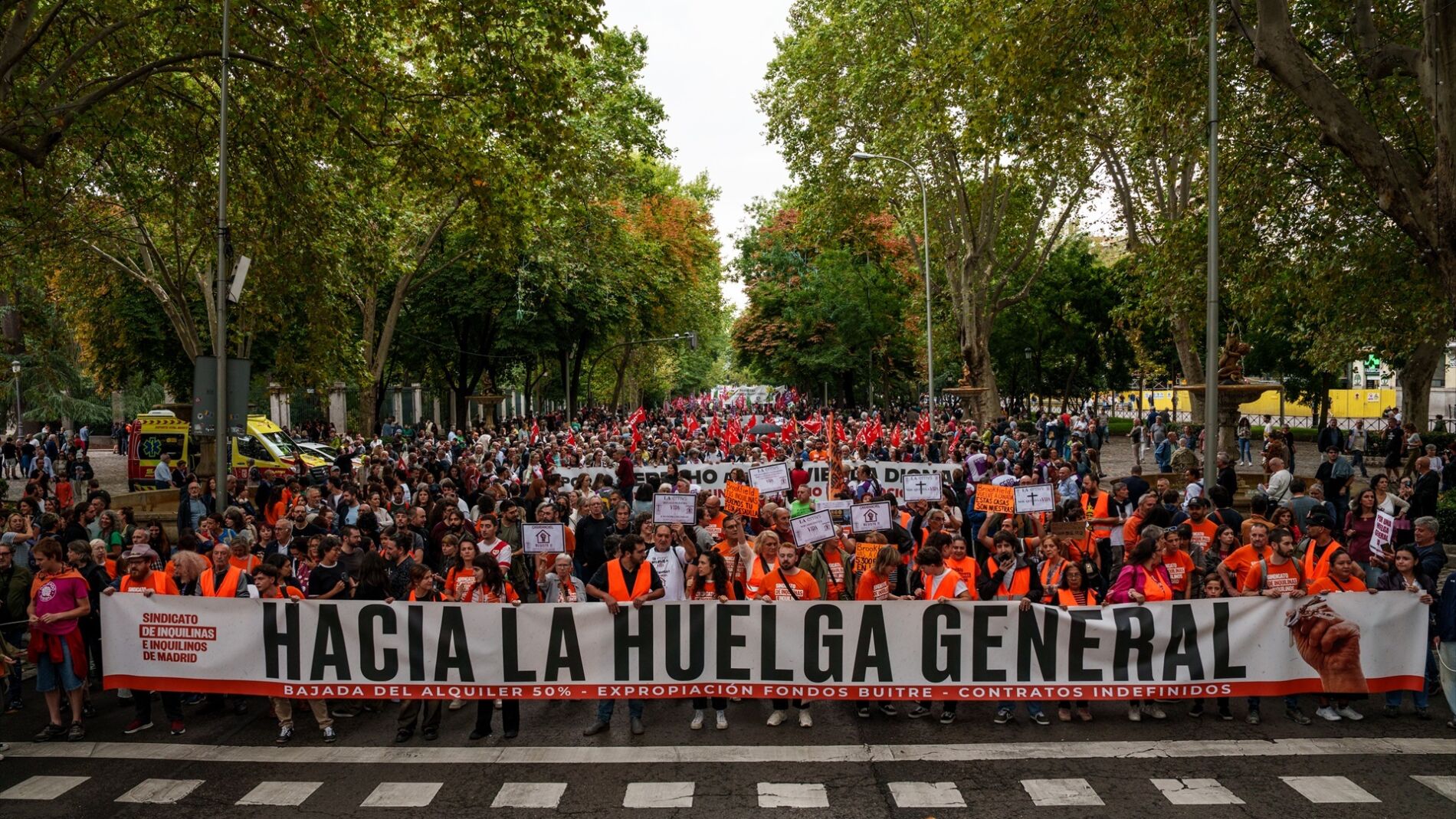
Demonstrators identified the acute difficulty of securing decent accommodation as one of the country's most critical economic and social crises.
The walkout marked the first nationwide general strike endorsed by Spain's two primary labor federations, Comisiones Obreras and the Union General de Trabajadores, since 2012.
It also represented the first strike of such sweeping national scope during the administration of Prime Minister Pedro Sanchez.
Electoral Controversy Ahead of November Vote
The timing of the stoppage generated intense debate due to its proximity to the upcoming general election scheduled for November 29.
The action took place only two days before the official start of the parliamentary election campaign, amidst fierce partisan confrontation over housing policy.
Trade union leaders insisted that the mobilization was strictly driven by legitimate social and workplace concerns facing working families.
Business associations and opposition political parties questioned the underlying motive, suggesting the strike was intended to benefit specific political factions before voting began.
Analysts debated whether the demonstration was aimed primarily at the government or private landlords, and whether union demands would become integrated into party platforms.
Television commentator Vicente Valles noted that the unions were testing their own mobilization capacity while simultaneously subjecting Sanchez and his government to a public test.
Union Alliances and Notable Divisions
A broad spectrum of social organizations and trade unions supported the national day of action across major urban centers.
The stoppage originated with the Confederacion de Sindicatos de Inquilinas, which coordinates tenant organizations throughout Spain, before gaining the support of traditional labor unions.
Major confederations Comisiones Obreras and the Union General de Trabajadores formally joined the initiative, bringing substantial industrial weight to the protest.
A coalition of smaller unions also backed the stoppage, including the Confederacion General del Trabajo, the Confederacion Nacional del Trabajo, and the Union de Actores y Actrices.
Further support came from independent and regional organizations, such as Co.Bas, Intersindical, and Solidaridad Obrera.
Several prominent labor bodies refused to participate, reflecting deep ideological divisions across the Spanish union movement.
The Central Sindical Independiente y de Funcionarios, which represents public servants, and the Union Sindical Obrera both declined to join the action.
The Spanish Confederation of Business Organisations issued strong criticism of the stoppage, pointing out its potential political and electoral motivations.
Legal Challenges Under Labour Legislation
Real estate analyst and housing market expert Sergio Gutierrez questioned whether the general strike satisfied the legal standards established by Spanish law.
Gutierrez, who has built a prominent following on social media for his analysis of the property market, reviewed the legal validity of the strike.
Spanish industrial relations are governed by legislation enacted in 1977 during the transition to democracy, which sets strict boundaries on industrial action.
Under the 1977 statute, a strike organized exclusively for political purposes can be declared unlawful by the courts.
Gutierrez noted that Spanish law requires any lawful strike to be grounded in direct employment disputes and labor relations.
Housing served as the public headline to capture attention, Gutierrez argued, but workplace demands regarding wages were included to provide essential legal protection.
Because statutory rules require an employment dispute, organizers were obliged to frame the protest around labor conditions to prevent the strike from being challenged as illegal.
Scrutiny of Madrid Tenant Demands
Gutierrez conducted a detailed examination of the six core demands put forward by the Sindicato de Inquilinas e Inquilinos de Madrid.
The first point demanded housing for living rather than speculation, urging the recovery of empty flats, the abolition of tourist rentals, and bans on speculative purchases.
Gutierrez dismissed the initial point as an old story repeating the same impractical ideas that have failed to address supply issues.
The second demand called for an expansive public housing stock funded by higher wealth taxes and expropriations from commercial banks and investment funds.
Gutierrez questioned the financial viability of that proposal, asking which wealthy citizens would remain to finance state programs if tax policies drove them away.
A third union demand called for open-ended rental agreements and a permanent ban on tenant evictions across the country.
Those concepts reflected proposals in one of two housing decrees presented by the government to parliament, but Gutierrez cautioned that they amounted to indefinite squatting.
Debate Over Public Rents and Industrial Rights
The fourth demand from the tenant organization sought to reduce rents by 50 percent for all publicly owned housing properties.
Gutierrez reacted with skepticism, encouraging citizens to inspect the state-backed Casa 47 housing portal to see how few rental properties were offered and at what cost.
The Casa 47 platform created by the central government has suffered from a lack of listed properties, while its qualifying requirements have attracted persistent skepticism.
A fifth demand insisted on the formal right to conduct rent strikes under legal protections similar to those enjoyed by workers in industrial disputes.
Gutierrez observed that activists were already conducting rent withholding campaigns in practice, rendering formal legislative recognition redundant.
The final demand focused on statutory wage increases, state pension adjustments, and a reduction in standard weekly working hours.
Gutierrez argued that employment measures were placed at the end of the union manifesto specifically to satisfy the legal requirements of the 1977 labor decree.
By attaching standard workplace grievances to a housing campaign, organizers attempted to shield the general strike from legal challenges while mobilizing public sentiment ahead of the polls.