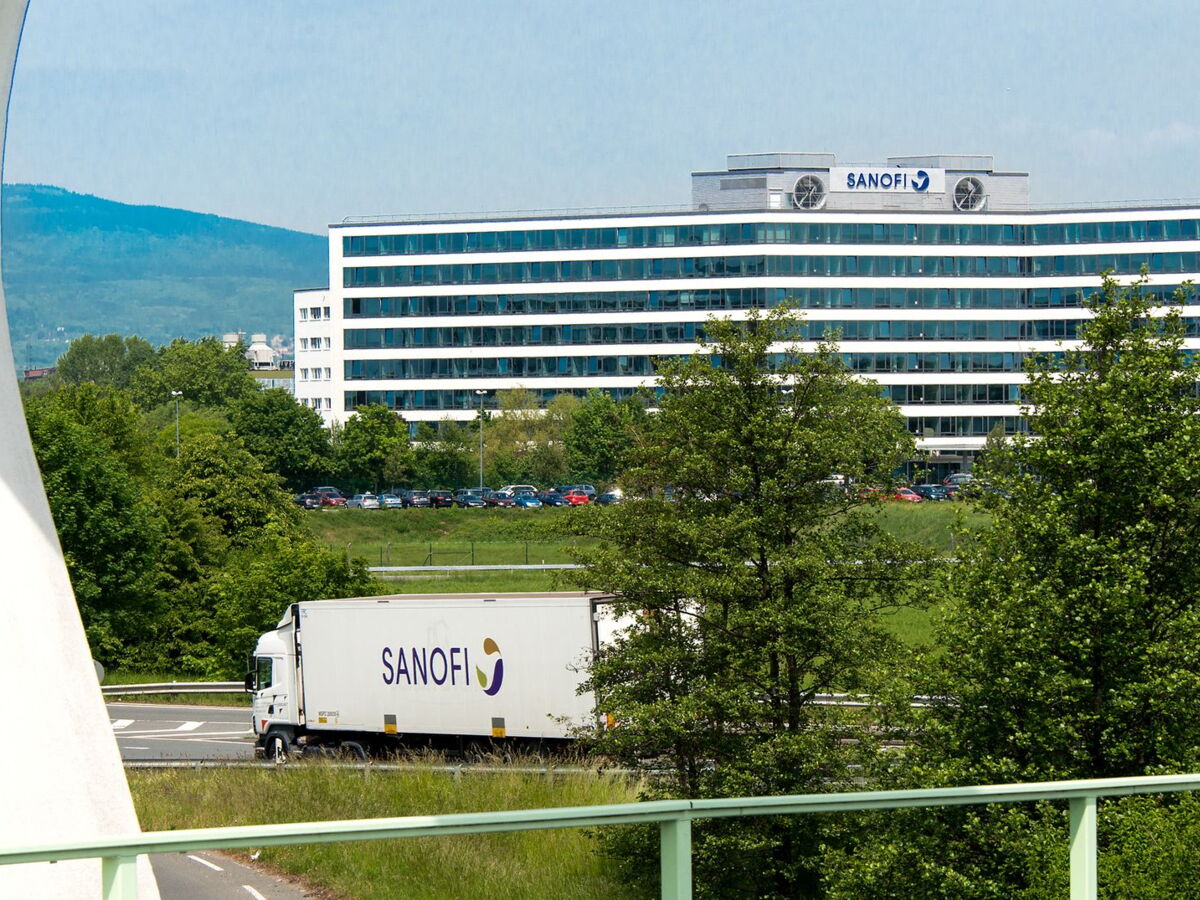
French pharmaceutical group Sanofi announced on Tuesday that it has signed an agreement to acquire American company Insmed for 37.6 billion euros, a major deal that strengthens its position in respiratory disease.

Under the terms of the merger agreement, Sanofi will acquire all outstanding shares of Insmed at a price of $175 per share in cash, representing a total equity value of about $41.0 billion, or 37.6 billion euros, the French group said in a statement.
The acquisition includes two Insmed drugs already on the market: Brinsupri, a treatment for the chronic lung disease non-cystic fibrosis bronchiectasis, and Arikayce, an inhaled antibacterial treatment. It also brings in a clinical-stage program in advanced development.
Strengthening the respiratory franchise
The deal, one of the largest acquisitions Sanofi has ever carried out, aims to strengthen the French group's presence in respiratory diseases, where significant medical needs remain unmet, the company said.
Sanofi chief executive Belen Garijo told a conference call that the deal was an exceptional opportunity to accelerate growth and create long-term value for shareholders. She noted that Brinsupri, launched in the United States in August 2025, has already generated more than $1 billion in cumulative sales.
Garijo added that Arikayce, intended for certain patients with a serious lung infection, could in future benefit a larger number of patients, subject to regulatory approval of a new therapeutic indication.
A growth driver through the next decade
Garijo said that together, the two drugs represent an important growth driver, with estimated combined peak annual sales potential of more than $10 billion, which should extend to the very end of the next decade.
Sanofi is also counting on TPIP, a treatment in advanced development for pulmonary hypertension, which Garijo said could become a significant growth engine for the company beyond 2030.
Sanofi, which focuses on immunology, vaccines and rare diseases, must prove to the market that it can find a successor to its flagship drug Dupixent, which alone accounts for close to 40% of its revenue but is set to lose patent protection around 2031. Dupixent is approved for multiple conditions, including respiratory diseases such as asthma and smoker's bronchitis, as well as immunology indications ranging from atopic dermatitis to prurigo nodularis.
A bigger deal after a push for scale
Three months into her tenure, Sanofi's chief executive had already signalled her intention to pursue larger deals. Garijo said the transaction shows strong strategic complementarity with Sanofi's portfolio in immunology and rare diseases.
The acquisition of Insmed is expected to close in the first half of 2027 and is projected to improve Sanofi's net earnings per share by the end of 2028. The company said the deal should have no impact on its financial guidance for 2026.
Sanofi's chief financial officer, Francois Roger, estimated annual cost synergies from the deal at more than $500 million.
Echoes of the Genzyme deal
In 2011, Sanofi bought American biotech Genzyme for about $20 billion, a deal that was led at the time by Garijo.
What happens next
The acquisition is expected to be completed in the first half of 2027 and is projected to improve Sanofi's net earnings per share by the end of 2028.
Test yourself
How much is Sanofi paying to acquire Insmed?
Why does Sanofi need a new growth driver, according to the article?
What did Sanofi's CFO estimate the annual cost synergies from the deal to be?
Have your say
Do you think large pharmaceutical acquisitions like Sanofi's purchase of Insmed are good for patients?