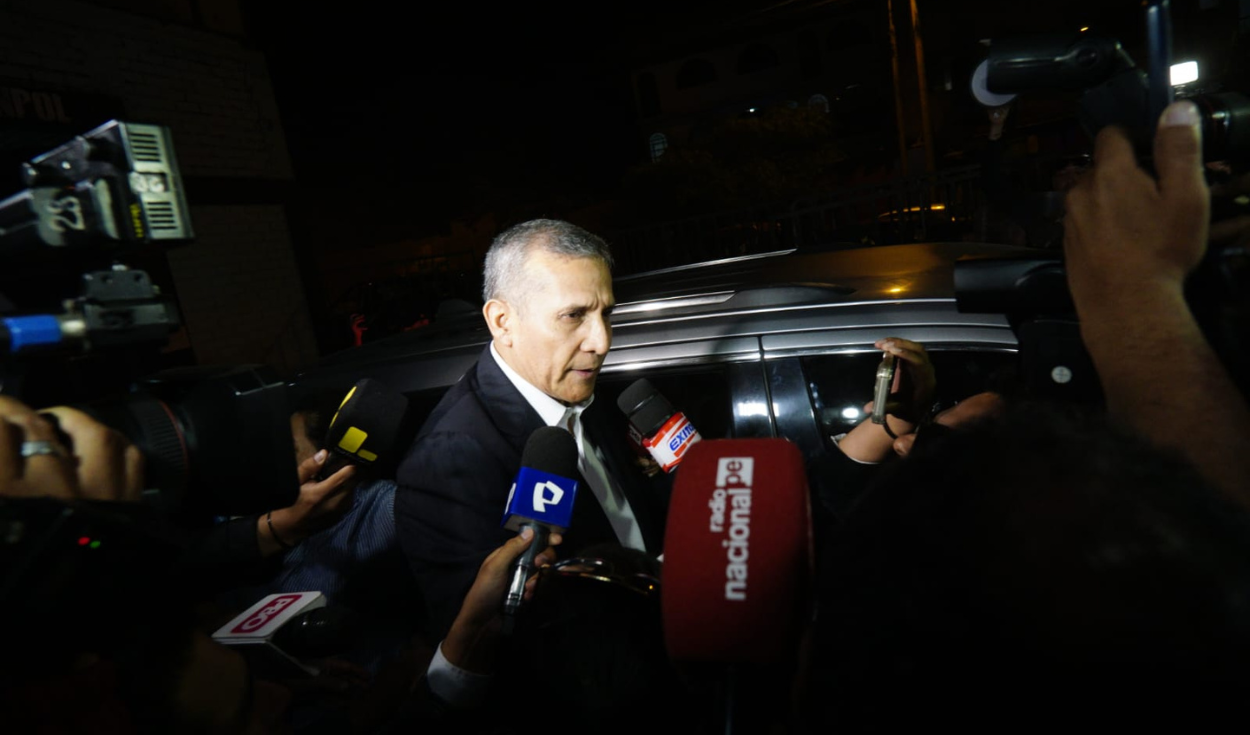
Former Peruvian president Ollanta Humala walked free from Barbadillo prison on Friday after a national preparatory court ordered his release in compliance with Constitutional Tribunal ruling 169/2026, which annulled the entire criminal process against him for aggravated money laundering. The 15-year sentence handed down in April 2025 was voided, and the court ordered prison authorities to carry out his release the same day.
Speaking to reporters after his release, an emotional Humala said he and his family had been victims of political and judicial persecution. He described his imprisonment as a kidnapping by the state and alleged that the justice system had been used to target him because of his record in government and his party's ideology.
Humala denied all the charges against him and said his family had suffered serious consequences from the case. He said his wife had been forced to seek asylum and that his children had been taken out of the country.
The former president also directed sharp criticism at the Lava Jato Special Team, accusing its members of usurping functions belonging to the judiciary and the national elections body. He said the group had criminalised campaign contributions and set out to destroy him.
Humala said the ruling validated the decision by his wife, Nadine Heredia, to seek asylum in Brazil following her own legal troubles. Heredia has been in asylum there since April of last year. Humala said his mother-in-law and his youngest child were waiting for him at his home, and he asked to be allowed to reunite with his family. He also called on the state to apologise, saying his freedom had been taken from him unlawfully, and expressed hope that Heredia would be allowed to return.
How the tribunal decided
The Constitutional Tribunal voted five to two to grant Humala's habeas corpus petition. The majority, made up of magistrates Dominguez Haro, Morales Saravia, Gutierrez Ticse, Ochoa Cardich and Hernandez Chavez, found that the criminal type used to convict Humala was not incorporated into law until November 2016, making its retroactive application to conduct linked to his 2006 and 2011 campaigns unconstitutional. The majority also found that it was not clearly established which underlying crime generated the funds in question, nor that Humala knew at the time that the money came from an illegal source. The tribunal ordered the prosecutor's office to archive the case.
The two dissenting magistrates, Luz Pacheco Zerga and Manuel Monteagudo Valdez, challenged both the procedure and the substance of the ruling. Pacheco Zerga argued that the decisions under review did not directly affect Humala's liberty and that the Supreme Court had always framed the conduct within a pre-existing offence dating to 2002. Monteagudo Valdez argued that an appeal against the 2025 sentence was still pending before another tribunal when the Constitutional Tribunal intervened, which he said amounted to an encroachment on the jurisdiction of the ordinary criminal courts.