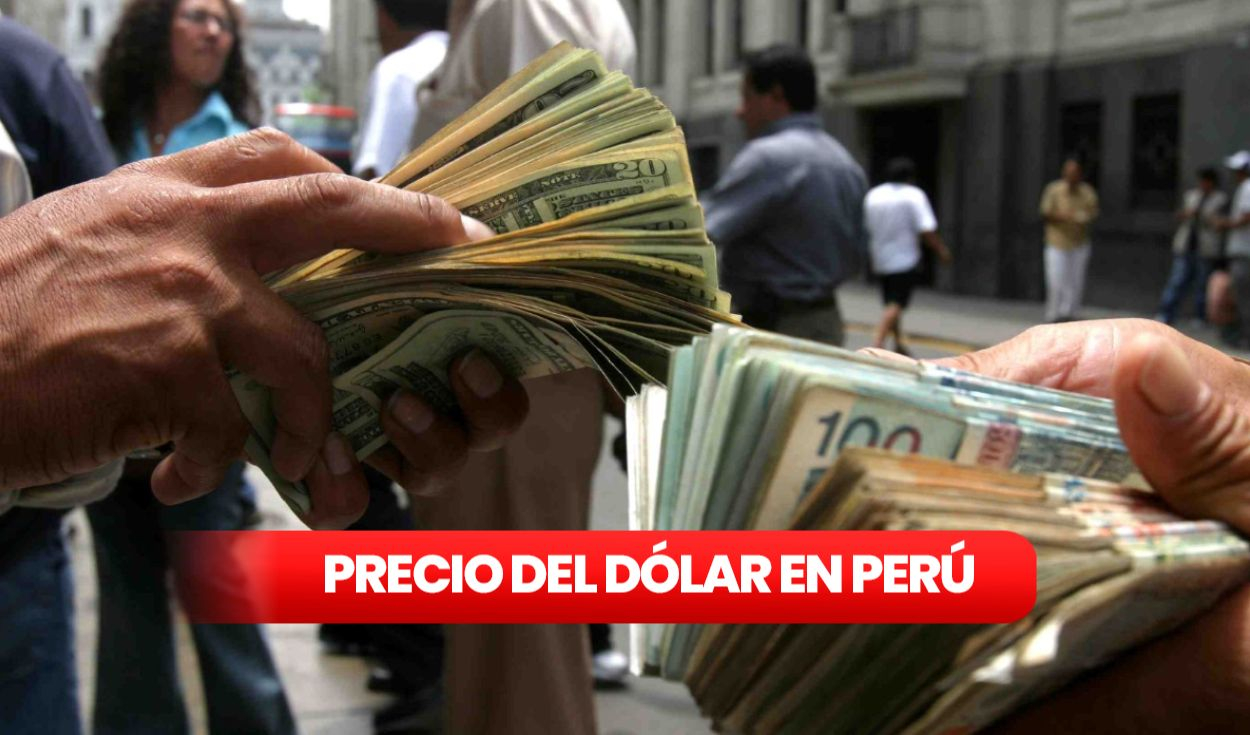
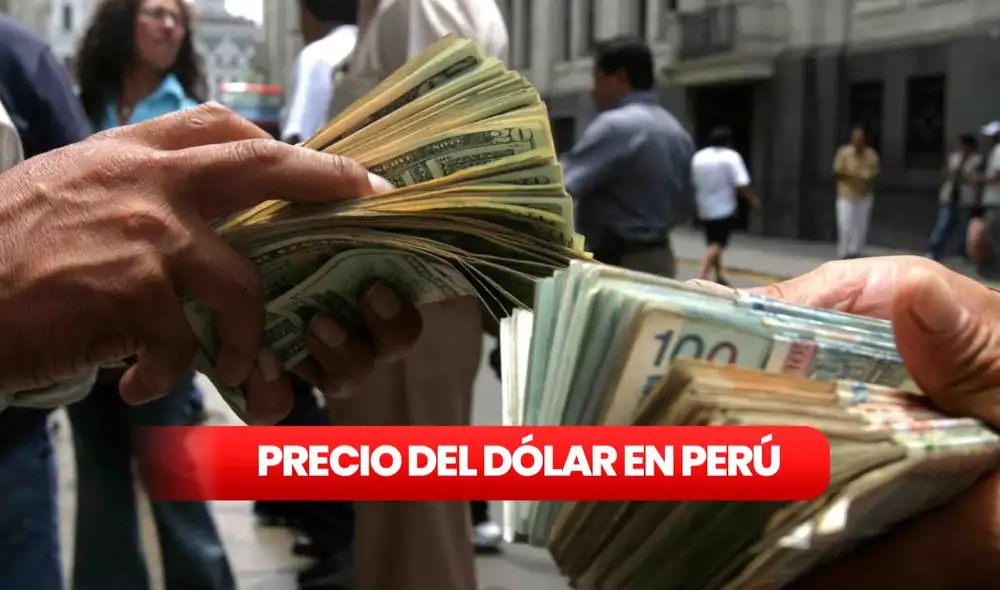
The US dollar traded at 3.340 soles for purchases and 3.360 soles for sales in Peru's parallel market on Tuesday, August 25, 2026.
According to the exchange rate platform cuantoestaeldolar.pe, informal market rates in the South American nation remained lower than commercial bank quotations as overall currency supply influenced trading throughout the day.
Tax Agency and Financial Market Rates
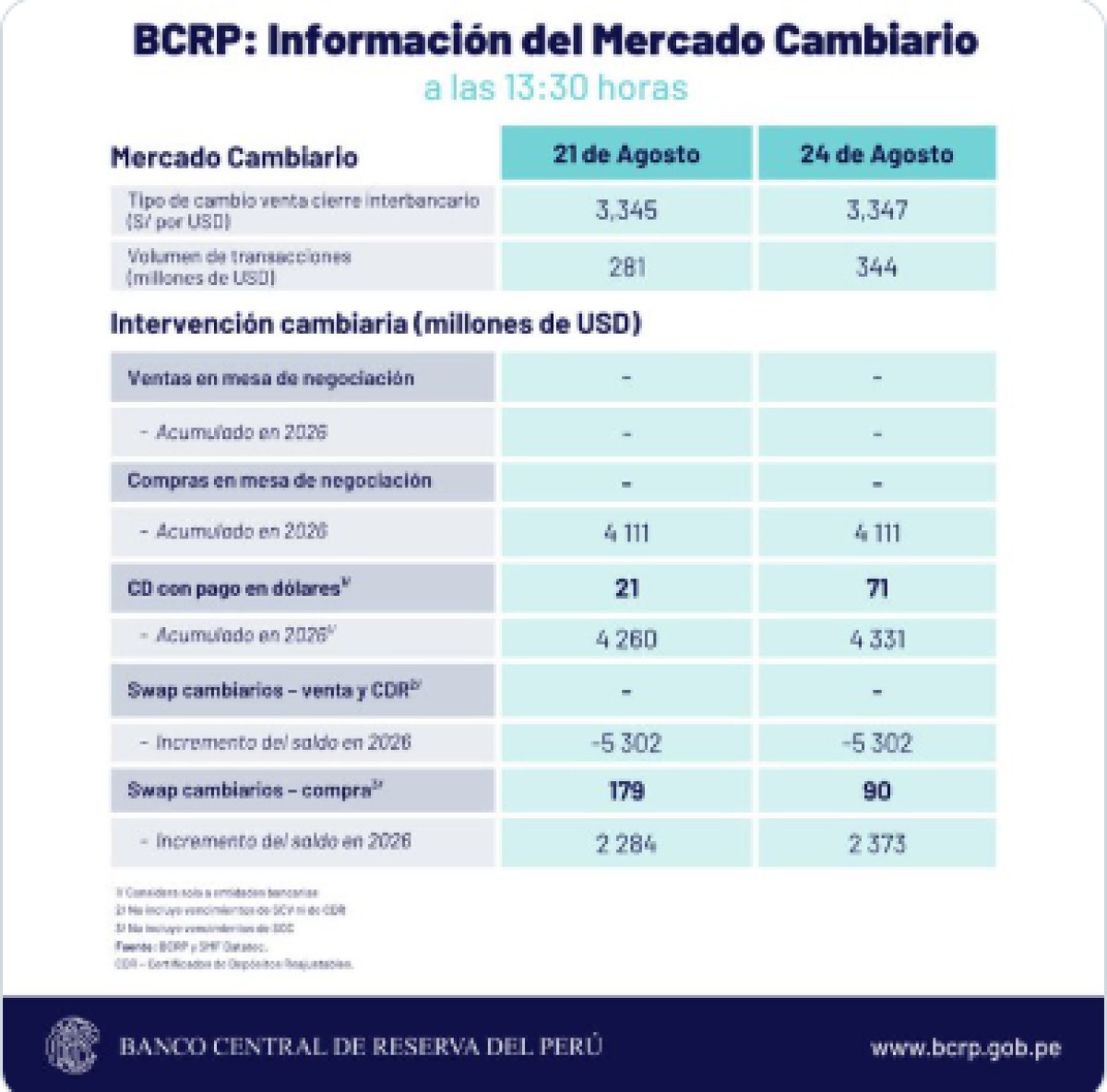
At the market opening recorded by financial news portal Bloomberg at 7:00 a.m., the dollar stood at 3.3463 soles.
The National Superintendency of Customs and Tax Administration, known locally as SUNAT, established its official reference rate at 3.342 soles for purchases and 3.356 soles for sales.
Financial expert Jorge Carrillo Acosta explained that the SUNAT exchange rate serves as an essential reference for tax accounting. Carrillo Acosta noted that the figure allows individuals and companies to record foreign currency transactions accurately for purchases, sales, and tax returns.
Commercial Bank Exchange Rates
Commercial banks across Peru published higher exchange rates for buying and selling US dollars on Tuesday.
Banco de Crédito del Perú, the country's largest commercial bank, set its buying rate at 3.525 soles and its selling rate at 3.540 soles. Scotiabank listed a buying rate of 3.519 soles and a selling rate of 3.558 soles, while Interbank quoted 3.493 soles for purchases and 3.576 soles for sales.
State-owned bank Banco de la Nación listed a purchase price of 3.480 soles and a sale price of 3.600 soles. BBVA Peru posted a buying rate of 3.468 soles and a selling rate of 3.608 soles.
Supply, Demand and Market Dynamics
The downward movement in the dollar price follows fundamental principles of market supply and demand. When the supply of dollars exceeds market demand, the exchange rate falls, whereas demand exceeding supply causes the price to increase.
Economist Jorge Luis Ojeda emphasized that Peru is highly reliant on foreign exchange rates because a large part of the domestic economy depends on imported goods purchased in dollars.
Ojeda said the country buys wheat at foreign currency costs, which affects livestock feed prices as well as bread and bakery production. He noted that these costs directly impact the basic family shopping basket, adding that a similar situation occurs with imported fuel on international markets.
Etymology and Local Currency Terminology
Peruvians frequently use the informal slang term "coco" to refer to the US dollar.
The term originates from the image of George Washington on the one-dollar bill. Because the English name George translates to Jorge in Spanish, and people named Jorge are commonly nicknamed "Coco" in Peru, the name became associated with the currency.
The nickname is widely recognized in Peruvian banking, with Banco de Crédito del Perú naming its digital currency exchange service "Cocos y Lucas."
Wider Peruvian Economic Indicators
The currency updates coincided with positive domestic economic figures released in Lima. Mining employment in Peru grew by 11.1 percent in June 2026, generating more than 291,000 jobs in the sector.
Peruvian authorities also confirmed that the Free Trade Agreement between Peru and Hong Kong will enter into force on September 1, 2026.