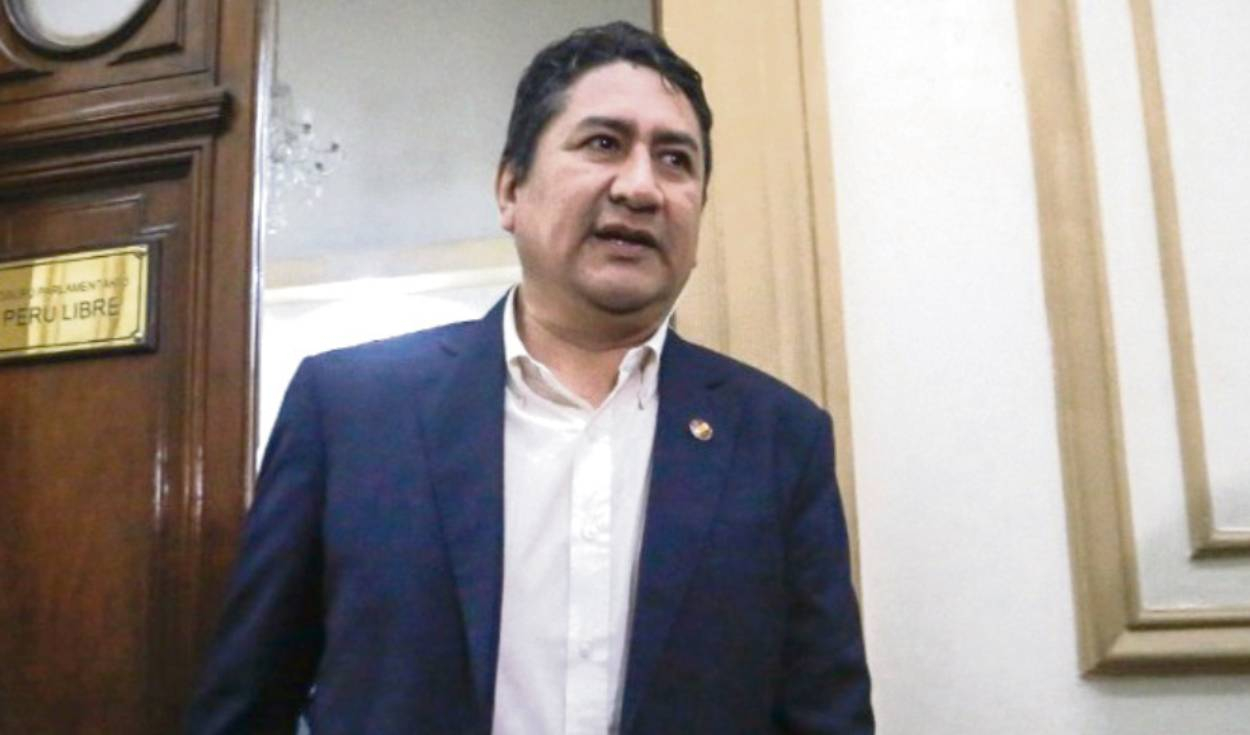
Peru's judiciary has replaced the pre-trial detention order against Vladimir Cerrón, former governor of Junín and leader of the Perú Libre party, with supervised release, following a Constitutional Tribunal ruling in his favor.
The Poder Judicial acted after the tribunal declared a habeas corpus petition by Cerrón's defense team well-founded and struck down the measure that had kept him a fugitive since October 2023.
Under the new arrangement, Cerrón must appear before the court and prosecutors every 30 days, pay bail of 30,000 soles within ten business days of notification, and seek judicial authorization before leaving Peru. The case stems from a criminal organization and money laundering investigation known as Los Dinámicos del Centro.
The tribunal voted 4 to 3 to grant the habeas corpus on July 3, though the ruling became public weeks later. Magistrates Helder Domínguez Haro, Francisco Morales Saravia, Gustavo Gutiérrez Ticse, and Pedro Hernández Chávez voted in favor. Magistrates Luz Pacheco Zerga, Manuel Monteagudo, and César Ochoa Cardich voted against.
Enforcement was not straightforward. The Sixth National Preparatory Investigation Court initially classified the tribunal's ruling as unenforceable, arguing that other resolutions sustaining the pre-trial detention remained valid. The tribunal rejected that argument and ordered immediate compliance, and the Poder Judicial executed the change one day later.
Cerrón has been at large since October 2023, when he was sentenced in the Aeródromo Wanka case, a conviction that was later overturned.
Why the Lower Court's Objection Failed
Constitutional lawyer David Panta explained on his X account why the lower court's position did not hold. He said an execution judge has no authority to classify a Constitutional Tribunal ruling as unenforceable.
Panta outlined the expansive-effect doctrine: if a pre-trial detention is declared null, any later resolutions that merely kept it in place must also fall as accessory acts. He added that habeas corpus proceedings are governed by the principles of pro libertate, anti-formalism, and maximum speed, making a formalist reading incompatible with the protective purpose of such proceedings.
Panta also noted that the authority of a final constitutional ruling leaves no room for an execution judge to redefine its scope. The tribunal's order sent a broader institutional message: its sentences must be complied with on their own terms, without reinterpretations that neutralize their effects.