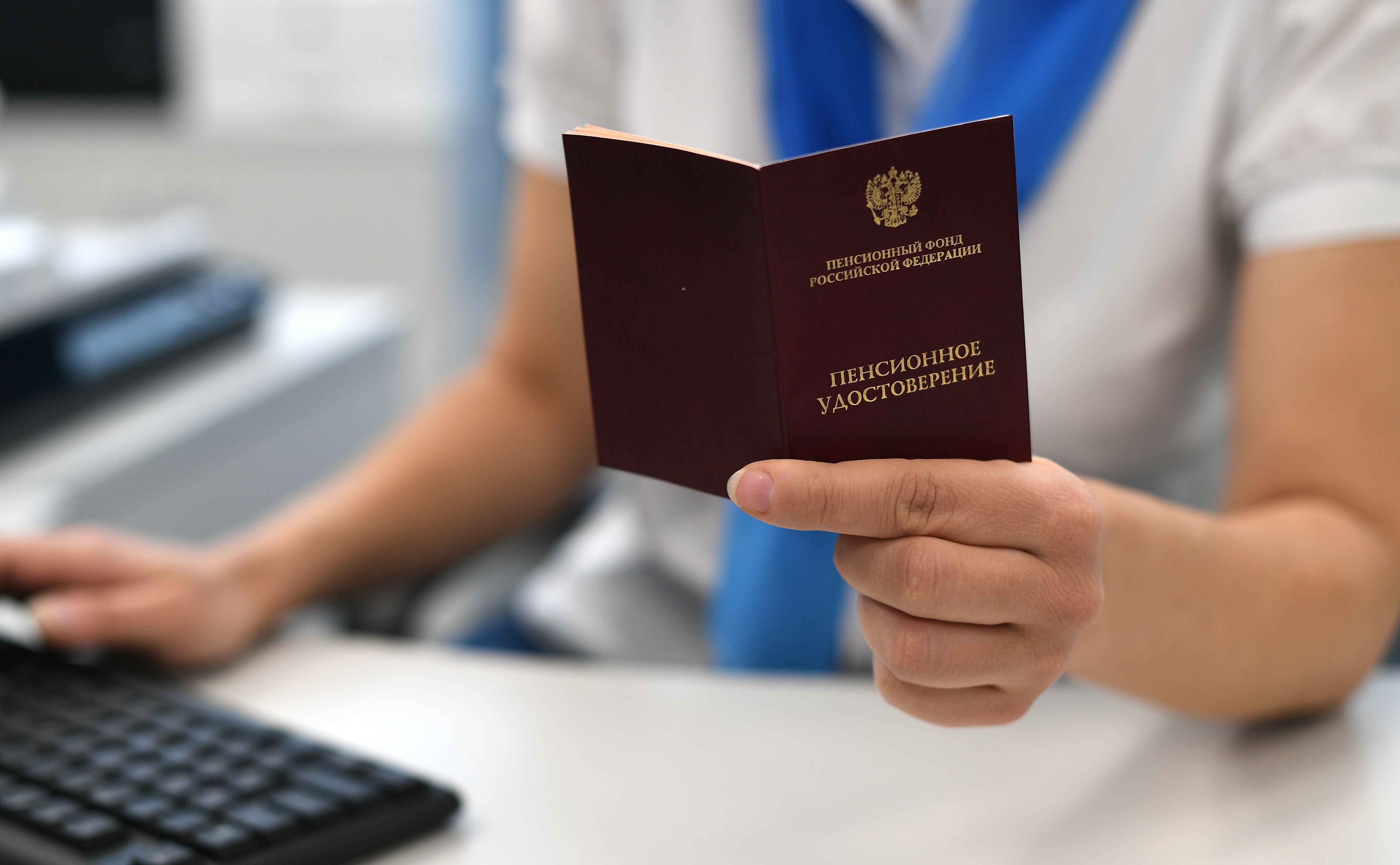
Russian pensioners will not receive a so-called "13th pension" before the New Year in 2026, because no such payment exists in Russian law. The term resurfaced repeatedly in 2026 after two separate bills proposing an extra year-end payout were submitted to the State Duma, the lower house of Russia's parliament, in July.

One bill was put forward by deputy Andrei Svintsov together with the Pensioners' Party, and the other by Sergei Mironov, leader of the A Just Russia party. Mironov proposed setting the payment at 1.5 times the subsistence minimum.
What the "13th pension" actually means
The phrase is often used, sometimes mistakenly, to describe three different things: a legislative proposal that has never become law, the regular indexation of pensions, or an advance payment of January's pension made in December.
Daria Mitina, head of the independent trade union Novy Trud, said many people confuse the so-called 13th pension with an advance payment that arrives in December. Under this practice, pensioners receive their normal pension at the start of the month and then a second sum later in December, she said.
Mitina said this is not a 13th pension but simply an advance on January's payment, meaning people can spend the money before the New Year but will not receive a pension in January. She said this is what people commonly, if loosely, call the "13th pension."
No Russian government has ever actually paid a 13th pension. The idea is modeled on the "13th salary," a bonus equal to one month's pay that employers can choose, but are not obliged, to give staff before the New Year.
Irina Andrievskaya, content and analytics director at the financial marketplace Vyberu.ru, said the 13th salary is not regulated by Russia's Labour Code or other legislation and is not a mandatory form of pay. She said it is a bonus meant to boost performance and motivation, governed by internal company rules that set out eligibility and criteria. Companies sometimes extend such bonuses to employees who have recently retired, she said, but no law requires any employer nationwide to pay a 13th salary to staff or recent retirees.

A decade of failed bills
Lawmakers have proposed an extra pension payment to the Duma since 2013, but none of the bills has passed, largely because of the scale of public spending involved.
The idea was first floated in 2013, when officials proposed giving people over 70 an extra payment for medicine and healthcare; the measure was estimated to cost the budget about 120 billion rubles.
In December 2021, the Duma again raised the idea of a 13th pension for all retirees. The bill's authors estimated it would add 654.8 billion rubles to budget spending.
In autumn 2022, the proposal was resubmitted as bill No. 50206-8, which would have made the annual December payment equal to a normal monthly pension for all categories of pensioners, including military, civilian, working and non-working retirees. The bill was not supported.
Andrievskaya said deputies again rejected a version of the bill in 2023. The government argued the payment would not be equal for everyone, even though Russian law defines a pension as compensation for lost earnings. Because not all organizations pay a 13th salary, the Cabinet concluded an equivalent pension payment would effectively amount to financial aid, which by its nature should be the same for all recipients.

In 2024, State Duma deputy speaker Boris Chernyshov put forward a new version proposing a single, equal payment for all pensioners. That initiative also failed to win support.
In 2025, Mironov raised the idea again on Grandparents' Day, saying his party wanted grandparents to have extra money to buy gifts for children and grandchildren and to celebrate the New Year. He said the measure could help restore social fairness toward older people.
In 2026, supporters have argued the bill is needed because pension indexation has not kept pace with rising prices and utility rates.

Arguments for and against
Sergei Dovgal, head of the legal department at Novy Trud, said the main motivation for a 13th pension is social support for older people, including help covering utility bills and medicine, offsetting price rises that indexation does not fully cover, and covering New Year expenses.
The main argument against it is the cost to the budget. Svetlana Bessarab, a Duma deputy on the committee for labour, social policy and veterans' affairs, said a one-off payment to all categories of pensioners, roughly 40.5 million people in Russia in 2026, would require between 654 billion and 1 trillion rubles from the budget, along with sweeping changes to regulations and to how the Social Fund of Russia operates.
In 2022, Bessarab described the 13th pension proposal as a semi-childish approach that was not backed by calculations or funding sources. She said at the time that substantial government resources were already going toward pension indexation, and that an extra payment could only replace that indexation, not come on top of it.
What pensioners can expect instead
Instead of a 13th pension, pensioners can expect the regular indexation of pensions, which is due to take place twice in 2027, on 1 February and 1 April, and the usual December advance payment of January's pension, which is often mistaken for a 13th pension but leaves pensioners without a payment the following January.
What happens next
No 13th pension bill has passed, but Russia's regular pension indexation is scheduled to take place twice in 2027, on 1 February and 1 April.
Test yourself
What is the "13th pension" in Russian law?
According to Svetlana Bessarab, how much would a one-off payment to all pensioners cost the budget?
What is scheduled to happen with pension indexation in 2027?
Have your say
Should Russia introduce an extra year-end pension payment for retirees?
Where it happened
Moscow, Russia