Filippo Sardella, an analyst at the Istituto Analisi Relazioni Internazionali, says Morocco's defense spending does not support claims that Rabat is arming to attack Spain. In a report published on October 21, Sardella examined military budgets across North Africa and the western Mediterranean and concluded that budget data alone cannot prove an intention to strike a neighboring country.
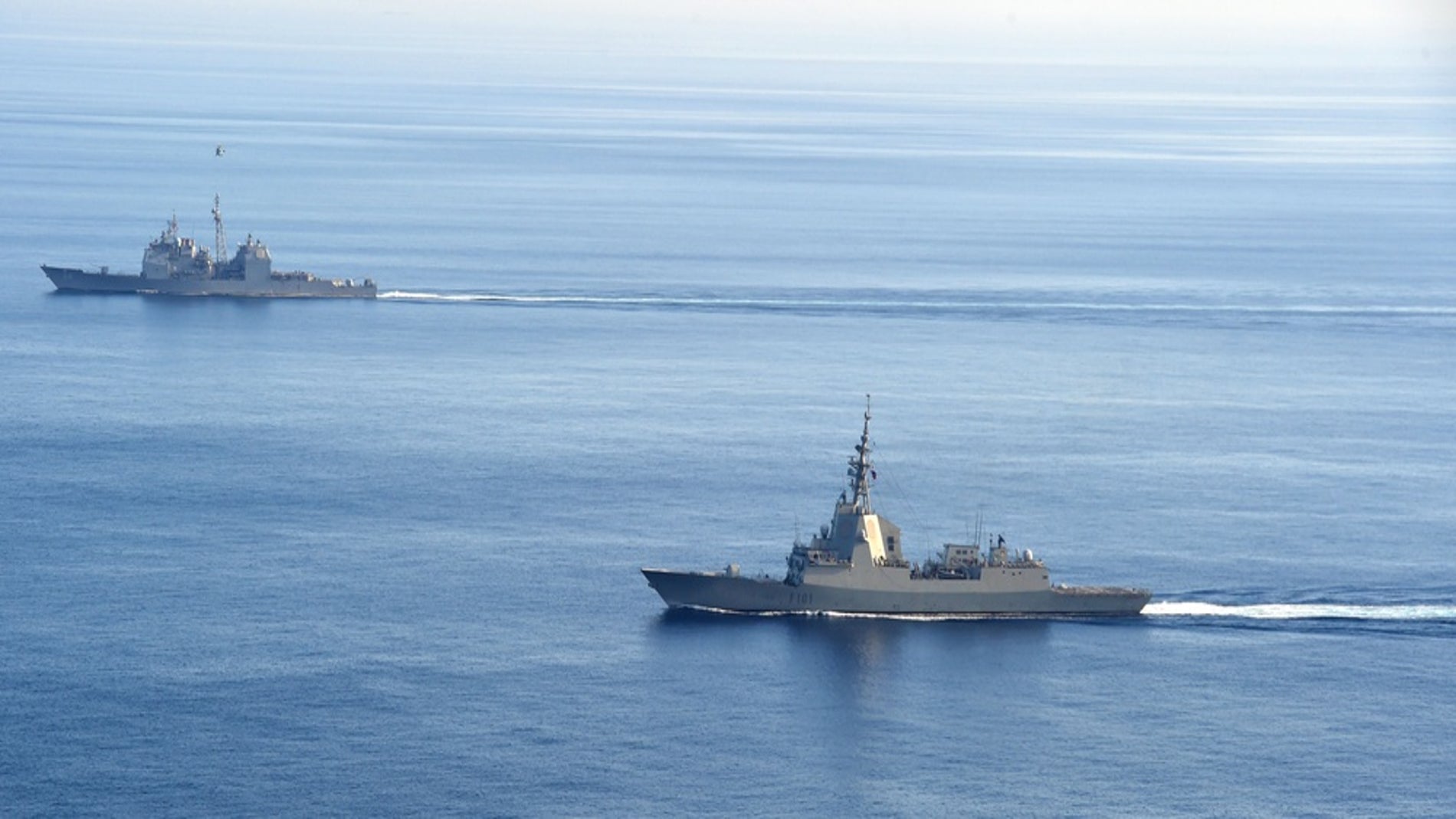
According to data from the Stockholm International Peace Research Institute, known as SIPRI, Algeria spent about $25.4 billion on defense in 2025, while Morocco spent about $6.3 billion during the same financial year. That gap means Algiers spent roughly four times as much on its armed forces as Rabat, pointing the primary driver of Moroccan rearmament toward its eastern land border rather than across the Strait of Gibraltar.
Sardella noted in his analysis for the Istituto Analisi Relazioni Internazionali (IARI) that a national defense budget measures the scale of a state's economic effort, whereas attributing a specific military target to that spending requires separate political and operational evidence. That assessment aligns with broader commentary on North African defense policy, including observations by Maghreb specialist journalist Ignacio Cembrero that Morocco is locked in an arms race with Algeria, and by military analyst Yago Rodríguez that Spain generally overestimates Morocco as a military adversary.
Defense budgets in Algeria and Morocco
SIPRI, an independent research institute based in Stockholm that tracks global military expenditure and arms transfers, links the trajectory of defense spending in both Algeria and Morocco to their long-standing bilateral tensions and the territorial dispute over Western Sahara. Western Sahara, a disputed territory on the northwest coast of Africa bordering both Morocco and Algeria, has remained at the center of diplomatic and security friction between Rabat and Algiers for decades.
Sardella added that Morocco has the capacity to sustain a political and diplomatic rivalry with Madrid over specific issues even while Spain retains a clear military advantage. Disagreements between neighboring states over maritime waters, territories, or trade relations can persist for years as part of an ongoing bilateral competition without escalating into an armed conflict.
Arms authorizations and submarine delivery timelines
The October 21 report also addressed a frequent source of confusion in public comparisons of military strength: the time lag between a procurement authorization and an actual delivery. When the United States authorizes a potential foreign military sale to another country, officials publish the planned equipment package and an estimated dollar value.
While such an announcement can represent an important step for the Moroccan Army, the equipment still has to be formally contracted, manufactured, and delivered before it enters active service. Once the hardware arrives, personnel must also complete training and establish maintenance systems. Sardella noted that adding every authorized unit to the equipment already operating in the field artificially brings the delivery calendar forward and distorts any assessment of the current military balance.
The same distinction between industrial planning and operational readiness applies to Spain's own armed forces. The Spanish naval industry is capable of designing and building domestically produced submarines, yet individual vessels within a single production class move through construction and testing on separate schedules. Sardella pointed out that the Spanish Navy received the submarine S-81 Isaac Peral in November 2023, whereas the second submarine in the series, the S-82 Narciso Monturiol, was still undergoing trials at the time of his October 2026 assessment. Both submarines belong to the same industrial program, but a vessel in trials does not hold the same operational status as one already delivered to the fleet.
Naval balance between Spain and Morocco
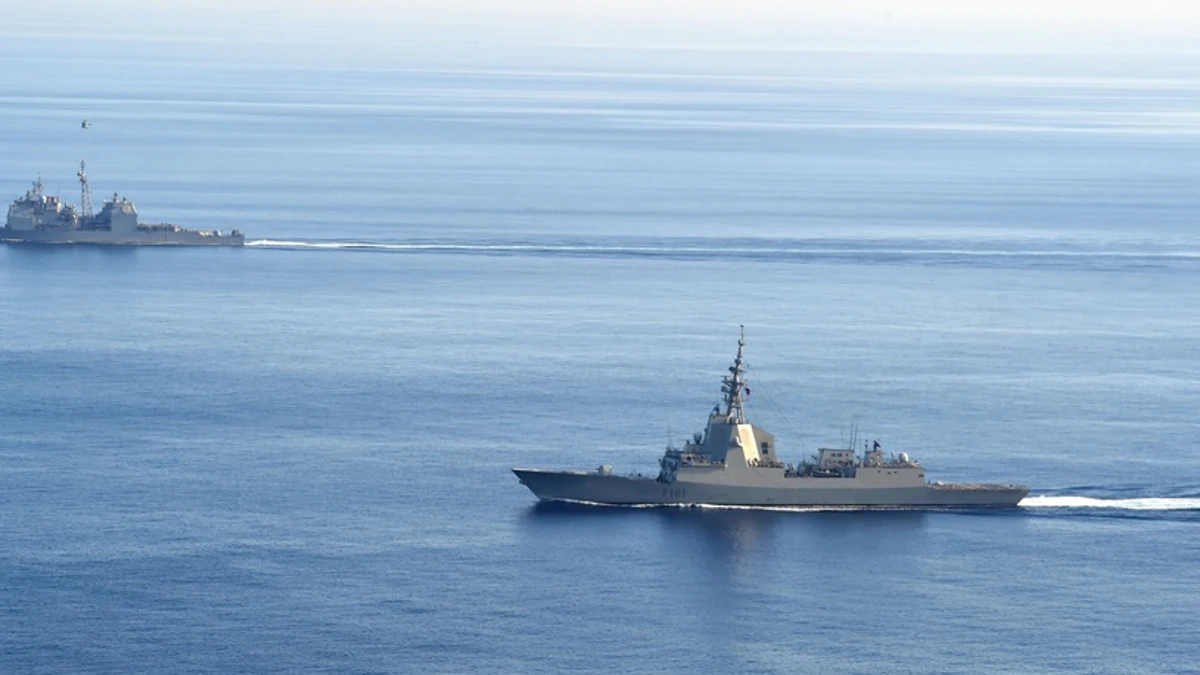
Evaluating the maritime balance in the western Mediterranean requires examining the composition of both naval fleets as a whole rather than comparing only their best-known flagship vessels. On the Spanish side, Sardella highlighted the weight of the Spanish Navy's five Álvaro de Bazán-class frigates alongside the amphibious ship Juan Carlos I.
Facing them, the Royal Moroccan Navy operates the frigate Mohammed VI together with vessels of the SIGMA and Floréal classes. Beyond the ships currently at sea, domestic shipbuilding capacity adds a further structural dimension to the naval balance. As Sardella observed, a shipyard that builds and delivers a warship can also participate in its periodic overhauls and in the modernization of the entire class.
Trade ties and corporate presence in Morocco
Military budgets are only one part of the bilateral equation in the western Mediterranean. According to figures from the Spanish Ministry of Foreign Affairs, more than 6,000 Spanish companies exported goods and services to Morocco on a regular basis in 2024, while more than 900 Spanish firms operated subsidiaries or held significant stakes inside the North African country.
Those commercial connections coexist with recurring tensions over Ceuta, a Spanish autonomous city on the north coast of Africa bordering Morocco. Sardella incorporated the trade and corporate data into his analysis because any severe political or military crisis would also impose substantial economic costs on companies in both Spain and Morocco.
In his report, Sardella wrote that it is plausible as a hypothesis that Rabat seeks to negotiate from a stronger position. Proving that a government has chosen to attack a neighbor, however, would require concrete evidence of that political decision. Morocco's public accounts allow analysts to track how much money the government allocates to defense and how that effort varies relative to Algeria's spending, but budget figures alone do not answer whether Rabat intends to attack Spain.
Test yourself
How much did Algeria spend on defense in 2025 according to SIPRI?
When did the Spanish Navy receive the S-81 Isaac Peral submarine?
How many Spanish companies exported regularly to Morocco in 2024 according to Spain's Ministry of Foreign Affairs?
Have your say
What is the main driver of Morocco's defense spending?
Where it happened
Rabat, Morocco