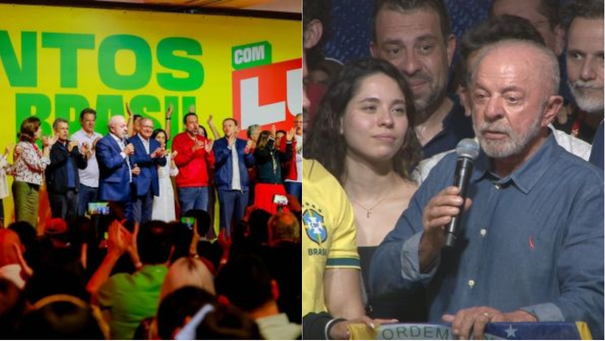
Brazilian President Luiz Inácio Lula da Silva reshuffled his closest political allies on stage after securing re-election in the second round of voting on Sunday.
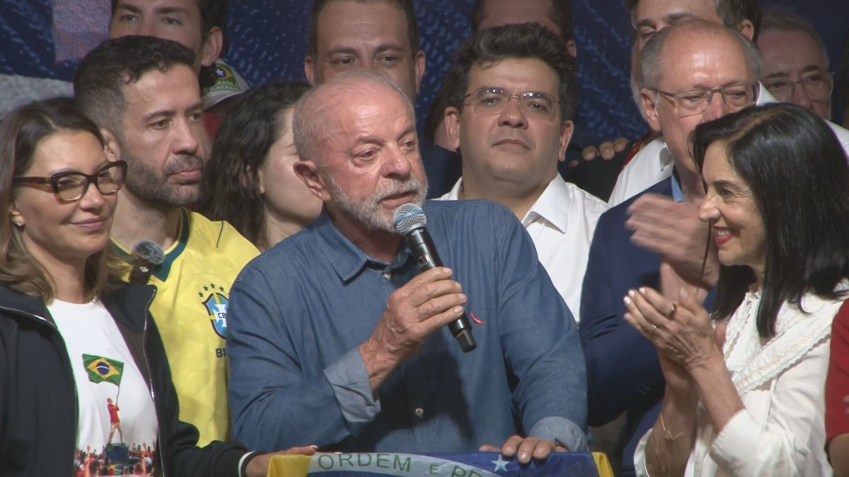
Speaking to supporters at a hotel in the Avenida Paulista district of São Paulo on 25 October, the Workers' Party leader appeared surrounded by fresh political figures, sidelining several established names who had accompanied him earlier in the campaign.
The visual transformation followed a dramatic race against Flávio Bolsonaro of the Liberal Party. Lula had trailed his conservative rival in the first round of voting on 4 October, prompting a strategic overhaul of his campaign messaging and personnel before the deciding vote.
Brazil requires a presidential candidate to secure an absolute majority in the first round to avoid a run-off, forcing the governing coalition into a head-to-head race against Bolsonaro.
First round campaign lineup
During his initial appearance after falling behind on 4 October, Lula stood flanked by the traditional core of his political movement, including former cabinet ministers and prominent candidates.
That original front line featured Edinho Silva, the national president of the Workers' Party, known as the PT, alongside Communications Minister Sidônio Palmeira and First Lady Rosângela Janja Lula da Silva.
They were joined by Health Minister Alexandre Padilha, former Environment Minister Marina Silva, Minister of Development and Industry Márcio Elias Rosa, former Finance Minister Fernando Haddad, and Aloizio Mercadante, the president of the National Bank for Economic and Social Development, known as the BNDES.
Those senior figures represented the administration's veteran core, overseeing critical federal portfolios from public health and industrial development to state infrastructure lending at the BNDES.
Shift away from defeated candidates
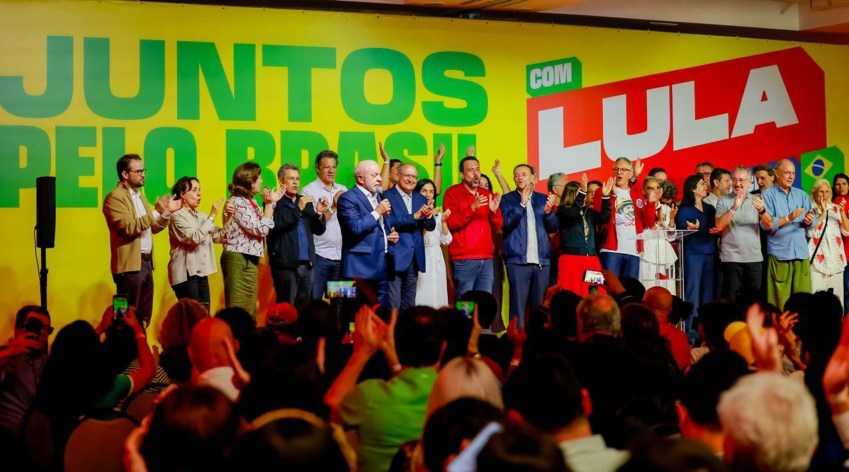
When Lula returned to the stage on Sunday night, only three figures from that initial group remained visible in the victory photograph: Janja, Padilha, and Mercadante.
Allies who suffered defeats at the ballot box lost their prominent positions beside the president. Despite actively mobilising voters across São Paulo during the second round, Haddad, Marina Silva, and Simone Tebet were moved out of the spotlight.
Although Tebet, Haddad, and Marina Silva campaigned across São Paulo, the second-round victory event projected renewal rather than party seniority.
Youth and digital mobilisation
In place of the old guard, the platform featured a younger generation of progressive politicians. Former Recife mayor João Campos of the Brazilian Socialist Party stood near the president alongside federal deputy Tabata Amaral, representing São Paulo for the same party.
Newly elected federal deputy Guilherme Cortez of the Socialism and Liberty Party, known as PSOL, also took a prominent spot. Cortez had travelled across Brazil during the campaign to mobilise university students and LGBTQIAPN+ voters.
He was accompanied by several newly elected federal deputies from the Workers' Party, including Ana Elisa of Minas Gerais, Ana Júlia Ribeiro of Paraná, and Luna Zarattini of São Paulo.
Federal deputy André Janones of the Sustainability Network, who manages the Lula's Army digital campaign group, earned a place beside the president and received praise during his speech.
Cabinet outreach and regional influence
Behind the president stood Minister of the General Secretariat of the Presidency Guilherme Boulos. Boulos had taken on targeted outreach duties, meeting with organised football supporters after the administration banned commercial betting platforms.
Boulos also led negotiations with motorcycle couriers and app delivery workers following the launch of Move Brasil, a federal initiative offering credit lines to help transport workers buy new vehicles.
Leaders from the North-East filled the podium background, representing a region that has long served as the electoral bedrock of the Workers' Party.
Among them was Rafael Fonteles, the re-elected governor of Piauí, who is widely seen as a contender for finance minister. Fonteles, who famously gave Lula his first mobile phone, moved into the campaign's front line alongside Senator Camilo Santana of Ceará after the first-round setback.
According to reporting by CNN Brasil, both Fonteles and Santana earned Lula's close trust during the run-off campaign. Santana is considered a leading candidate to head the Casa Civil, the presidential chief of staff office that coordinates government ministries.
Vice presidential role and electoral strategy
Vice President Geraldo Alckmin of the Brazilian Socialist Party, who had not appeared in a prominent spot after the first round, stood beside Lula on Sunday accompanied by his wife, Lúcia Alckmin.
Alckmin, a former governor of São Paulo, had the specific assignment of winning over voters in the state's conservative interior.
Prominence was also given to Marília Arraes of the Democratic Labour Party, who was elected senator for the north-eastern state of Pernambuco.
The new stage arrangement reflected a deliberate effort by the re-elected president to showcase regional strength and emerging legislative allies as he prepares to assemble his next governing coalition.