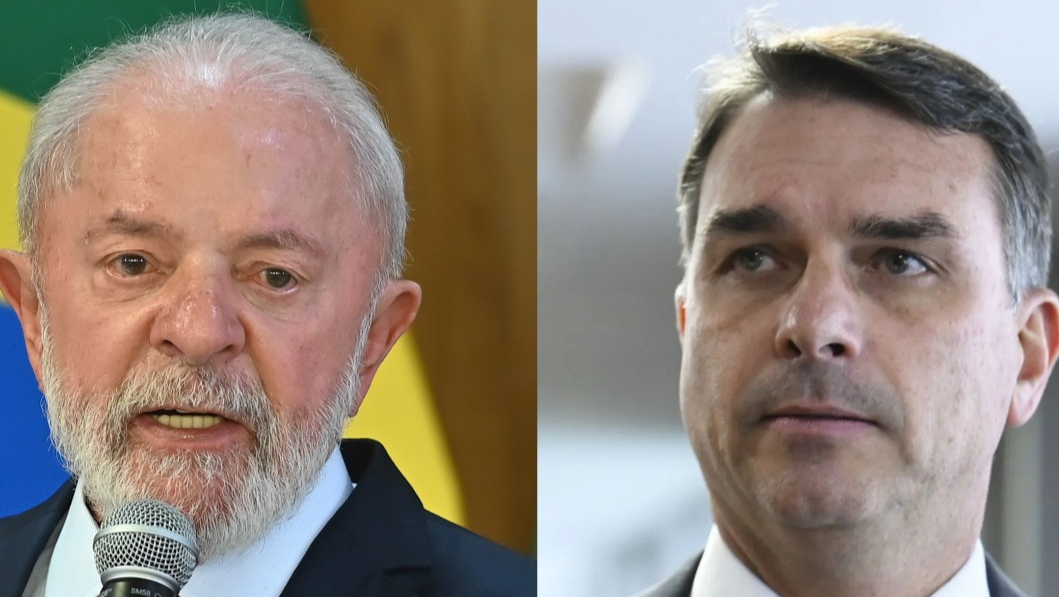
Brazilian President Luiz Inácio Lula da Silva and Senator Flávio Bolsonaro face the highest voter rejection rates among presidential candidates, according to a PoderData poll.
The survey, conducted alongside Aya and published on Thursday, September 24, revealed that 49 percent of electors stated they would not vote for Lula under any circumstances. Meanwhile, 47 percent of respondents expressed the same refusal regarding Flávio Bolsonaro.
Although both contenders lead the presidential race, major polling institutes report that the two men also concentrate the steepest disapproval figures among all candidates seeking the Palácio do Planalto, the official presidential office located in the capital, Brasília.
When questioned about Lula, 37 percent of respondents affirmed that the incumbent president was the only candidate they would vote for. Another nine percent said they could consider voting for him, while four percent said they did not know how to answer.
In the case of Flávio Bolsonaro, 34 percent of those surveyed said he was the only name they would vote for, while 13 percent indicated that they could vote for him. Another six percent did not express an opinion.
Voter resistance in the presidential race
Voter rejection ratings represent a crucial indicator in Brazilian presidential contests, where capturing the presidency requires securing an absolute majority of valid votes. High rejection numbers present a significant obstacle during a runoff election, as contenders with steep resistance often struggle to attract moderate and undecided voters.
Lula represents the leftist Workers' Party, known as the Partido dos Trabalhadores, while Flávio Bolsonaro belongs to the conservative Liberal Party and serves as a senator representing Rio de Janeiro. As the presidential campaign enters its decisive stretch, both frontrunners have focused their attention heavily on the populous Southeast and Northeast regions.
Survey methodology and official registration
The telephone survey was carried out between September 20 and September 23, gathering responses from 3,000 eligible voters across 723 municipalities in all 27 federal units of Brazil, spanning the nation's 26 states and the Federal District.
The research carries a margin of error of 1.8 percentage points, plus or minus, and a confidence level of 95 percent. Financed entirely through the polling institute's own resources, the study is officially registered with the Superior Electoral Court, Brazil's Tribunal Superior Eleitoral, under protocol number BR-01739/2026.