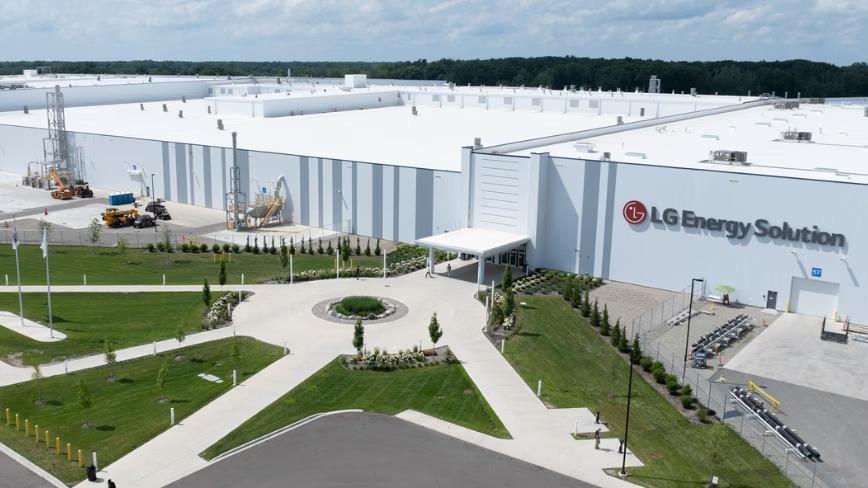
LG Energy Solution has declared that large solid-state batteries for electric vehicles remain far from mass production due to manufacturing scaling challenges, speaking at its newly opened plant in Michigan. Robert Lee, president of the North American division at the South Korean battery manufacturer, told reporters that the industry must overcome major hurdles before the technology becomes viable for automotive use.
Lee explained that the main problem with solid-state batteries is not achieving high specific energy density, but scaling up the manufacturing of large cells. While small battery formats already yield strong performance metrics, transitioning to the larger cells required for electric vehicles presents severe manufacturing difficulties for most companies across the sector.
According to forecasts by LG Energy Solution, solid-state batteries will land in smartphones approximately 10 years before they reach electric vehicles. The company expects the technology to appear first in mobile electronics, move into specialized industrial applications, and only later enter passenger cars and grid-scale energy storage systems.
European Gigafactories and Automaker Tests
The conservative timeline from LG Energy Solution contrasts with ambitious developments in Europe. Taiwanese battery maker ProLogium began construction in Dunkirk, France, in February 2026 on Europe's first solid-state battery gigafactory, designed for a capacity of 12 gigawatt-hours. Meanwhile, a Dutch startup has secured state funding to develop its own solid-state manufacturing project.
European automakers are already testing prototype batteries on public roads and test tracks. Mercedes-Benz drove a prototype EQS sedan nearly 750 miles, or about 1,200 kilometers, on a single charge using cells supplied by Factorial Energy. BMW has installed a battery from Solid Power into an i7 luxury sedan, while Stellantis is testing solid-state technology inside a Dodge Charger Daytona.
However, two out of the three vehicle projects rely on semi-solid-state designs rather than fully solid-state batteries. Industry analysts and manufacturers note that this reliance highlights a significant gap between initial technology demonstrations and full industrial production.
Chinese Timelines and Alternative Battery Tech
Chinese battery makers are pushing for faster deployment schedules than their Western and South Korean rivals. Companies including BYD, CATL, and Geely plan to start pilot production of solid-state cells in 2027, with plans to expand their commercial use in vehicles by the end of the decade.
In response to these timeline uncertainties, LG Energy Solution is focusing on improving established lithium-ion chemistry. In partnership with General Motors, the firm is developing lithium-manganese cells featuring significantly reduced nickel and cobalt content. Expected to hit the market in 2028, these cells aim to deliver over 400 miles, or roughly 640 kilometers, of driving range at a price comparable to cheaper lithium iron phosphate batteries.
LG Energy Solution is also expanding its production portfolio across other form factors and chemistries. The company is preparing to manufacture 46 mm cylindrical cells at its factory in Arizona while conducting pilot testing on sodium-ion batteries designed for stationary energy storage systems.
Local Production Pressures in Europe
The debate over solid-state timing comes as Europe struggles to build a domestic battery supply chain. Following the financial collapse of Swedish battery maker Northvolt, the European market lost one of its primary homegrown producers. As a result, the gigafactories currently under construction across Europe are owned almost entirely by foreign firms based in Taiwan, South Korea, and China.