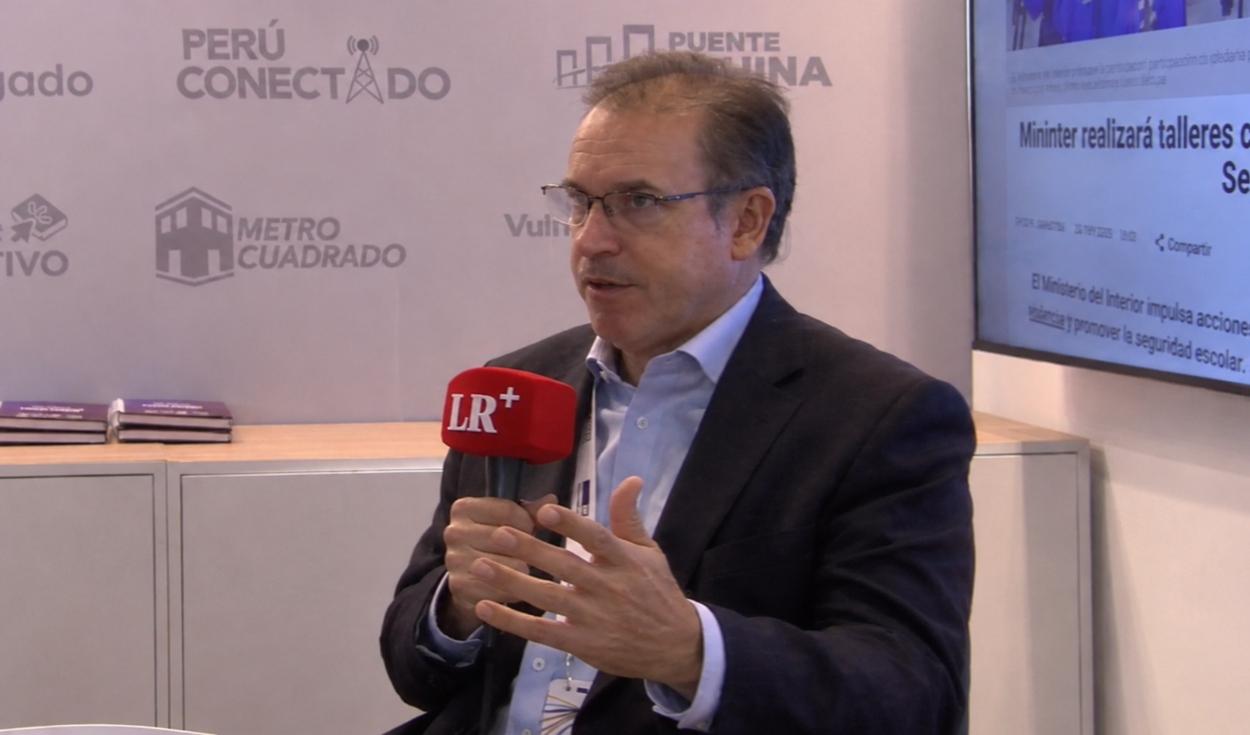
Illegal mining in Peru has grown so large that it now rivals the country's formal gold production, according to Gonzalo Quijandria, vice president of the Sociedad Nacional de Mineria, Petroleo y Energia (SNMPE), the national mining, oil and energy trade association.
Quijandria made the warning in an interview with La Republica on the second day of CADE Ejecutivos 2026, an annual gathering of Peruvian business leaders. He said the increase in illegal activity has been so steep that illegal mining is now the country's top gold producer, and that the practice must be stopped.
The SNMPE also said Peru has become the largest exporter of illegal gold in the region.
According to the International Monetary Fund, illegal mining threatens an estimated $12 billion portfolio of mining projects in Peru, putting at risk one of the main drivers of private investment and economic growth in the country.
Illegal mining threatens concessions and investment
Quijandria said one of the biggest problems for mining companies is the invasion of their concessions by illegal operators. He explained that a company can acquire rights to a plot of land, fund exploration work and carry out studies to assess a zone's geological potential, only to end up affected by miners operating outside the law.
He criticised operators who use their registration in the Registro Integral de Formalizacion Minera (Reinfo), Peru's formalization registry for small-scale miners, to remain in areas where formal investments already exist.
He said that amounts to more than illegal competition, calling it theft.
Quijandria said these invasions directly affect the resources companies set aside for exploration, as well as the geological knowledge they build up over years to identify new deposits. He added that the problem is not limited to disputes over land or concessions.
He said the expansion of illegal mining also has security consequences, since it brings with it other illicit activities such as extortion, human trafficking, violence and the use of explosives.
Given this, he said the state needs to strengthen measures to curb these activities and stop them from continuing to affect formal operations and public safety.
SNMPE urges Congress to pass MAPE law and avoid another Reinfo extension
Faced with the advance of illegal mining, Quijandria said one of the most urgent steps is for Congress to debate and approve a Ley de Mineria Artesanal y de Pequena Escala (MAPE), a law aimed at artisanal and small-scale mining. In his view, the standard formalization regime can be too cumbersome for small producers who genuinely intend to operate within the law.
The SNMPE vice president criticised the legislature for failing to advance discussion of the bill submitted by the executive branch. He warned that the absence of new regulation should not become an argument for extending Reinfo again.
He said it is not acceptable to argue that because a MAPE law has not been debated, Reinfo must simply be extended again.
Quijandria said the Energy and Mines Commission of the Chamber of Deputies must treat the debate as a priority and establish a regime that makes it easier for artisanal miners and small producers who meet the required conditions to formalize their operations.
He said the MAPE law has to be debated, noting that the deadlines for Congress to discuss the bill submitted by the executive have already passed, even though it was presented as urgent.
On the formalization deadline set for June 2028, Quijandria said the process could move faster. He added that since the executive branch set that timeframe, it is up to the authorities to ensure the stated objectives are met.
What happens next
The SNMPE is calling on the Chamber of Deputies' Energy and Mines Commission to prioritize debate on the MAPE bill, warning against another extension of the Reinfo registry; Peru's formalization deadline is set for June 2028.
Test yourself
According to Gonzalo Quijandria, what is illegal mining's status in Peru's gold sector?
How large a portfolio of mining projects does the IMF say illegal mining threatens in Peru?
What does the SNMPE want Congress to do instead of extending Reinfo again?
Have your say
Should Peru's Congress prioritize a new law for small-scale miners over extending the current Reinfo registry?
Where it happened
Lima, Peru