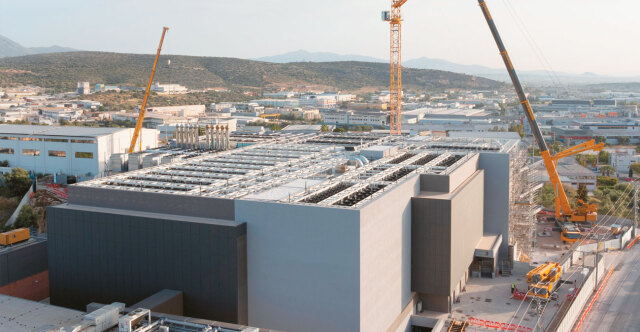
The Hellenic Association of Data Center Builders and Operators, known as GRDCA, said Greece's colocation data center market has entered a period of rapid expansion, with projects worth about 1 billion euros under construction and broader investment interest in the sector reaching as much as 10 billion euros.
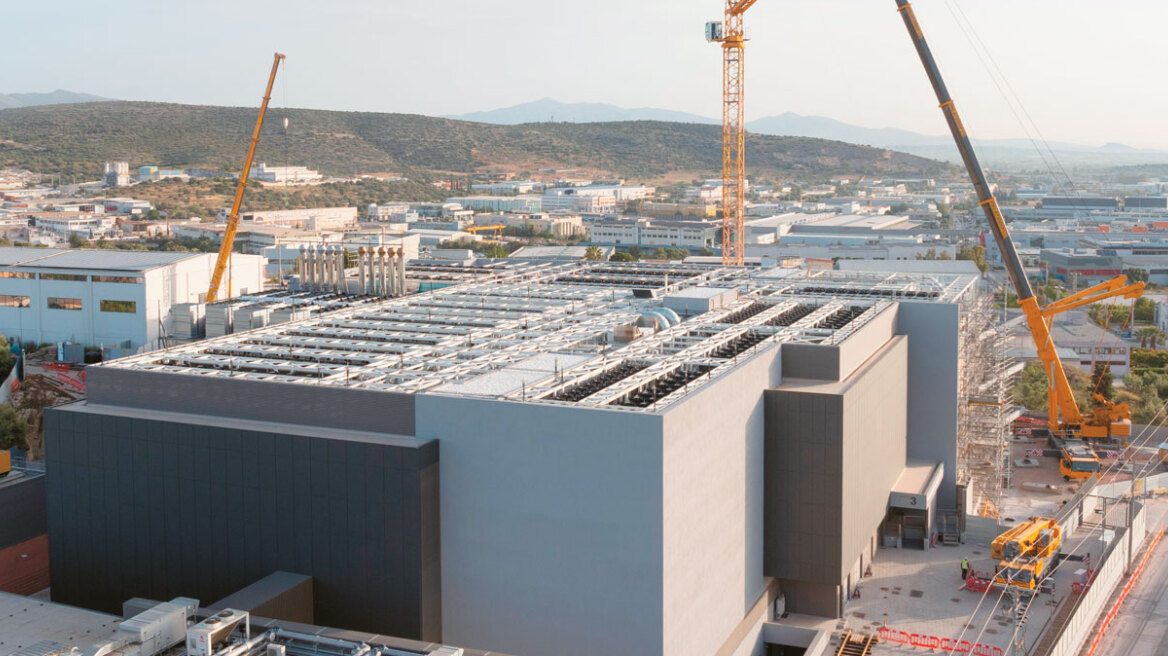
The figures, presented recently by the association, show the market growing from roughly 6 to 7 megawatts of capacity as of 2023 to projects totalling 40 to 60 megawatts now under way or in advanced construction. Announced plans and projected developments across the wider market approach 200 megawatts, GRDCA said, though it cautioned that these figures span different stages of development and do not all represent capacity that is already operating.
Economic impact of the investments
Citing data from IDC Research Services, GRDCA said every euro invested in data centers generates 8.23 euros in total economic value, made up of 2.45 euros in direct impact, 4.38 euros in indirect impact and 1.41 euros in induced economic activity. The presentation also cited an employment multiplier of 7.5, with GRDCA saying each direct job in the sector is linked to the creation of 6.5 additional jobs elsewhere in the economy.
The association said the significance of the investments goes beyond construction, since data centers generate demand for equipment, engineering services, technical support, telecommunications infrastructure and specialised staff, while also underpinning the growth of cloud computing, artificial intelligence, digital applications and technology companies. The presentation distinguished investment in building infrastructure from the wider ecosystem of equipment and digital services, where it put investment interest at around 10 billion euros, stressing that the figure should not be presented as investment already carried out.
Speaking at Cisco Connect Greece 2026 in Athens, Agostino Santoni, Cisco's senior vice president of sales for Europe, the Middle East and Africa, said the growth of artificial intelligence, and particularly of AI agents taking on tasks with increasing autonomy, is creating new requirements for corporate networks, data centers and cybersecurity. He also praised Greece's growth momentum, the pace of the country's progress, the quality of innovation developed in both the public and private sectors, and the high level of its workforce.
Energy use compared with the rest of Europe
One of the main issues accompanying the growth of data centers is electricity consumption. According to the presentation, data centers currently account for about 0.1% of Greece's total electricity consumption, compared with a global average of around 1.5%. In Germany, the Netherlands and France the figure ranges between 3% and 5%, while in Ireland it reaches about 18%.
The gap also shows up in electricity consumption per resident linked to data centers. For 2024, Greece's figure was about 6 kilowatt-hours per resident, compared with 51 kWh globally, 216 kWh in Germany, 540 kWh in the United States and 981 kWh in Ireland. Under a GRDCA scenario in which future IT load reaches 200 to 250 megawatts, the sector's demand could approach 1% of the country's annual electricity consumption, depending on how the market develops and is used. Globally, demand is rising sharply: the International Energy Agency expects worldwide data center electricity consumption to climb from 415 terawatt-hours in 2024 to 945 terawatt-hours in 2030.
Water, environment and local communities
The growth of the facilities has also raised concerns over water use, noise and effects on local communities. GRDCA said not all data centers use large volumes of water, and that most facilities in Greece rely on air cooling and closed-loop systems, which significantly limits operational water use. The association said each facility should be assessed on its actual technical specifications, local climate conditions and specific indicators such as water usage effectiveness and power usage effectiveness.
On noise and other environmental effects, GRDCA proposed measurable criteria, transparency and early communication with local communities. The association, a member of the European Data Centre Association since 2026, takes part in the Climate Neutral Data Centre Pact, which sets targets for energy efficiency, clean energy, the circular economy and climate neutrality by 2030.
Grid connection the biggest challenge
Despite the investment prospects, the market faces several challenges. GRDCA said the availability of electricity and the ability to connect new facilities to the grid rank as the top issue, followed by energy costs, licensing, the need for a stable regulatory framework and a shortage of skilled staff.
The association said about 30 megawatts of capacity are currently operating in Greece, while pending grid connection requests approach 11 gigawatts. It said the huge gap does not reflect an equivalent level of real investment demand and makes it necessary to set clear maturity criteria for projects seeking connection.
Greece's bid to become a regional digital hub
GRDCA said Greece's geographic position is one of the country's most significant comparative advantages, offering the potential to connect Europe with the Balkans, the Middle East and North Africa, alongside growing telecommunications infrastructure and an expanding renewable energy base. Competition from other countries in the region is intense, the association said, and investment decisions depend on power availability, cost, licensing speed and regulatory stability.
GRDCA, which counts 70 member companies and six independent advisers, said Greece currently has a window of opportunity to secure a stronger position on Europe's digital map. The key task now, it said, is moving from investment announcements to project implementation, with measurable results, environmental responsibility and genuine participation from local communities.
The presentation involved GRDCA president Alexandros Behrakis, managing director for Greece at Digital Realty; vice president Nikos Konstantinidis, country director for Greece at DATA4; secretary general Giorgos Dritsakos, vice president of secure power and data centers business for central and eastern Europe at Schneider Electric; treasurer Nikos Madias, technical director for Greece at Sparkle; and Tilemachos Moraitis, Microsoft's representative on the GRDCA board and government affairs director for Greece, Cyprus, Malta and the Adriatic region at Microsoft.
Digital infrastructure and daily life
Beyond the investment figures and technical specifications, GRDCA linked the growth of data centers to a broader shift in how the economy and daily life function. Digital transactions, banking services, health apps, remote work, e-commerce and the use of artificial intelligence all rely on data processing and storage infrastructure that remains largely invisible to end users. The association said the real significance of the investments will be reflected not only in the number and capacity of new facilities, but in how far they help boost productivity, innovation and competitiveness in the Greek economy in the years ahead.
What happens next
GRDCA says Greece's main task is moving from investment announcements to actual project implementation, with measurable results and local community involvement.
Test yourself
How much is GRDCA's colocation market data center capacity, according to projects under construction?
What share of Greece's total electricity consumption do data centers currently represent, according to the presentation?
How many gigawatts of grid connection requests are currently pending in Greece?
Have your say
Should Greece prioritize expanding data center investment given the grid and environmental challenges involved?
Where it happened
Athens, Greece