Greece's government is preparing a sweeping overhaul of how building permits are issued, under a plan to transfer the country's Urban Planning Services, known as YDOM, into the Hellenic Cadastre, the national land registry. Under the new system, an engineer based in Thessaloniki could examine a permit application for a property on Mykonos or Santorini, since cases would no longer be tied to the geographic area where the property sits.
The plan was presented to the prime minister a few days ago and is expected to go to public consultation before the end of the year. At its core is a new National Organization for Cadastre and Construction Control, known by its Greek acronym EOKED, which would run a nationwide network of 97 Building Centers absorbing the country's 183 existing planning offices.
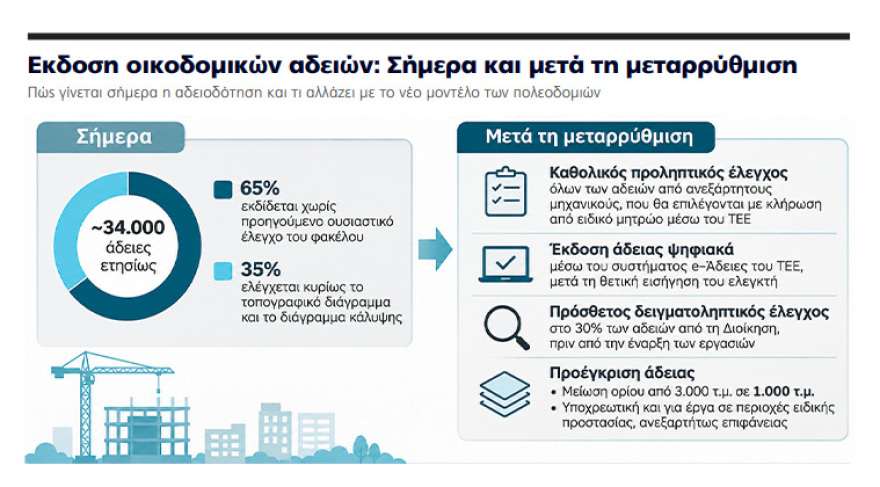
The new framework would make checks by independent engineers mandatory for every permit. Those engineers would be chosen by lottery, the administration would run additional sample checks on 30% of permits, and the floor above which a mandatory pre-approval is required would drop from 3,000 to 1,000 square metres. Today, a permit for a 3,000-square-metre building can be issued on a simple certificate of building terms, signed off solely by the private engineer involved, with no intermediate check.
The reform is intended to go beyond a simple administrative reshuffle, tackling decades of understaffing, long delays and inconsistent interpretation of planning law from office to office. It also addresses a lack of transparency, after a string of corruption cases and illegal transactions in planning services, including in Attica, Chalkidiki and Pieria.
Fully staffing the new system would require 1,056 engineering posts in total, with the annual running cost of just the permit-issuing side estimated at 32 million euros, against projected fee revenue of only 1.5 to 2 million euros a year. That gap, and the fact the overhaul is being attempted as the country enters a pre-election period, underlines the scale of the task.
From 183 offices to 97 Building Centers
Of Greece's 332 municipalities, only 183 currently have their own planning office, with the other 149 served by neighbouring municipalities. About 35% of offices run on just one or two engineers, 28 municipalities with 25,000 residents have no planning office at all, and in 23% of offices the average time to issue a permit exceeds six months. Nationally, 46% of public-sector engineers are over 55.
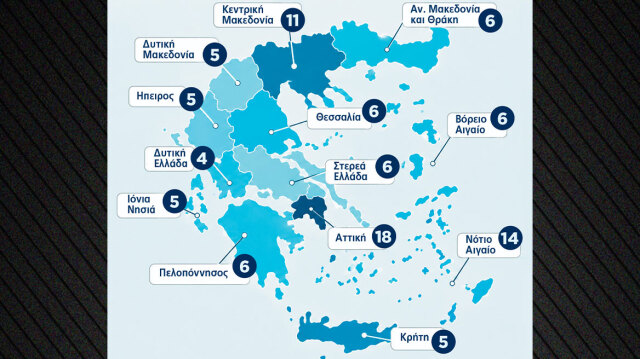
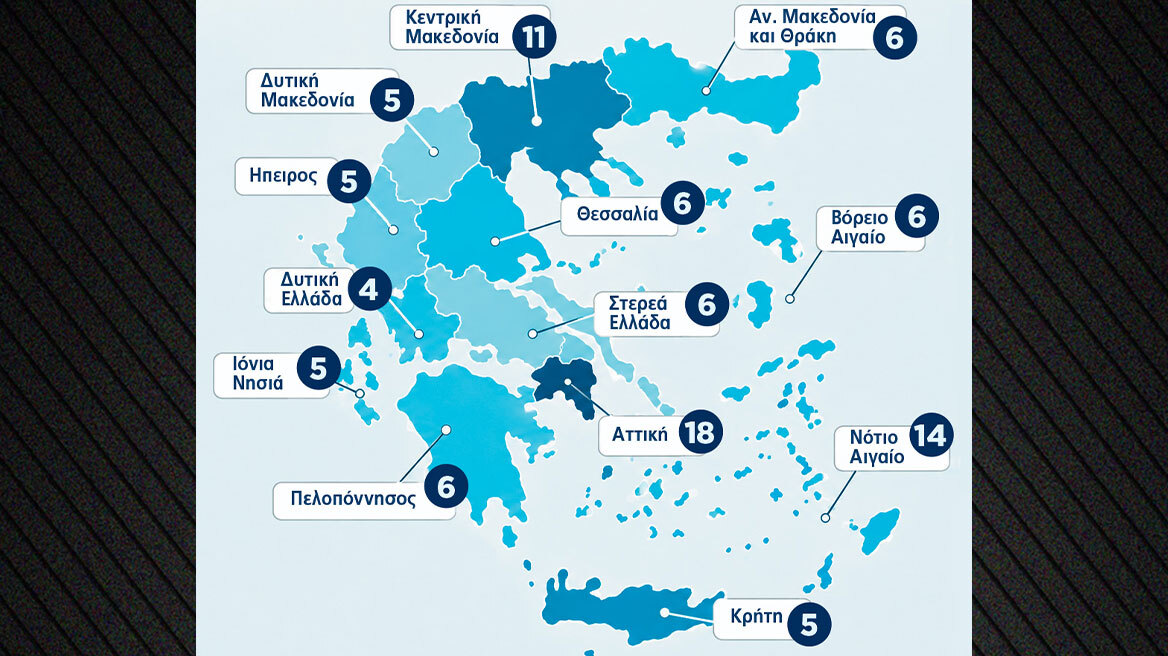
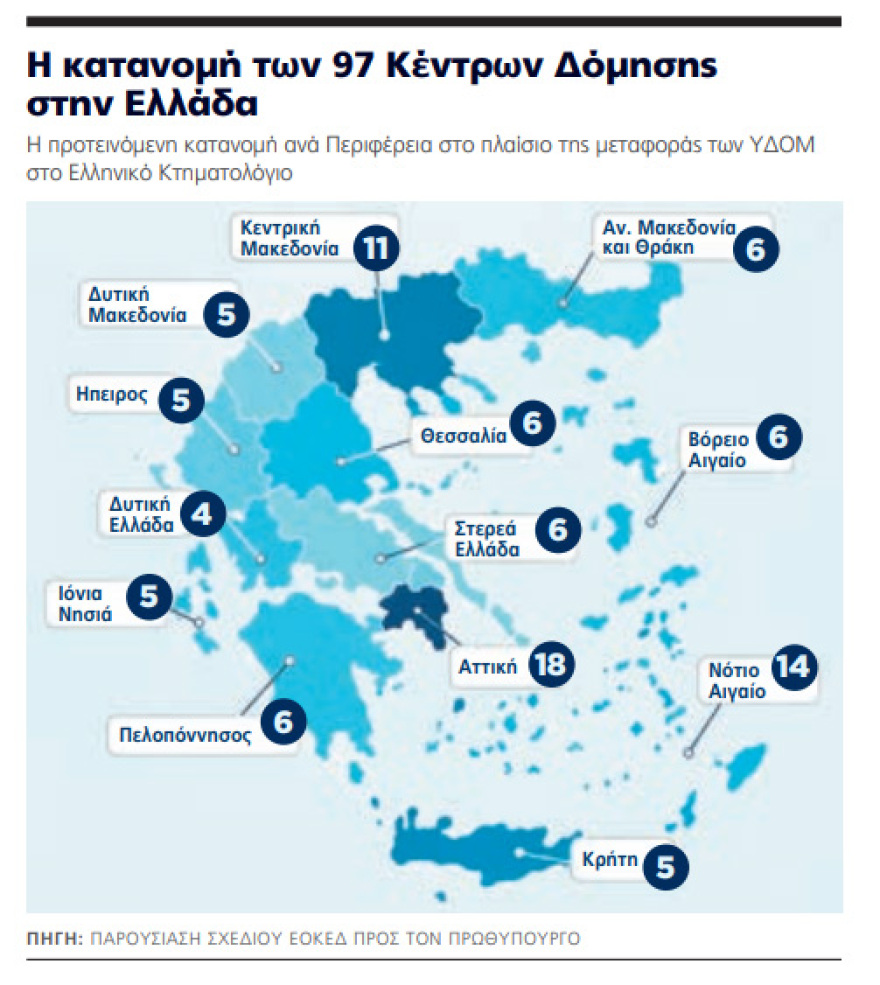
The plan would concentrate permit-issuing in 97 Building Centers, 21 Regional and 76 Local, under unified oversight with the power to redistribute workload nationally. Proposed breakdowns include:
- Attica: 41 current offices replaced by 18 Centers (7 Regional, 11 Local)
- Central Macedonia, including Thessaloniki: 28 offices replaced by 11 Centers (2 Regional, 9 Local)
- South Aegean: 14 Centers (2 Regional, 12 Local)
- North Aegean: 6 Centers; Ionian Islands: 5
- Crete: 5; Thessaly: 6; Peloponnese: 6; Central Greece: 6; Eastern Macedonia and Thrace: 6
- Western Greece: 4; Epirus: 5; Western Macedonia: 5
The plan relies mainly on existing cadastral offices for premises, to avoid building new ones. Physical cadastre archives are being moved to central storage in Thessaloniki and Heraklion to free up space, and 78 existing Hellenic Cadastre service points would be used. Regional Centers would handle pre-approvals for larger projects and properties in protected areas, while Local Centers would issue building-terms certificates, overseen by the new organization's central construction directorate. Municipalities would keep urban-planning duties, and moving checks on illegal structures is left for a later stage.
A pilot is due to start with 20 engineers across Larissa and Trikala in April 2027, two areas with urban and peri-urban characteristics, ahead of a planned nationwide rollout in October of the same year. It is an ambitious timetable, requiring major staff increases, completion of digital infrastructure and secured funding.
Universal checks before construction
The biggest single change targets how permits are approved today. Of roughly 34,000 permits issued each year, 65% are granted with no substantive check of the file, and the remaining 35% are checked mainly on topographic and coverage drawings.
The new model would make a preventive check of every permit mandatory, carried out by independent private engineers drawn by lottery from a special registry run through the Technical Chamber of Greece, after studies, approvals and other documents have been filed. Once an inspector recommends approval, the permit would be issued digitally through the Chamber's e-Permits system, while the administration separately samples 30% of permits before work begins.
That sits alongside the drop in the mandatory pre-approval threshold to 1,000 square metres and its extension to any project in a specially protected area, regardless of size, a shift that moves scrutiny ahead of construction to curb violations and improve legal certainty.
The challenge is making the new system work without creating fresh delays, which requires enough independent engineers, clear lines of responsibility and firm deadlines. The overhaul of permit procedures, covering permit, construction and dangerous-building checks, is still being drafted into the bill creating EOKED, and will need ministerial decisions and presidential decrees once the law passes.
Permits without geographic borders
Under the current system, each planning office's jurisdiction is fixed, so staff shortages or a backlog in one office cause delays even when others have spare capacity. Under the new model, applications would be distributed among Building Centers based on staff availability and existing caseloads.
The Cyclades illustrate the problem: intense building activity on some islands creates demand that local staff struggle to cover alone. Under the new system, a permit file for a Mykonos property could be examined by an office in Athens, Thessaloniki or Trikala, provided it has access to the area's digital planning data. The model is designed to apply across the whole country, not just the islands, shifting cases from overloaded offices to Centers with spare staff capacity.
A single digital map
Officials are also reportedly weighing whether new Building Centers should avoid handling permits for their own area altogether, examining only files from elsewhere in the country, to cut local dependencies and the direct relationship between inspectors and applicants, reducing room for interference.
That kind of cross-regional handling depends on shared, reliable digital data. The central tool would be the Technical Chamber's Unified Digital Map, gathering planning, spatial and environmental data, including land use, building coefficients and building terms, referenced to each property's National Cadastre code number. Artificial intelligence tools are planned to help search applicable building terms, determine required documents and process case files, though the system's effectiveness will depend on how complete the data is and how uniformly offices use it.
A related goal is ending the differing interpretations of planning law between offices, which often produce extra paperwork, delays and uncertainty for engineers and property owners. Sources following the reform say unification under a single body, with shared oversight and digital tools, depends on codifying planning legislation and simplifying the New Building Regulation, a long-standing demand from engineers aimed at cutting the ambiguity that currently allows different offices to rule differently on the same issue, particularly outside designated town plans.
Staffing and a 32-million-euro cost
Staffing and funding are the reform's two biggest obstacles. The plan calls for 817 engineers and 80 administrative staff to run permit-issuing services, rising to a total of 1,056 engineers once checks on illegal structures are folded in. To fill the posts, officials are counting on voluntary transfers from municipalities and other public bodies, contract staff, and 200 new hires through ASEP, Greece's civil-service recruitment body.
If those measures fall short, a fallback under consideration is the compulsory transfer of up to 390 employees, limited to moves within 10 kilometres of their current workplace, or alternatively a program agreement with the Technical Chamber.
Annual running costs for the permit-issuing services are estimated at 32 million euros, of which 29.7 million would go on salaries, plus a further 8.3 million euros in one-off costs. Projected annual revenue from the related share of fees is put at only 1.5 to 2 million euros, leaving a funding gap of around 30 million euros. The final funding model is still being worked out with Greece's General Accounting Office, and the estimates do not include the future cost of construction-control services.
Beyond EOKED's financial viability and the success of the planning reform itself, officials say the bigger test is ensuring the new responsibilities do not weaken the existing Hellenic Cadastre, which must also complete the national land survey by the end of 2026 while keeping its own services running smoothly.